Graham's Port Lodge Guide: What to Expect on a Tour
Graham's has been in the Port business since 1820 and sits higher up the Gaia hillside than almost any of its neighbours. The climb buys you a panorama over the Douro that the riverside lodges simply cannot offer.
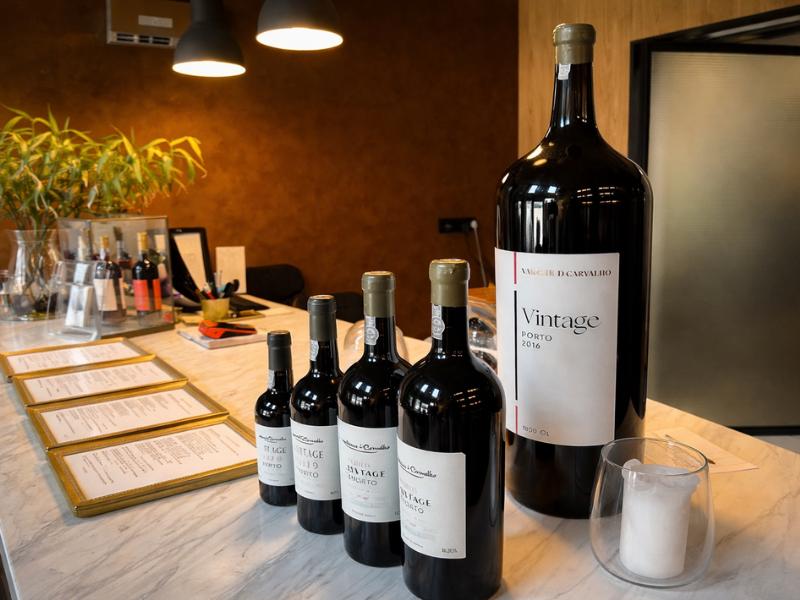
Booking Choice: For Graham’s itself, choose the guided lodge and food-pairing ticket. The Vintage Room is a separate premium option, and a multi-cellar walk does not promise Graham’s admission. Explore Graham's Port And Food Pairings
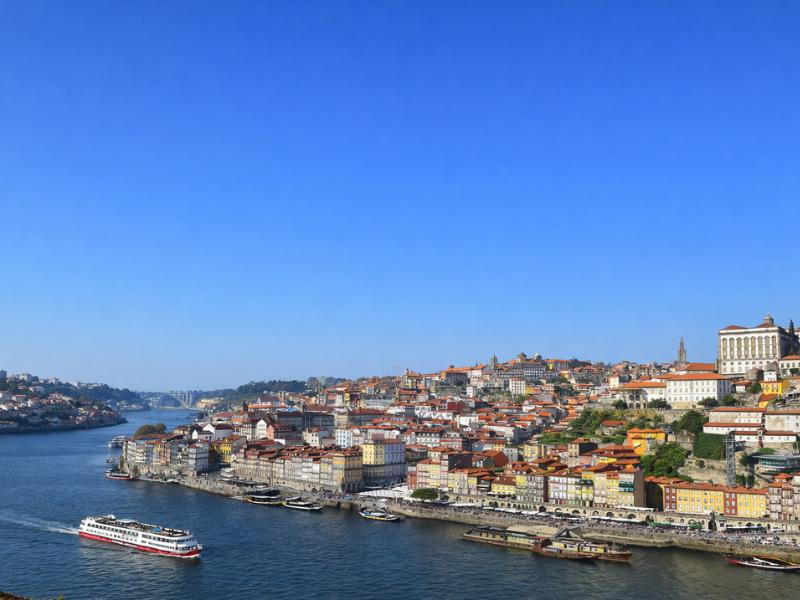
Everyone photographs Gaia from Porto. Far fewer people photograph Porto from Gaia, and fewer still from properly high up. Graham's occupies one of those higher positions, well above the row of lodges lining the quay, and the first thing most visitors do on arrival is stop talking and look at the river.
At A Glance: Graham’s is a hilltop lodge visit with different tasting options. Select the actual flight you want and arrange transport and restaurant time separately. Explore Graham's Port And Food Pairings
The view is real and it is the house's signature, but it is not the only reason to make the climb. Graham's dates to 1820 and belongs to the Symington family group, one of the genuinely long-running family wine companies in Portugal. That combination, an old house still in family hands with a hilltop position over the Douro, shapes what a visit here feels like compared to the flat, busy waterfront strip below.
Three Gaia houses, three centuries
Founding dates for the three best-known lodge visits in Vila Nova de Gaia. All three still ship Port certified by the IVDP.
Why is Graham's lodge higher up the hill than the rest?
Most Gaia lodges cluster at river level along Avenida de Diogo Leite because barrels once arrived by boat and moving them uphill made no sense. Graham's sits notably higher on the hillside, which costs you a climb and repays it with a panoramic view over the Douro and Porto's old town that riverside cellars cannot match.
The geography of Gaia is the whole story of the Port trade in miniature. Wine came downriver from the Douro Valley in flat-bottomed rabelo boats, was unloaded at the quay, and went into cellars built as close to the water as possible. That logic produced the dense riverside lodge district you walk through today, where you can move between half a dozen famous names on the flat.
Higher up, the calculation was different. A hillside site means more space, better airflow, and a position that looks out over everything below. What was once a practical trade-off is now the single most quoted reason people put Graham's on the list, because the terrace looks straight across the water at the stacked houses of the Ribeira with the bridge off to one side.
There is a second effect that matters less to visitors and a lot to the wine. Gaia's climate is milder and more stable than the Douro Valley's brutal summers, which is why the trade aged its wine here rather than upriver. Thick walls, cool interiors and steady humidity are the working conditions Port ages in, and any lodge you walk into in Gaia is built to hold those conditions.
| Position | What it means for the wine | What it means for you |
|---|---|---|
| Riverside quay lodges | Historic unloading points, cool and close to the water | Flat walking, easy to combine several houses in one hour |
| Mid-slope lodges | Similar conditions, slightly more space | Short climb, partial views over the rooftops |
| Upper hillside, including Graham's | Good airflow, room for larger cellar halls | A real climb or a ride, and a full panorama at the top |
There is regulation baked into that density too. For much of the twentieth century, Port destined for export was effectively required to be aged and shipped from Gaia rather than from the Douro Valley itself, which is why so many famous names ended up stacked into one short stretch of riverbank. The requirement was later relaxed, and some producers now age upriver, but the lodge district stayed exactly where the rule put it.
Practically speaking, treat Graham's as a destination rather than a stop on a riverside crawl. Slotting it between two quay-level lodges means climbing and descending in the middle of an afternoon of tasting, which nobody enjoys. Put it first, while your legs are fresh, or last, as the payoff.
Who are the Symingtons, and does family ownership change anything?
Graham's was founded in 1820 and is part of Symington Family Estates, a real and well-documented family wine company that also owns Dow's, Warre's and other Port houses. Family ownership shows up in continuity: long-term decisions about vineyards and cask stocks rather than quarterly ones, and a house style held steady across generations.
Port has consolidated heavily over the last century. Many historic names now sit inside international drinks groups, which is not automatically bad for quality but does change how decisions get made. The Symington group is one of the notable counterexamples, a family company holding several of the best-known houses and running them as distinct identities rather than merging them into one brand.
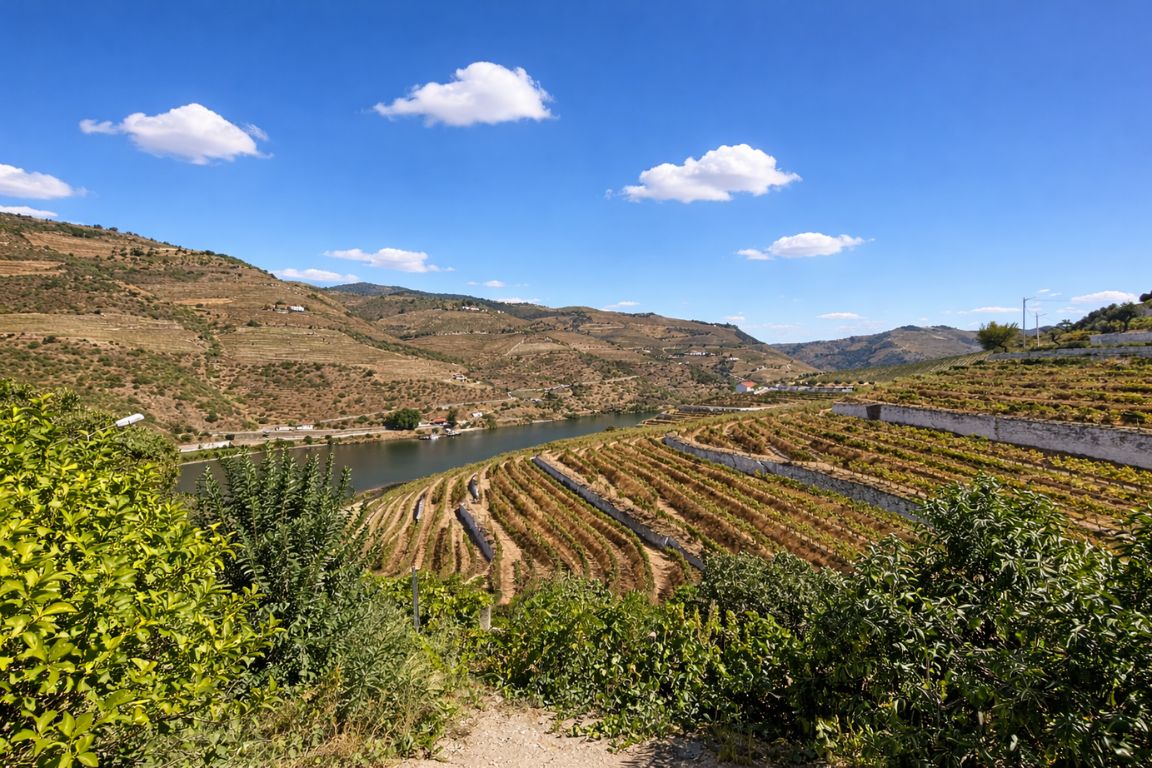
That structure explains something visitors often find confusing. You will see Graham's, Dow's and Warre's presented as separate houses with separate styles and separate followings, and they are, while sharing ownership behind the scenes. Each keeps its own house character, its own Vintage declarations and its own cellar identity.
Why should a visitor care? Because it changes what the guide can tell you. At a house inside a family group with several Port brands, the comparisons are informed rather than diplomatic. Someone explaining why one house leans sweeter or another drier is working from inside knowledge of both, and that makes the tasting conversation more useful than a straight brand pitch.
Continuity buys something else that shows up directly in the glass: stock. An aged Tawny only exists because somebody committed casks to a cellar decades before anyone knew what the market would look like. A 40 Year indication represents a decision taken in a different century, held through recessions and changes of fashion. The depth of a house's old cask reserve is one of the quieter measures of how seriously it takes the top of its range, and it is much easier to hold across generations of one family than across a series of owners.
| Milestone | Detail |
|---|---|
| 1820 | Graham's founded, entering an already established Anglo-Portuguese Port trade |
| Ownership today | Part of Symington Family Estates, a family-run Portuguese wine company |
| Sister houses | Dow's and Warre's among others, each maintained as its own identity |
| Lodge position | High on the Gaia hillside, above the riverside lodge district |
| Signature draw | Panoramic views over the Douro and Porto's old town |
| Regulator | All genuine Port, from every house, is certified by the IVDP |
What does a visit to Graham's actually cover?
Expect the standard shape of a major Gaia lodge visit: exhibition space on the Douro and the making of Port, a walk through the cellar halls where casks and vats are aging, then a guided tasting flight and a shop. Formats and tiers change seasonally, so confirm the current options on the day.
The exhibition portion at any serious lodge exists to make the cellar walk mean something. The core idea it has to land is fortification. During fermentation, before the yeast has converted all the sugar, grape spirit goes in. Fermentation stops. The remaining sugar stays as natural sweetness, and the wine lands at roughly 19 to 22 percent alcohol rather than the 12 to 14 percent of an unfortified table wine.
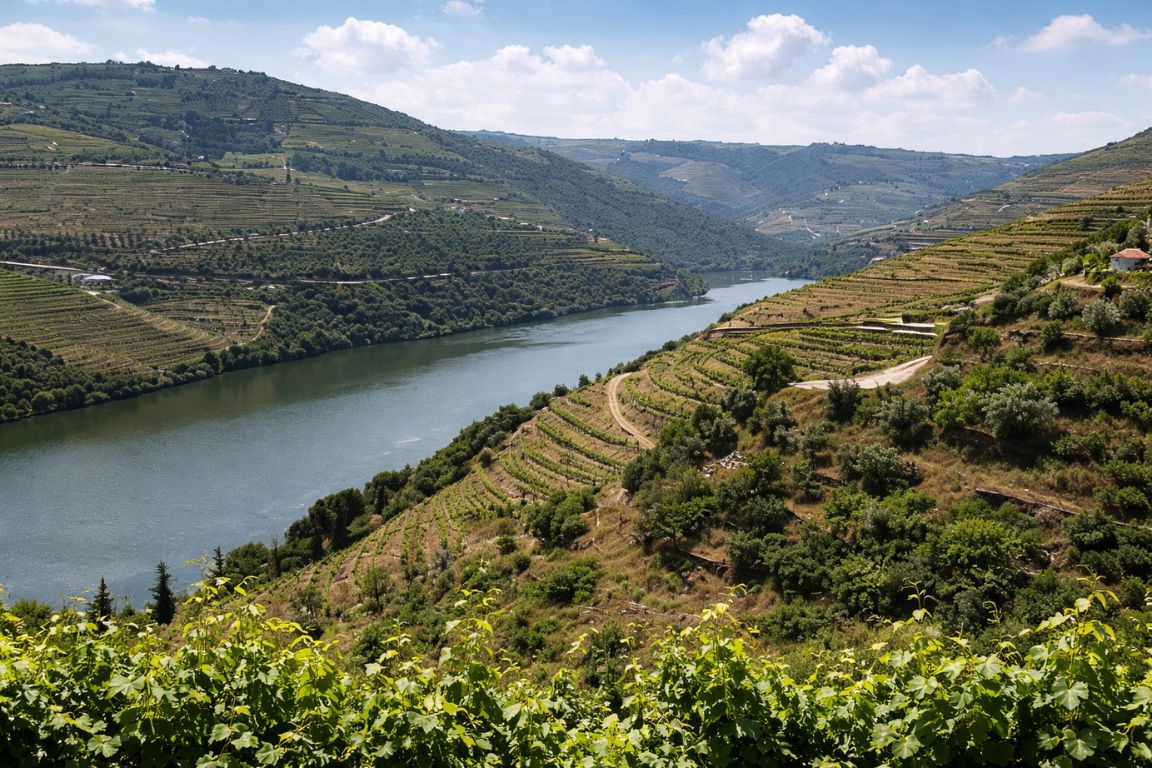
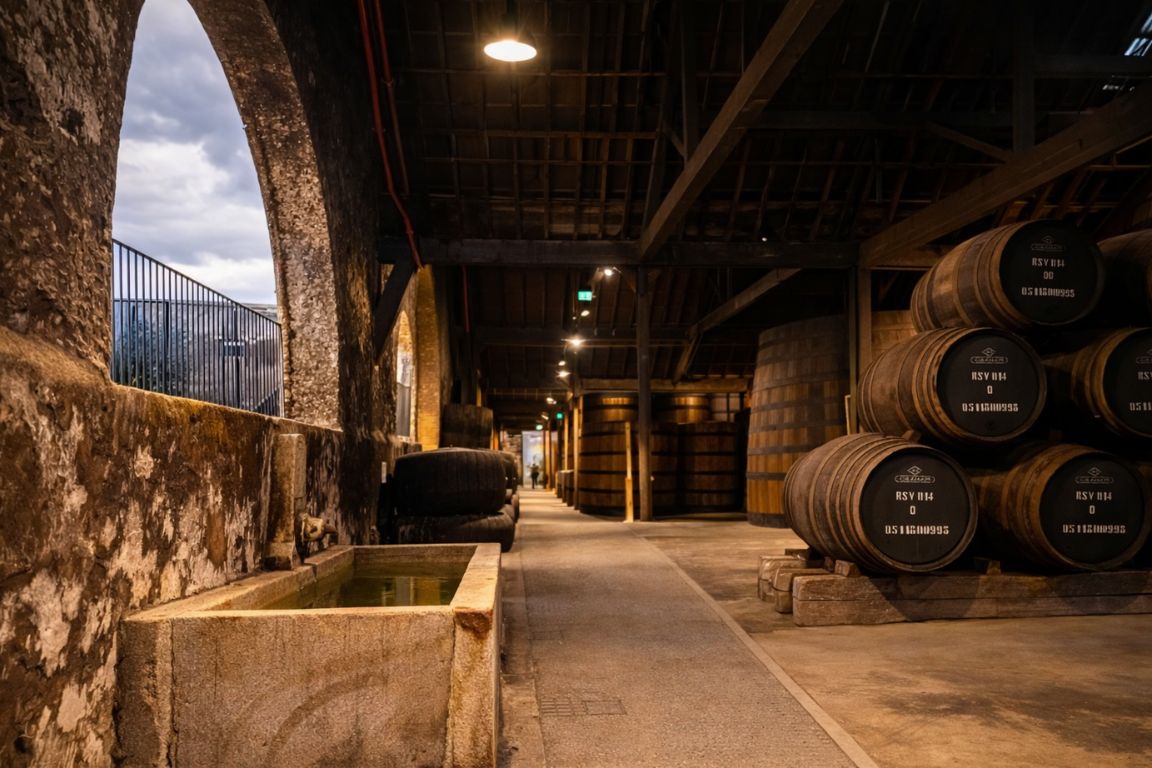
Once that clicks, the barrel halls read differently. The enormous wooden vats are there to age ruby styles with as little oxygen contact as possible, keeping the fruit bright and the colour deep. The smaller casks, the pipes, do the opposite job: more wood contact per litre of wine, slow oxidation, and over years the transformation into the amber, nutty, caramelised character of tawny.
Then the tasting. The pours at Graham's naturally include house bottlings, and because the group behind it holds several Port names, guides tend to be fluent in stylistic comparison. Ask directly how the house style differs from its sister houses. It is the most interesting question you can put to a guide in that room, and they will have a real answer.
Group size and language are worth checking before you commit to a slot. English departures run frequently at the well-known Gaia houses, other languages less often, and the gap between a small group and a full one is the gap between asking questions and listening to someone else ask them. Where a listing shows departure times, the first slot of the day is usually the smallest group of the day.
| Part of the visit | What to look for |
|---|---|
| Exhibition rooms | The fortification moment, harvest imagery, the Douro's terraced vineyards |
| Cellar halls | Vats versus pipes, chalk cask markings, the temperature drop |
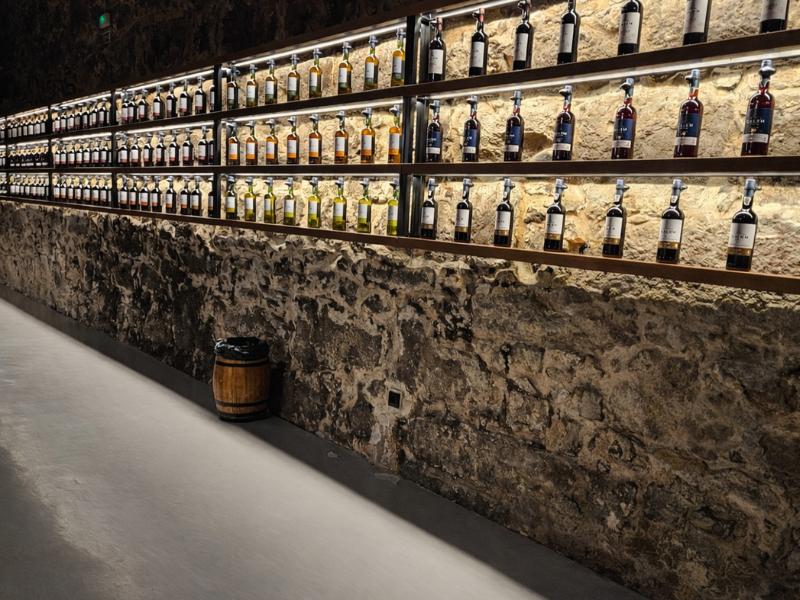
| Tasting | House style across ruby, tawny and, on higher tiers, aged or Vintage wines |
| Terrace and views | The panorama over the river toward Porto's old town |
| Shop | Bottlings that rarely reach export markets, plus shipping advice |
What should you taste, and how do the styles differ?
Work upward. Start with a ruby style for bright berry fruit, move to a 10 or 20 Year Tawny for caramel and walnut, and finish on whatever the top of your flight is. Tawny and Vintage are two different philosophies of aging: one done for you in cask, the other left for you to do in bottle.
Most tasting flights are built in that ascending order for a reason. Palates adjust, and going from an intense 30 Year Tawny back down to a young ruby makes the ruby taste like nothing at all. If you have a choice of pour order, take the standard ascent rather than jumping to the headline wine first.
The distinction people most often get wrong is Vintage versus Late Bottled Vintage. Vintage is declared only in the strongest years, spends about two years in cask, and then does its real aging in bottle, throwing sediment and requiring a decanter. Late Bottled Vintage stays in cask for four to six years instead, arrives ready to drink, and is far kinder to a hotel room with no decanting equipment.
| Style | Aging approach | Serve | Keeps once opened |
|---|---|---|---|
| Ruby and Reserve | Short time in large vats, oxygen kept low | Lightly chilled | Several days |
| White Port | Made from white grapes, styles run dry to sweet | Cold, often with tonic | Several days |
| 10 to 40 Year Tawny | Years in small oak casks, slow oxidation | Cool, around cellar temperature | Weeks |
| Late Bottled Vintage | Four to six years in cask, then bottled | Room temperature | Days |
| Vintage | Two years in cask, decades in bottle | Decanted, room temperature | A day or two |
There is one category most visitors have never heard of and often end up liking best. A colheita is a tawny from a single harvest year, aged in cask rather than in bottle, so it carries a date on the label like a Vintage but drinks with the nutty, caramelised character of a tawny. Lodge shops are frequently the only place you will see a real range of them, and if there is one on the tasting list, take it.
If you buy a bottle to carry home, be honest with yourself about what you will actually open. Aged Tawny is the traveller's choice: it survives an open bottle for weeks, needs no decanting, and does not sulk if it gets shaken in a suitcase. A young Vintage is a lovely thing to own and a demanding thing to drink well.
When is the view from Graham's at its best?
The lodge faces across the Douro toward Porto's old town, so the light works in your favour late in the day when the sun drops behind you and hits the far bank directly. Clear winter afternoons give the sharpest visibility. Summer middays are bright but hazy, and the terrace offers little shade.
Porto's Ribeira climbs from the north bank of the river in tiers of tiled facades, and it looks dramatically different depending on where the sun is. In the middle of the day it is flattened by overhead light. In the last hour or two before sunset, with the sun behind the Gaia hillside, the whole opposite bank warms up and the depth returns to it.
Winter has a genuine advantage most travel writing ignores. Cold, clear air after rain gives visibility you never get in an August haze, and the low winter sun spends the whole afternoon at a good angle rather than only the last hour. The trade-off is shorter days and shorter opening hours at some lodges, so an early booking matters more.
Porto weather moves fast off the Atlantic, which cuts both ways from a terrace. A grey morning can clear into a bright afternoon inside an hour, and a settled blue sky can close in just as quickly. If the forecast looks mixed, do not cancel. The cellars are indoors and completely unaffected by what the sky is doing, and the odds of the view opening up at some point during your hour on the hill are good.
| Season | The view | The visit |
|---|---|---|
| Winter | Sharpest air, low sun angle all afternoon | Quietest cellars, shortest daylight, check hours |
| Spring | Clean light, green hills upriver | Comfortable climb, moderate crowds, book weekends |
| Summer | Bright but often hazy, harsh at midday | Peak crowds, hot climb, cellars a welcome relief |
| Early autumn | Warm evening light, harvest atmosphere | High demand across Gaia, best-balanced season overall |
| Late autumn | Dramatic skies between rain fronts | Thinning crowds, bring a jacket for the terrace |
How do you get up the hill without wrecking your legs?
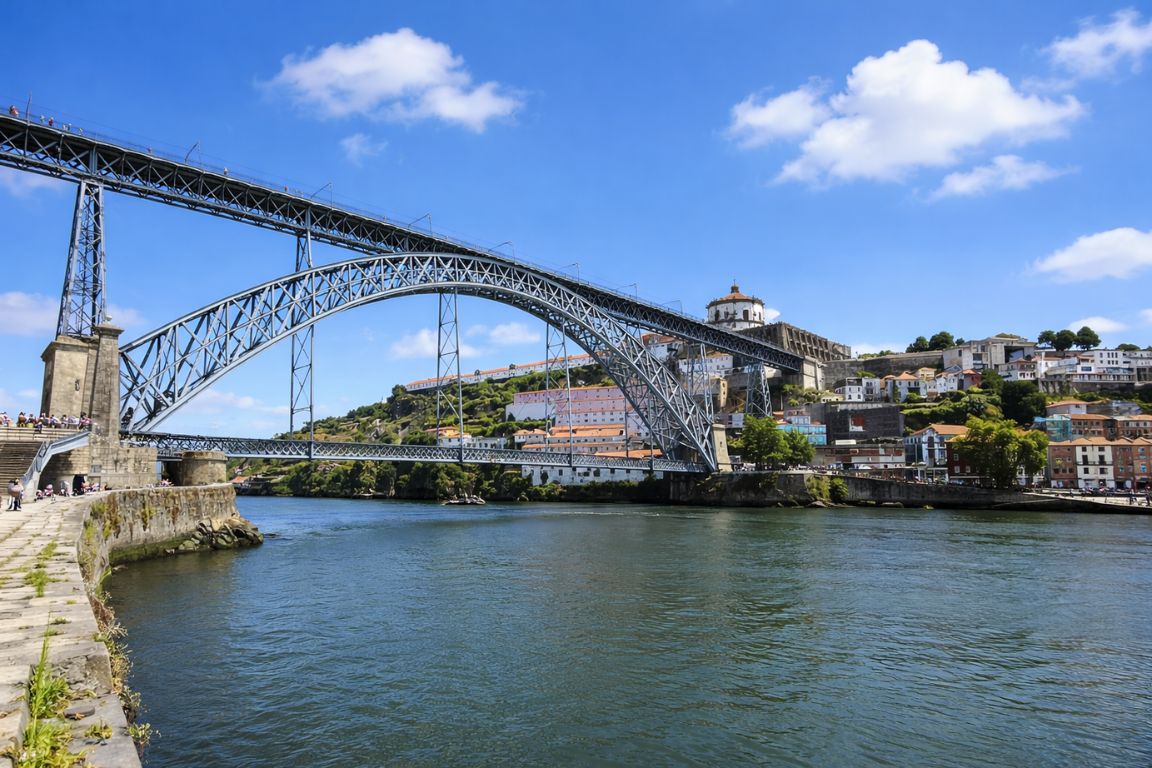
Three good options exist. Walk across the upper deck of the Dom Luis I Bridge and arrive already at hill level. Take the metro across that same upper deck to the Gaia side. Or walk the riverside quay and ride the Gaia cable car up. Climbing the streets from river level is the hardest route by far.
The Dom Luis I Bridge has two decks, and choosing the wrong one is the single most common planning mistake in Gaia. The lower deck connects the Ribeira quay to the Gaia waterfront at river level, which is perfect for the riverside lodge strip and wrong for anything up the hill. The upper deck runs at hilltop height and carries pedestrians alongside the metro.
The cable car is the other useful piece of infrastructure. It links the Gaia riverfront with the upper part of the hillside near the bridge's top deck, so you can walk the quay, look at the moored rabelo boats, then ride up rather than climb. It costs money and takes only a few minutes, and in August that money is well spent.
| Approach | Climb involved | Best when |
|---|---|---|
| Upper deck on foot from Porto | None, you cross at hill height | You want the best free view in the city on the way |
| Metro across the upper deck | None, short walk after | Hot days, tired legs, coming from further out |
| Quay walk plus the cable car | None, the car does the work | You want the riverfront first and the lodge second |
| Lower deck then walk up | Significant, steep in places | Cool weather and a genuine appetite for hills |
| Taxi or ride-hailing | None | Mobility needs, rain, or a tight schedule |
Our standard advice: go up by metro or bridge deck, visit, then walk down through Gaia to the quay afterwards. Downhill in a good mood after a tasting is a pleasant twenty minutes. Uphill beforehand in 33 degree heat sets the wrong tone for everything that follows.
Graham's or a riverside lodge: which fits your day better?
Riverside lodges win on convenience: several famous houses within a few minutes of each other on flat ground. Graham's wins on setting, with a hillside panorama and more space than the packed quay allows. Guided multi-cellar walks generally work the riverside cluster, so a hillside house is usually a separate trip.
Think about it in terms of what you have time for. With one free afternoon and a wish to understand Port quickly, the riverside cluster is unbeatable, and a guided walk through three historic cellars with seven or more tastings does that job in two to three hours without any planning on your part. Those walks run around 60 to 65 dollars and small-group versions cap at roughly a dozen people.
With two afternoons, or with one long relaxed one, the hillside is worth the detour. You get a less compressed visit, room to sit with the view, and a house whose family ownership gives the guides something genuinely interesting to talk about. It is the difference between covering ground and settling in.
Cost is the part travellers routinely underestimate. Buying entry separately at three riverside houses generally adds up to more than a single guided walk that covers three cellars and pours more wine across the route, and the independent version comes without anyone to explain what you just drank. Going alone wins on freedom, not on value. That is a perfectly fair trade if freedom is the thing you want.
| Riverside lodge crawl | Hillside visit at Graham's | |
|---|---|---|
| Walking | Flat, minutes between houses | A climb or a ride, then a single destination |
| Houses per afternoon | Two or three comfortably | One, done properly |
| Views | Ribeira across the water at eye level | Full panorama over river and old town |
| Crowds | Heavy, especially on cruise days | Busy at peak, but more space to absorb it |
| Guided tour coverage | Most multi-cellar walks work this strip | Usually visited independently |
| Best for | Fast learning, comparing house styles | Setting, photography, an unhurried tasting |
What should you sort out before you arrive?
Confirm current hours and last admission, book ahead between June and September, and pick your route up the hill in advance. Bring a layer for the cellars, eat beforehand, and remember that Port at 19 to 22 percent adds up faster than the small pours suggest across an afternoon.
Last admission is the detail that catches people. Lodges stop admitting new visitors well before their stated closing time because the visit itself takes an hour or more. Arriving forty minutes before closing means being turned away, and on this particular hillside that is a wasted climb rather than a wasted two minutes.
Booking behaviour changes sharply with the calendar. Between June and September, and especially around the September harvest window, advance slots at the well-known houses go quickly and weekends go first. Between November and March you can usually turn up, though reduced winter hours mean checking before you set out is still sensible.
| Item | What we recommend |
|---|---|
| Timing | First hour after opening, or late afternoon for the light |
| Booking | Advance in summer and September, flexible in winter |
| Route | Metro or upper bridge deck up, walk down to the quay after |
| Clothing | A light layer for the cellars, shoes with grip |
| Accessibility | Ask ahead, historic cellar floors and steps vary by house |
| Buying | Aged Tawny travels best, look for the IVDP certification |
| Pacing | Water between tastings, food before them |
One last thought on ordering your day. The Gaia waterfront in the evening, with the Ribeira lit across the water and the bridge strung with lights, is one of Porto's genuine pleasures and it costs nothing. Finishing the hillside visit in time to walk down for that is a better plan than the reverse, and it makes the climb feel like the start of the evening rather than an obstacle in the middle of it.
Browse the other wine tours covered here before booking.