How to Taste Port Wine Like an Expert
Port rewards a slightly different method than table wine, because fortification changes almost everything that reaches your palate. Here is the method that works, glass by glass.
Booking Choice: Start with a guided three-Port flight at Poças to practise comparing styles. Choose the three-cellar walk for more producers, or Graham’s for a food-pairing focus. Explore Poças Cellar And Three Ports
Seven small glasses land on a wooden board, poured left to right from pale gold through garnet to something close to old mahogany. That is the standard setup in a Gaia lodge, and it is also the moment plenty of visitors quietly panic. Nobody wants to say something foolish about a wine that went into barrel before they were born.
At A Glance: Compare colour, aroma, palate and finish slowly. A short guided flight is enough to begin building useful reference points. Explore Poças Cellar And Three Ports
Tasting port well is a procedure, not a talent. The people who do it for a living use the same three moves as everyone else. They just know what each move is supposed to tell them, and they know that port, being fortified, behaves differently in the glass than the table wine most visitors grew up with. Our team put this guide together to close that gap before your first flight, so the row of glasses in front of you reads as information rather than a test.
Why Does Port Need Its Own Tasting Approach?
Port is fortified. Grape spirit goes in partway through fermentation and stops the yeast before it has eaten all the sugar, which leaves natural sweetness behind and lifts the wine to roughly 19 to 22 percent alcohol against 12 to 14 for standard table wine. That single difference changes pour size, pace, temperature and how fast your palate gives up.
Standard wine ferments until the yeast runs out of sugar or the alcohol kills it off. Port never gets that far. The producer adds neutral grape spirit while there is still sugar in the vat, the yeast stops working on the spot, and what stays in the wine is the sugar the yeast never converted. Sweetness in port is not something added at the end. It is what got rescued from the middle.
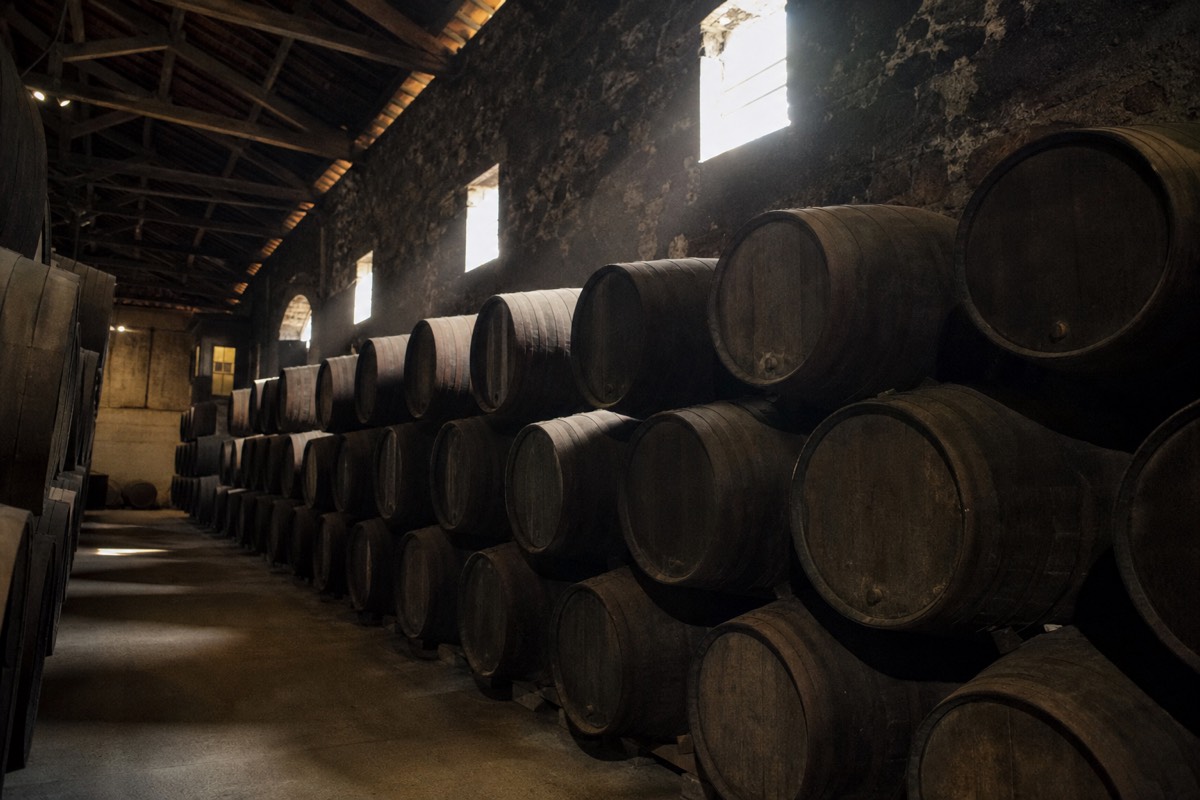
Two practical consequences follow, and both shape how you should taste. Higher alcohol carries aroma compounds into the air much faster, so a port glass throws a lot at your nose with very little encouragement from you. Residual sugar coats the tongue, which means glass four arrives at a duller palate than glass one. Cellar staff have known this for generations. It is why tasting pours are small, why water sits on the counter, and why nobody blinks when a glass goes back half full.
None of this makes port difficult. It makes it slower. Treat the flight as a sequence you work through deliberately rather than a set of drinks, and the wine gives up its detail readily.
| At the glass | Table wine | Port | What it changes for you |
|---|---|---|---|
| Alcohol | Roughly 12 to 14 percent | Roughly 19 to 22 percent | Smaller sips, more water, slower pace |
| Sweetness | Usually fermented dry | Natural sugar left behind by fortification | Your palate tires faster across a flight |
| Pour size | A full tasting measure | A fraction of one | Seven glasses is less liquid than it looks |
| Aroma delivery | Needs a firm swirl | Volatile, arrives fast | Swirl gently, smell from above the rim first |
| Serving temperature | Whites cold, reds cool | White and tawny chilled, ruby and vintage cool | A warm glass reads as alcohol burn |
| Sediment | Rare in young wine | Normal in vintage port | Vintage is decanted before it reaches you |
What Are the Three Steps, and What Is Each One For?
Look, smell, taste, in that order, every time. Looking tells you age and style before anyone says a word. Smelling delivers most of what you will later call flavor. Tasting confirms both and adds the parts the nose cannot report: sweetness, weight, texture, and how long the wine stays with you after you swallow.
This is the standard methodology used in tasting rooms everywhere, and it is standard because each step gathers something the next one cannot. Skipping straight to the sip throws away two thirds of the available information.
Start with the look. Tilt the glass about forty-five degrees over something white, a napkin or the paper the flight is sitting on, and look at the wine where it thins out toward the rim. That thin edge is where age shows first. Then swirl, but gently. A hard swirl on a 20 percent wine sends a wave of spirit straight up your nose and numbs it for the next thirty seconds. A small, low rotation is plenty.
Smell in two passes. Hold the glass a few centimeters below your nose and take a short sniff of what is rising off the surface, then bring it closer and take a second, slower one. The first pass catches the bright, volatile notes. The second reaches the heavier, sweeter material underneath. Finally, taste: take a small sip, let it move across the whole tongue instead of straight down the middle, and pay attention to what happens after you swallow. That trailing part is the finish, and it is where good port separates itself from ordinary port more clearly than anywhere else.
| Step | What you actually do | What it tells you |
|---|---|---|
| Look | Tilt over a white surface, study the rim | Style, rough age, clarity, whether sediment is present |
| Swirl | One small, low rotation, no drama | Releases aroma without blasting your nose with spirit |
| Smell | Short sniff from below the rim, then a slower one closer in | Fruit character, barrel character, freshness against oxidation |
| Taste | Small sip, moved across the whole tongue | Sweetness, acidity, tannin, alcohol balance, texture |
| Finish | Wait and count after swallowing | Quality and concentration, the clearest single indicator |
What Should You See in the Glass?
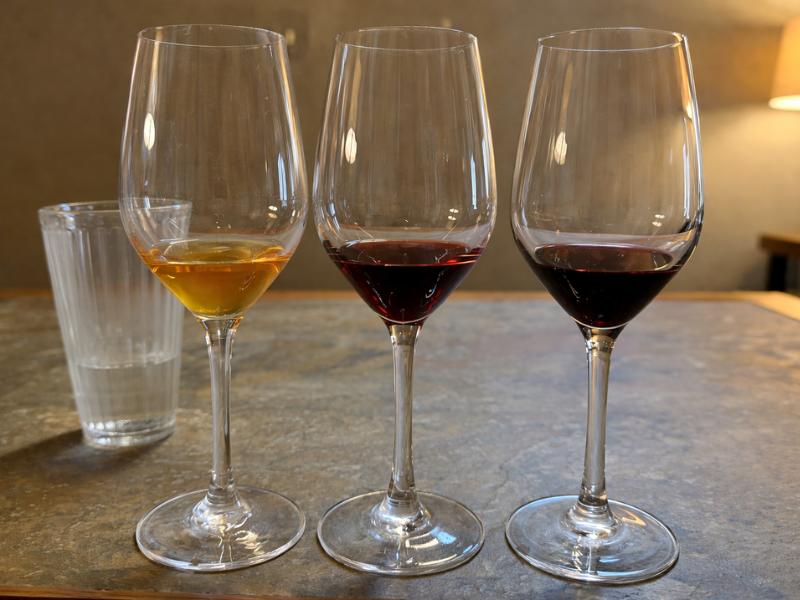
Color is the fastest read available. Ruby shows deep red to purple with a bright edge. Tawny slides toward amber and brick as barrel time accumulates, reaching an almost tea-like tone at the oldest end. White port runs pale straw to deep gold. Vintage is dense and opaque when young, and often carries sediment.
What you are really reading is exposure to air. Tawny gets its name and its color from years in wooden casks, where slow oxidation strips out purple pigment and replaces it with amber and brick tones. Ruby spends far less time in wood and keeps the color of the fruit it came from. The two sit at opposite ends of the same process, and once you have seen them side by side you will never confuse them again.
The rim is where the useful detail hides. A young ruby holds its color right out to the edge. An older tawny shows a wide, watery, almost greenish-amber band before the color fades out, which is why the tilt-and-look step matters more here than with most wines. Clarity is worth a glance too. A vintage port poured straight from an old bottle without decanting will look slightly cloudy at the bottom, and that sediment is a sign of age rather than a fault.
| Style | Core color | At the rim | What the look is telling you |
|---|---|---|---|
| Ruby | Deep red to purple | Bright, color holds to the edge | Young, little time in wood, fruit still front and center |
| Tawny | Amber to brick, paler with age | Wide, watery, amber to greenish | Years in cask, oxidative aging, fruit giving way to nuts |
| White | Pale straw to deep gold | Clean and bright | Made from white grapes, gold deepens with barrel time |
| Vintage | Dense, near opaque when young | Purple-black, almost no fade | Single exceptional year, aged in bottle, expect sediment |
What Should You Smell, and What Are You Smelling For?
You are asking one question: does this smell fresh or does it smell cooked? Fresh red fruit means ruby. Dried fruit, nuts, caramel and orange peel mean the wine spent years in wood, so it is a tawny. Citrus, blossom and honey mean white port. That single fresh-against-cooked distinction sorts almost every glass.
Aroma vocabulary intimidates people more than it should. You do not need to produce twelve descriptors on demand. Guides are not grading you, and the useful judgment is coarse rather than fine: fresh fruit on one side, dried and baked and nutty on the other. Everything else is detail you can add later, once the big split is automatic.
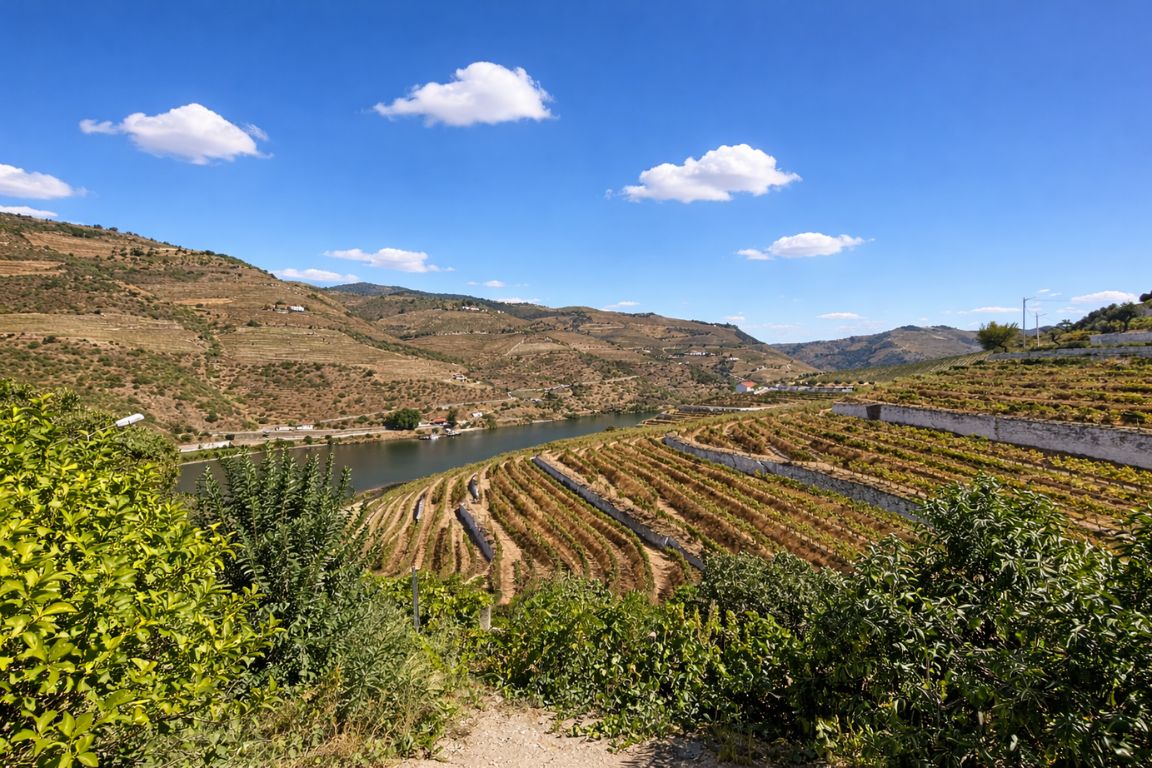
Ruby tends to be described in terms of cherry, blackberry, plum and sometimes a floral, violet-like lift. Tawny moves into walnut, almond, toffee, dried fig, caramel and candied orange peel, all of which come from those years in cask. White port sits somewhere else entirely, with citrus, orchard fruit, blossom and honey, and it is the style that surprises visitors most because it does not taste like their idea of port at all. Vintage, when you meet one, is the densest of the group: concentrated black fruit, spice, and an aroma that keeps developing in the glass over several minutes.
One practical habit is worth building. After you smell a glass, smell the back of your own hand for a second, then return to the glass. Resetting like that is a standard trick for beating nose fatigue, and by the fifth pour of a long flight it earns its place.
| Style | Commonly described as | Where it comes from | The giveaway |
|---|---|---|---|
| Ruby | Cherry, blackberry, plum, violet | Fruit, protected from air by short wood time | Smells like fresh fruit, not baked fruit |
| Tawny | Walnut, toffee, dried fig, candied orange | Years of slow oxidation in cask | Nutty, and the fruit reads dried rather than fresh |
| White | Citrus, orchard fruit, blossom, honey | White grapes, plus barrel time in the older versions | Nothing red about it, brighter and more floral |
| Vintage | Concentrated black fruit, spice, floral depth | A single strong harvest, then years sealed in bottle | Keeps changing in the glass while you sit there |
How Do You Taste It and Read the Finish?
Take a small sip and let it cover the whole tongue. Sweetness registers first, acidity next, then tannin and warmth from the alcohol. Swallow, then stay quiet and count. A wine whose flavor is gone in three seconds is a different animal from one still going at twenty, and length is the closest thing to an objective quality signal.
The order in which sensations arrive is consistent enough to use as a checklist. Sweetness hits early and hardest, which is exactly why a first sip of port can feel like a wall of sugar. Give it a moment. Acidity comes up underneath and cuts through, and in a well-made port that acidity is the reason the wine does not feel cloying by the third glass. Tannin shows up in the young reds as a light grip along the gums, and it fades as a wine ages.
Alcohol is the sensation people misread most often. In a balanced port the spirit should feel like warmth in the chest rather than heat in the mouth. When it burns on the tongue, the usual culprit is temperature, not the wine: a glass that has been cradled in a warm hand through ten minutes of conversation will taste noticeably hotter than the same wine poured cold. Set the glass down between sips.
Then there is the finish, which is where the tasting actually pays off. Swallow, put the glass down, say nothing, and count. Three or four seconds is a simple wine. Fifteen or twenty seconds of evolving flavor, especially in an aged tawny where the nuttiness keeps unfolding, tells you why one bottle costs several times another. Try it deliberately with the first and last glasses of a flight, back to back, and the difference stops being abstract.
| What you notice | What it usually signals | How to check |
|---|---|---|
| Sweetness dominates everything | A young style, or a sip taken too fast | Wait five seconds and look for acidity underneath |
| Sharp, refreshing lift | Acidity keeping the sugar in balance | Notice whether your mouth waters after swallowing |
| Grip along the gums | Tannin, so a younger red style | Compare directly against an aged tawny |
| Burning on the tongue | Usually the glass has warmed up | Set it down, taste again in two minutes |
| Flavor gone almost at once | A simple, everyday bottling | Count the seconds against the next glass |
| Flavor still changing after fifteen seconds | Concentration and age | Ask your guide what went into the blend |
How Do You Get the Most From a Side-by-Side Flight?
Comparison is the whole point of a flight. One glass in isolation tells you whether you like it. Two glasses next to each other tell you what makes them different, which is the thing you actually came to learn. Keep every glass in front of you, go back to earlier ones, and treat the board as a single exercise rather than a queue.
Most guided tastings in Gaia pour in a deliberate order, usually running from the lightest and driest toward the sweetest and oldest, because a heavy aged tawny early on flattens everything that follows it. If you get a choice, follow the same logic. If the order is set, go along with it and use your right to revisit: nothing stops you returning to glass two after glass five, and the contrast is far sharper on the second visit than it was the first time.
The single most useful comparison on any board is a young ruby against an aged tawny. Same region, same grapes, same fortification, and yet the color, the aroma family and the finish diverge completely. Everything you need to understand about barrel aging is in that pair. If white port is on the board too, taste it first and then come back to it at the end, when your palate has a frame of reference.
Take one line of notes per glass. Not a paragraph, a line: color, one aroma word, sweet or dry, and how long the finish ran. Seven glasses blur into one memory by dinnertime otherwise, and the notes matter more than they seem when you are standing in the shop afterward deciding what to carry home.
| Position in the flight | Typical style | Why it sits there | What to compare it against |
|---|---|---|---|
| Opening glass | White port, often chilled | Lightest and least sweet, so it does not flatten the rest | Revisit it at the end for the contrast |
| Second | Young ruby | Fresh fruit, moderate weight, easy entry point | The tawny that comes later |
| Middle | Mid-aged tawny | The pivot glass where wood starts overtaking fruit | The ruby you had two glasses ago |
| Later | Older tawny, ten years and up | Nuts, caramel and a long finish need an alert palate | The mid-aged tawny, for the effect of extra years |
| Final glass | Vintage or a premium reserve | The most concentrated wine, so it goes last | Everything before it |
How Do You Pace Seven Tastings Without Wrecking Your Palate?
Seven pours is the house standard on Porto cellar tours, and one walking tour we track pours nine across port and Douro wines in three hours. Eat beforehand, drink water between glasses, use the pour bucket without embarrassment, and accept that the last two glasses only work if you protected your palate through the first five.
Look at the real numbers on the tours running in Gaia right now and a pattern jumps out. Seven tastings appears again and again: on a three-hour classic lodges tour, on a three-hour Gaia cellars tour, and on two-hour tours visiting three cellars with a group capped at twelve people. A separate walking tour goes further and pours nine, mixing port with unfortified Douro wines across three hours. That is a serious volume of high-alcohol wine for someone tasting port for the first time.
The physical arithmetic is straightforward. Port sits at roughly 19 to 22 percent alcohol, which is about half again as strong as most table wine. Pours are deliberately small to compensate, but seven of them inside two hours is still seven. Nobody is going to comment if you leave wine in a glass, and every tasting room keeps a bucket on the counter precisely so that visitors and professionals alike can pour away what they do not need.
Three habits protect the experience. Eat something with substance before you arrive, because tasting on an empty stomach is the mistake that ruins more first tours than any other. Drink water between glasses rather than at the end, since it clears sugar off the tongue as well as slowing you down. And treat the last two glasses as the ones that matter, because on most flights they are the oldest and most expensive wines on the board.
| Tour | Tastings | Length | Rating | Pace |
|---|---|---|---|---|
| Porto Port Wine Tour: 3 Cellars, 7 Tastings, Small Group Max 12 | 7 | 2 hours | 4.9 | Brisk, three houses in two hours |
| Porto's Top Port Wine Tour: 3 Historic Cellars, 7 Tastings, Limited to 12 | 7 | 2 hours | 4.9 | Brisk, capped group |
| Classic Port Wine Lodges Tour with 7 Generous Tastings | 7 | 3 hours | 4.9 | Steadier, more time per glass |
| Port Wine Cellars of Gaia Tour with 7 Tastings | 7 | 3 hours | 4.9 | Steadier, English guided |
| Best Porto Wine Walking Tour, 9 Tastings of Port and Douro Wines | 9 | 3 hours | 4.7 | The largest pour count we track |
What Should You Ask Your Guide?
Ask about process, not opinions. How long was this in wood, what size vessel, is it a blend of years or one harvest, where in the Douro did the fruit grow. Guides in Gaia answer those questions daily and answer them well, and each one hands you a fact you can taste in the glass in front of you.
The difference between a pleasant tour and a genuinely useful one usually comes down to whether anyone in the group asks anything. Guides working the Gaia lodges tend to know their houses in real depth, and a specific question unlocks material that the standard script leaves out. Vague questions get vague answers, so go specific.
These are the ones that consistently pay off:
- How long was this in wood, and in what size vessel? Smaller casks mean more contact between wine and wood, which is the mechanism behind the color and the nuttiness you are looking at.
- Is this a blend of several years or a single harvest? The answer explains why one glass tastes consistent year after year while another is a snapshot of one particular season.
- Where in the Douro did the fruit come from? The valley has distinct sub-regions with different altitude and heat, and guides will happily tell you which quintas feed the blend.
- How do you decide when a tawny is ready? This gets you into the actual craft of blending and topping up casks, which is the most interesting part of the job.
- What does the IVDP seal on the bottle mean? It is the certification from the Instituto dos Vinhos do Douro e do Porto, the regulator for genuine port, and knowing what it guarantees is useful when you are choosing bottles later.
- Which of these do you drink at home? The one opinion question worth asking. The honest answer is almost never the most expensive glass on the board.
That last technical one is worth chasing a little further while you are standing there. The IVDP, formally the Instituto dos Vinhos do Douro e do Porto, is the body that certifies genuine port, and its seal on a bottle confirms the wine came from the demarcated region and met the rules for the style printed on the label. Ask a guide to show you one on a bottle in the shop. The whole regulatory apparatus becomes a lot less abstract once you have seen the strip of paper it comes down to.
What Do First-Timers Get Wrong?
Four errors account for most disappointing tastings: arriving hungry, swirling too hard, drinking every glass to the bottom, and rushing the finish. All four are easy to avoid, and fixing them costs nothing. A tasting flight is a slow exercise in comparison, and it collapses the moment you treat it as a round of drinks.
Arriving on an empty stomach is the big one. Sugar and 20 percent alcohol on nothing at all hits fast, and the glasses that matter most tend to be poured at the end, when you are least equipped to appreciate them. A proper meal beforehand is not overcautious, it is the reason you will remember glass seven.
The rest are small technical habits. A violent swirl is a wine-bar reflex that does port no favors, since the spirit rises immediately and dulls your nose. Draining every glass turns a tasting into a session, and the pour bucket exists for exactly this reason. Rushing past the finish throws away the single most informative moment of each wine, and it takes four seconds of silence to get it back.
One more, less obvious. People decide in advance that they do not like sweet wine and then taste defensively, which is a shame, because a well-made aged tawny reads far less sugary than most expect and white port surprises almost everyone. Suspend the verdict until the flight is done. Then decide, out loud, and tell your guide which one won.
The complete lineup of wine tours is worth checking before you commit.