Sandeman Port Lodge Guide: What to Expect on a Tour
The caped silhouette on the Gaia waterfront is one of the most recognised trademarks in wine. Behind it sits a house founded in 1790 by a Scottish family that ended up defining how Port looked to the rest of the world.
Booking Choice: The verified multi-cellar walks do not guarantee Sandeman admission. If you want several producers instead of Sandeman specifically, compare the guided walk below; Taylor’s is a different single-house visit. Explore Three Cellars, Seven Ports
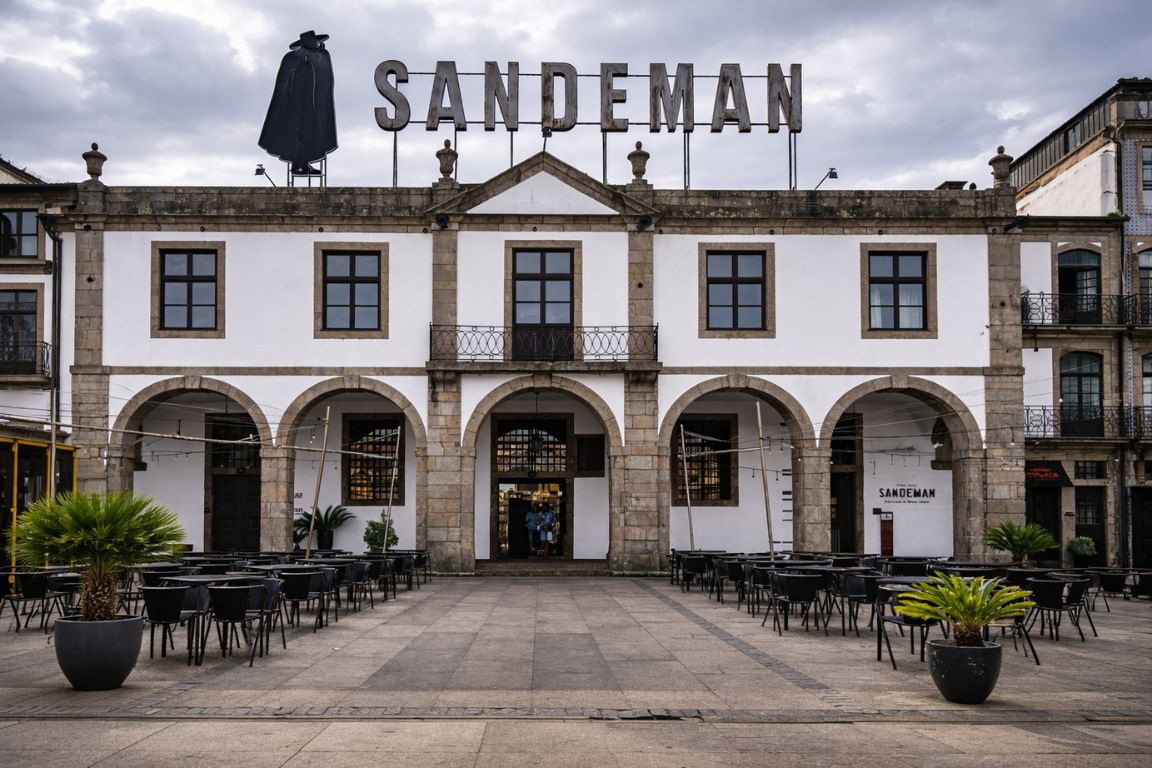
Walk the Gaia quay and you will see the Don before you see the building. A black silhouette in a wide-brimmed hat and a long cape, no face, no explanation, repeated on signage along the waterfront. It is one of the most recognised trademarks in the wine business and it has been doing that job for the better part of a century.
At A Glance: Sandeman is a specific Gaia house, not a guaranteed stop on every cellar walk. The verified tickets here are clearly labelled alternatives, not Sandeman admission. Explore Three Cellars, Seven Ports
The house behind it goes back further. Sandeman was founded in 1790 by a Scottish family, and it grew into one of the internationally best-known names in both Port and Sherry, an unusual double that almost no other producer manages. This guide covers what a visit to the Gaia lodge generally involves, where the Don came from, what to expect in the tasting, and how to slot the cellars into a day in Porto without wasting an hour on the wrong bridge deck.
Why Port tastes stronger than it looks
Fortification during fermentation stops the yeast early, leaving natural sweetness and lifting the finished wine well above table-wine strength.
Who founded Sandeman, and why does 1790 matter?
Sandeman was founded in 1790 by a Scottish family, at a point when British and Scottish merchants dominated the Port trade out of Porto. It became one of the best-known names internationally in both Port and Sherry, an unusual position, since almost every other house specialises in one fortified wine or the other.
Late eighteenth century Porto was a merchant town with a distinctly British accent. Northern European buyers wanted wine that survived the sea voyage, fortification solved that problem, and the families who set up shop along the Douro to organise the trade were disproportionately British and Scottish. The names on the Gaia lodges today are the surviving evidence of that arrangement.
Sandeman arrived in that world in 1790, which places it after the Douro's demarcation in 1756 and in the middle of the trade's expansion. It grew outward rather than staying local, which is the part that shaped its identity. Building a business in both Portuguese Port and Spanish Sherry meant thinking about export markets and recognition from early on.
That export orientation explains why the name turns up in places the more inward-looking houses never reached. For a lot of people worldwide, Sandeman is not one Port house among many, it is the mental image of Port itself. Whether that makes it the most interesting lodge visit in Gaia is a separate question, and the honest answer depends on what you want out of an afternoon.
| Aspect | Detail |
|---|---|
| Founded | 1790, by a Scottish family, during the British-dominated era of the Port trade |
| Categories | Both Port and Sherry, a rare combination for a single house |
| Trademark | The Don, a silhouetted figure in a wide-brimmed hat and cape |
| Lodge location | Vila Nova de Gaia, in the riverside cellar district facing Porto |
| Typical visit | Cellar walk with a guide, tasting flight, shop |
| Certification | Genuine Port from every house is certified by the IVDP |
What is the Don, and why is it all over Gaia?
The Don is Sandeman's trademark: a faceless silhouette in a wide-brimmed hat and a long cape, combining a Spanish caballero hat with a Portuguese student cape to represent the house's two fortified wines. It dates from the 1920s and remains one of the most recognised marks in wine, which is why it dominates the Gaia waterfront.
Wine branding in the 1920s was mostly ornate labels and dense text. A stark black silhouette with no face was a genuinely radical piece of design, and it worked because it survives reproduction at any size. Shrink it to a bottle neck or blow it up to the side of a building and it stays legible, which is precisely why it is still in service a century later.
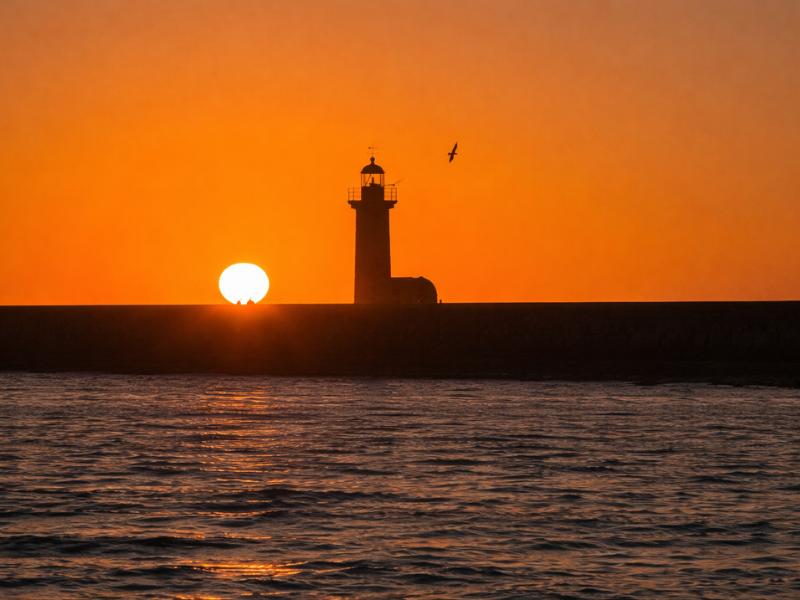
The two garments do real work. The wide-brimmed hat references the Spanish caballero and the Sherry side of the business. The long cape echoes the traditional Portuguese student cape worn in university cities, Porto and Coimbra included, and points to the Port side. One figure, two countries, two fortified wines, no words needed.
There is a reason the mark has never been heavily modernised. Trademarks that last a century usually manage it by staying still, and the Don has taken only light revision since it appeared. Walk the Gaia quay and you will find it working at several scales at once, tiny on a bottle in a shop window and enormous on signage above the waterfront, legible at both.
For a visitor, the Don functions as a piece of Porto's visual furniture, like the tiled facades or the rabelo boats moored below the quay. It shows up on the waterfront, in shop windows, on merchandise across the city. Recognising where it came from turns a logo you have half-seen your whole life into something with an actual story attached.
| Element | What it references |
|---|---|
| Wide-brimmed hat | The Spanish caballero, standing for the house's Sherry |
| Long dark cape | The traditional Portuguese student cape, standing for Port |
| Faceless silhouette | Reproduces cleanly at any size, from bottle neck to building |
| The glass in hand | Signals the product without any need for text |
| Introduced | The 1920s, early for this kind of minimal trademark design |
What happens inside the Sandeman cellars?
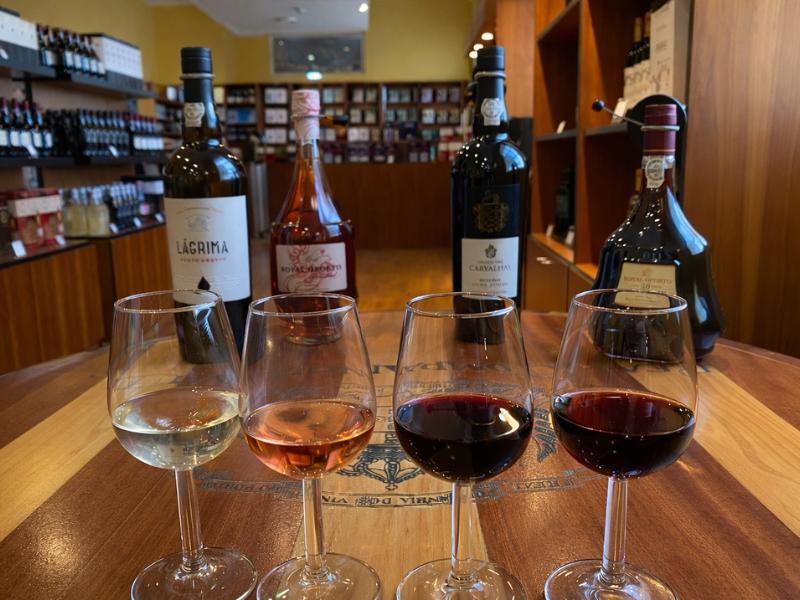
A Gaia lodge visit generally runs as a guided walk through the aging cellars with an explanation of how Port is made, followed by a tasting flight and time in the shop. Expect around an hour. Tiers, languages and departure times vary by season, so confirm the current schedule before you turn up.
The core of any lodge visit is the same everywhere in Gaia because the wine dictates it. You are shown where the wine lives, what it lives in, and why the vessel changes the outcome. Cool, dim halls, casks stacked in rows, chalk on the barrel heads, and a temperature drop of several degrees the moment you leave the street behind.
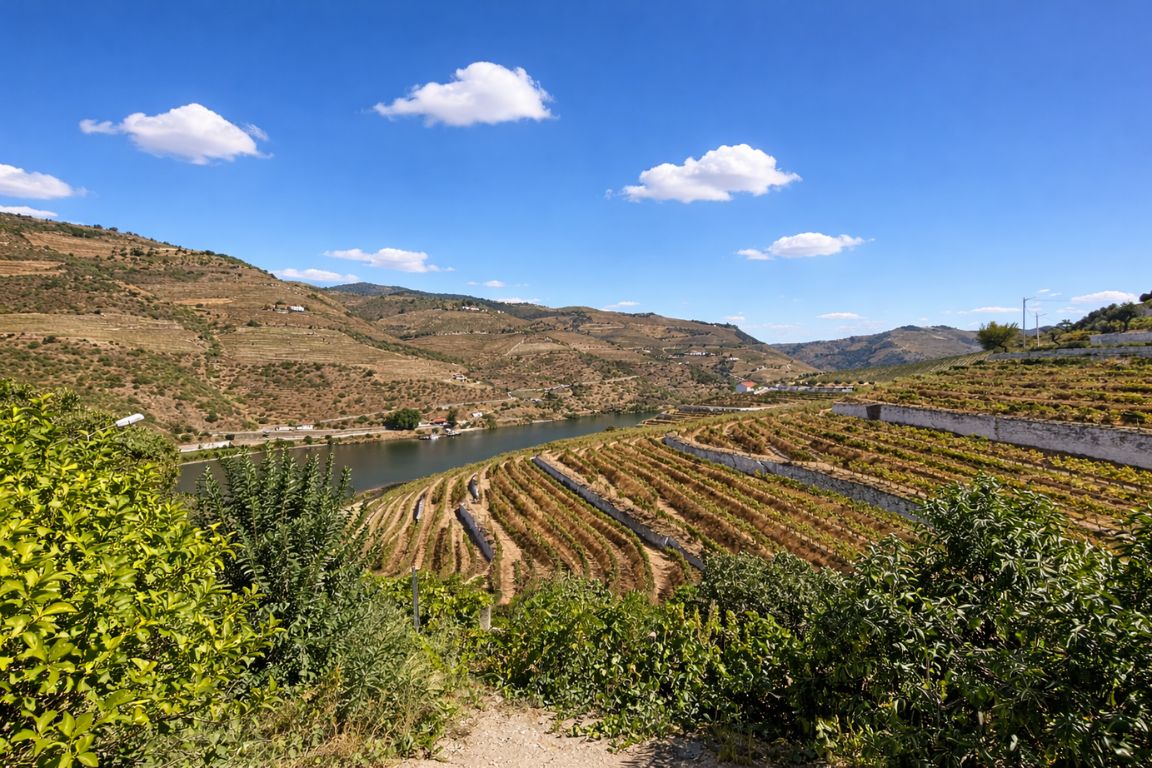
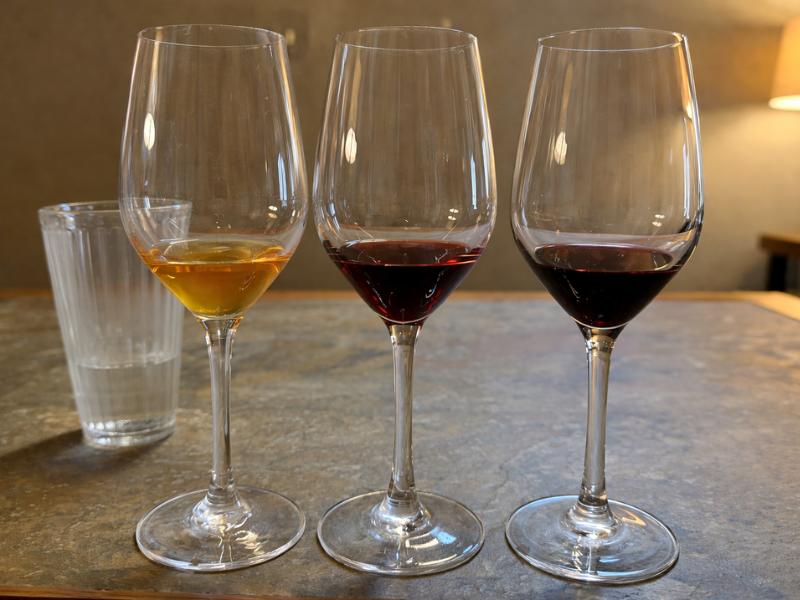
The explanation that matters most is fortification. Fermentation starts, the yeast begins converting grape sugar into alcohol, and partway through, grape spirit is added. The yeast stops. Unconverted sugar stays in the wine as natural sweetness, and the finished Port lands around 19 to 22 percent alcohol. Every style difference downstream is a question of what happens next.
What happens next is vessel and time. Big wooden vats limit oxygen contact and keep ruby styles purple and fruity. Smaller casks give more wood contact per litre, and over years the wine slowly oxidises toward tawny: amber colour, walnut, dried fruit, caramel. Vintage takes a third path, out of cask early and into bottle for decades of slow development.
| Stage | What is happening | Result in the glass |
|---|---|---|
| Harvest and crush | Douro grapes picked and pressed, fermentation begins | Raw material for every style |
| Fortification | Grape spirit added mid-fermentation, yeast stopped | Natural sweetness retained, 19 to 22 percent alcohol |
| Large vat aging | Minimal oxygen contact, short duration | Ruby styles, bright berry fruit, deep colour |
| Small cask aging | High wood contact, slow oxidation over years | Tawny styles, amber, nutty, caramelised |
| Bottle aging | Vintage bottled young, then decades in glass | Dense and structured, throws sediment, decant |
Look up while you are in the halls. Roof structures in the older Gaia lodges are timber, blackened by decades of still air, and the walls are thick enough to hold the interior steady through an Atlantic winter and a 35 degree August alike. Almost nothing about these buildings is decorative. Every feature is there because the wine needed it, and that is a large part of why they are such pleasant places to stand.
The tasting sits at the end for good reason. By that point you know why one glass is purple and another is amber, and the flight stops being a row of drinks and becomes a demonstration. Our team's suggestion is to ask the guide which wine in front of you they would take home. The answer is almost never the most expensive one.
Port and Sherry under one name: what does that mean for a taster?
Both are fortified wines, but the timing of the fortification differs and so does the result. Port is fortified during fermentation, which leaves natural sweetness. Most Sherry is fortified after fermentation finishes, which leaves it dry at the base. Same technique, opposite intentions, two different countries and regions.
This is the single most useful thing the Sandeman story teaches a visitor, and it takes about a minute to grasp. Fortification is not one process with one outcome. It is a lever, and where you pull it determines everything about the wine that comes out the other end.
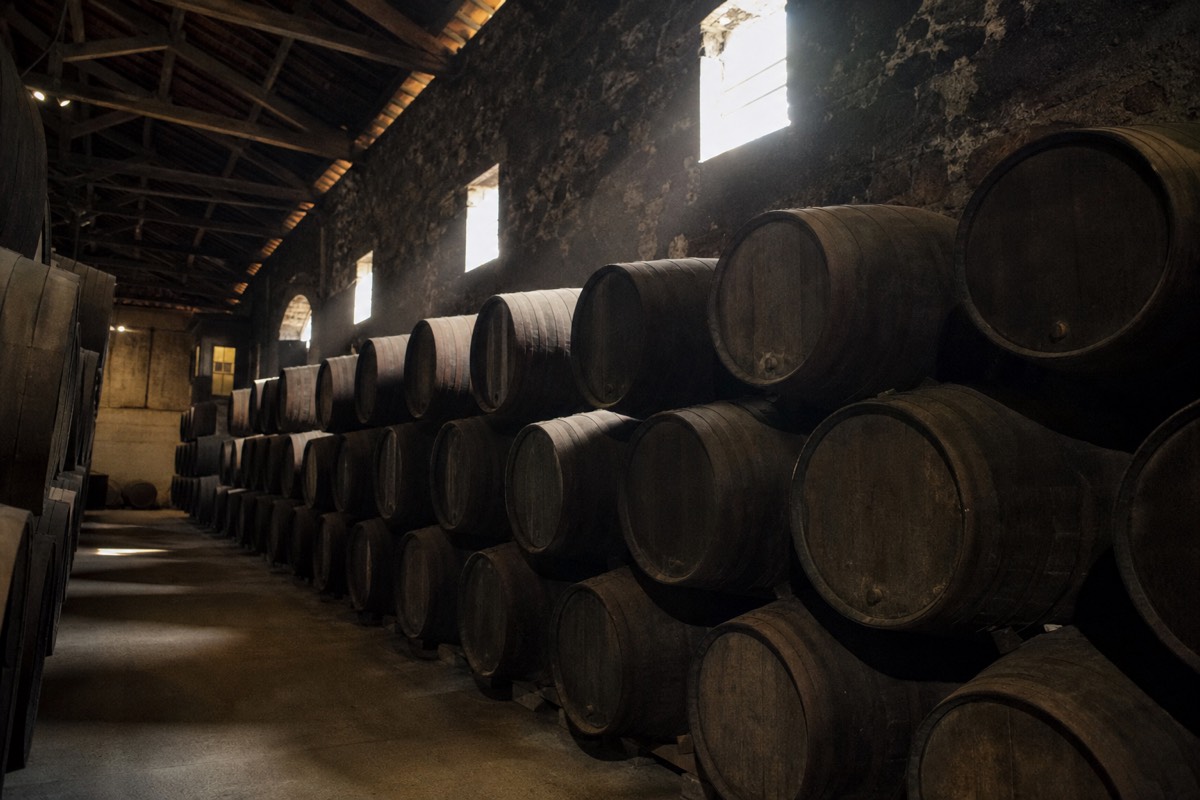
Pull it early, partway through fermentation, and the yeast dies with sugar still in the tank. You get sweetness, and you get it naturally rather than by adding anything back. That is Port, and it is why the category runs from off-dry white styles through to intensely sweet aged tawnies without anyone sweetening anything.
Pull it at the end, after the yeast has finished, and there is no sugar left to preserve. The wine is dry, and the interesting work happens afterwards in the aging: under a film of yeast for the palest styles, or in contact with air for the darker, nuttier ones. That is Sherry, a Spanish wine from the Jerez region rather than anything Portuguese.
| Port | Sherry | |
|---|---|---|
| Region | Douro Valley, northern Portugal | Jerez, southern Spain |
| When fortified | During fermentation | After fermentation, in most styles |
| Base character | Naturally sweet, sugar retained | Dry at the base |
| Typical strength | Roughly 19 to 22 percent | Around 15 percent upward by style |
| Regulator | The IVDP certifies genuine Port | Its own Spanish appellation authority |
You are in Porto, so Port is the point, and our separate guide to the Port styles covers the ruby, tawny, white and Vintage categories in more depth than a cellar tasting has time for. The Sherry connection is context rather than the main event, but it explains the hat on the Don and it makes the tasting conversation more interesting.
Where does the lodge sit, and how do you reach it?
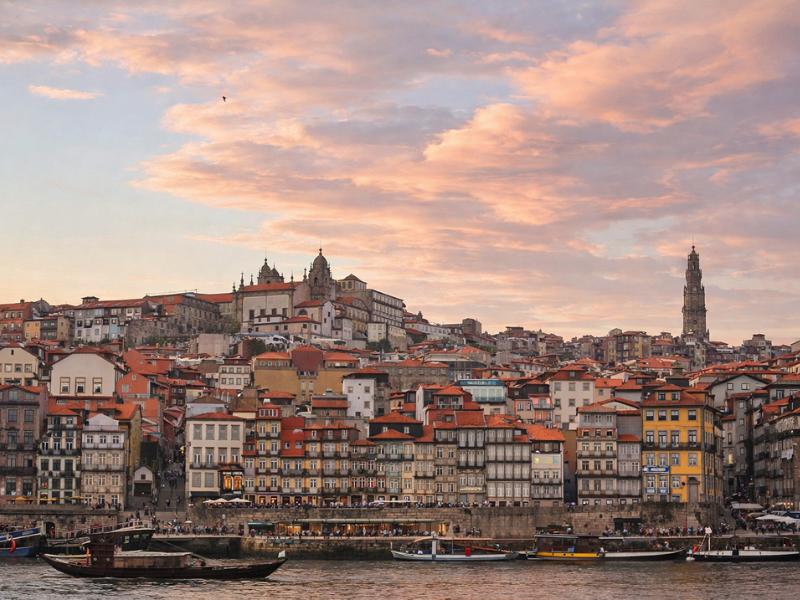
Sandeman sits in the Gaia riverside cellar district, the strip of lodges along Avenida de Diogo Leite directly opposite Porto's Ribeira. From central Porto it is a flat walk across the lower deck of the Dom Luis I Bridge, roughly ten to fifteen minutes from the Ribeira quay, with no climbing involved.
This is the easy one. Unlike the hillside lodges further up, the riverside cluster is all at water level, which means you can move between several famous houses in a few minutes each. Take the lower deck of the bridge from the Ribeira, turn along the waterfront, and the lodges are lined up in front of you with the rabelo boats moored alongside.
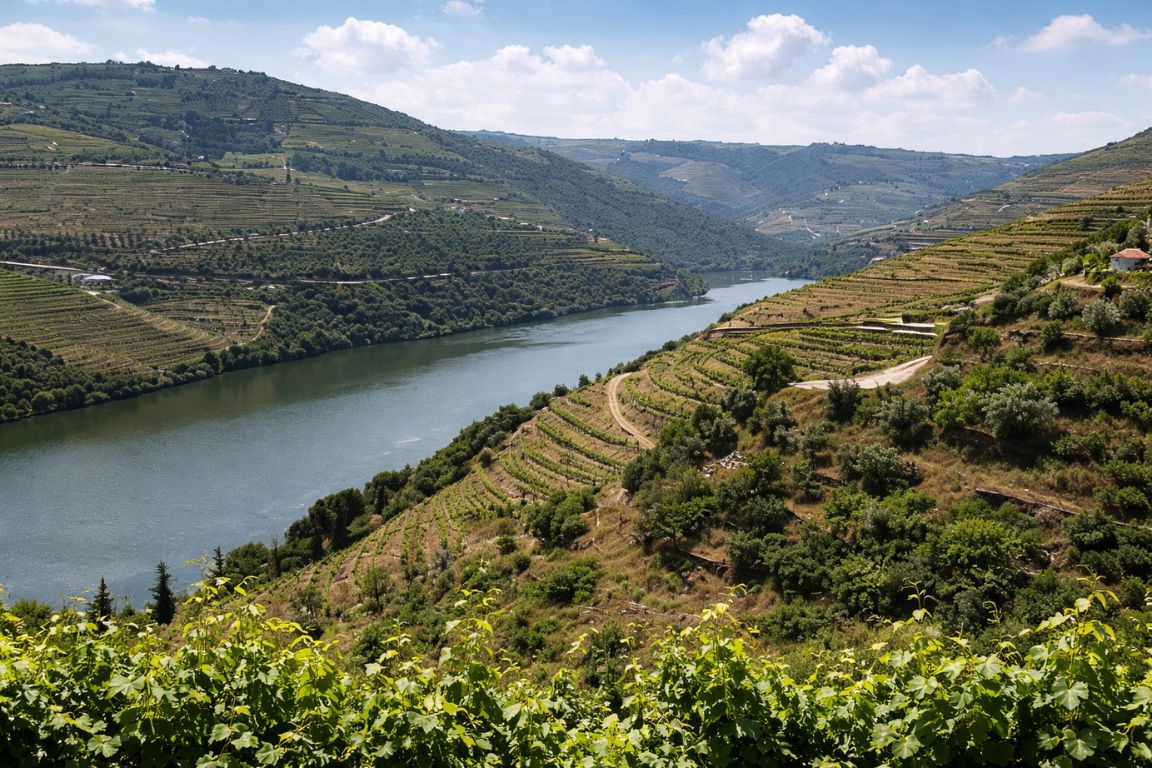
The mistake to avoid is the upper deck. It carries pedestrians and the metro across at hilltop height, which is right for the upper Gaia lodges and wrong here, because it leaves you above the waterfront with a descent to make. If the riverside strip is your destination, stay low and cross at river level.
| From | Route | Rough walking time |
|---|---|---|
| Ribeira quay | Lower deck of the Dom Luis I Bridge, then along the waterfront | 10 to 15 minutes, flat |
| Sao Bento station | Downhill through the old town to the Ribeira, then the lower deck | 20 to 25 minutes |
| Clerigos and the centre | Downhill to the river, then across at river level | 25 to 30 minutes |
| Jardim do Morro metro | Descend the Gaia hillside on foot or by cable car | 10 minutes plus the descent |
| Upper Gaia lodges | Walk down the hill or take the cable car to the quay | 10 to 20 minutes downhill |
Because it is so central, this stretch of waterfront is also the busiest part of Gaia. The quay fills with foot traffic through the middle of the day, particularly when cruise passengers are in town, and the tables along the water are at a premium by lunchtime. Early morning and the last hour before sunset are noticeably calmer.
When should you turn up, and how busy does it get?
The riverside cellar district is at its quietest in the first hour after opening and in the evening. Late morning through mid-afternoon is peak, especially in summer and on cruise days. Book ahead from June through September, and check current departure times, since guided slots and languages vary by season.
Being the most recognisable name on the waterfront has a downside. Sandeman is often the first lodge people can name before they arrive, which concentrates walk-in demand at exactly the hours when the quay is fullest. Arriving at ten in the morning instead of one in the afternoon changes the entire feel of the visit.
Cruise traffic is the variable most travellers never think to check. When ships are in, the Ribeira and the Gaia quay both absorb a large number of people in a short window, generally through the middle of the day. If your dates are flexible within a week, a quick look at the port schedule is a small effort that pays off.
| Window | What to expect | Verdict |
|---|---|---|
| Opening to late morning | Quiet cellars, easy tables on the quay after | The best slot of the day |
| Late morning to mid afternoon | Peak foot traffic, cruise arrivals, fullest tastings | Book ahead or avoid |
| Mid to late afternoon | Easing off, warm light on the Ribeira opposite | Good, pairs well with an evening on the quay |
| Last admission | Falls well before stated closing time | Check before making the trip |
| Winter months | Genuinely quiet, reduced hours at many lodges | Best for an unhurried visit |
What is actually worth buying in the lodge shop?
Lodge shops carry bottlings that rarely reach export markets, and the staff can tell you which ones survive a suitcase. Aged Tawny is the safest buy: no decanting, no sediment, and it keeps for weeks once opened. Check that anything you buy carries IVDP certification, which is what makes the category on the label mean something.
Treat the shop at the end of a cellar visit as part of the visit rather than a gift counter bolted on. This is where the house range is complete, including single-harvest colheitas, older tawny indications and bottlings that never make it onto a supermarket shelf outside Portugal. Prices are not automatically cheaper than in town, but the selection is not comparable.
The real question is not what tastes best in the room. It is what will still be good when you open it at home, possibly months later, after a flight and a suitcase. Aged Tawny handles that journey better than anything else in the category, because it has already spent years in contact with oxygen and has nothing left to be shocked by. It also does not need a decanter, which matters if your idea of a Tuesday evening does not involve one.
Vintage Port is the opposite proposition. It throws sediment, so it wants standing upright and resting for a while after travel before you open it, and it genuinely needs decanting off that sediment. Once open it goes downhill within a couple of days. None of that is a reason to avoid it. It is a reason to buy it for an occasion you have already got in mind rather than on impulse at the end of a tasting.
| What you might buy | Travels well? | What to know |
|---|---|---|
| 10 or 20 Year Tawny | Very well | No decanting, keeps weeks open, the reliable choice |
| Colheita, single harvest | Very well | Dated label, tawny character, rarely seen outside Portugal |
| 30 or 40 Year Tawny | Very well | Expensive, intense, a small pour goes a long way |
| Late Bottled Vintage | Well | Ready to drink, most bottlings need no decanting |
| Vintage | With care | Rest it upright after travel, decant, drink within days |
| White Port | Well | Serve cold, often mixed with tonic, an easy summer buy |
Two last practicalities. Bottles need to go in checked luggage, and glass in a suitcase wants clothes packed around it or a purpose-made sleeve, which most lodge shops sell. Customs allowances for alcohol vary by destination and change from time to time, so check your own country's current limit before you buy a case rather than a bottle. And whatever you pick, look for the IVDP certification on the bottle. The Instituto dos Vinhos do Douro e do Porto is the body that regulates the region, and its seal is the reason a 20 Year Tawny from one house means roughly the same thing as a 20 Year Tawny from another.
Is Sandeman better on its own or as part of a cellar walk?
On its own you get one house at your own pace, which suits anyone with an attachment to the name. On a guided walk you get around three historic cellars, seven or more tastings, and direct comparison between house styles. For a first visit to Porto, the multi-cellar route teaches far more per hour.
The riverside position makes Sandeman an obvious anchor for a self-directed afternoon, because the neighbouring lodges are minutes away on flat ground. Plenty of visitors buy a ticket at one house, walk two hundred metres, and buy another. That works, though it costs more than it looks like it will and there is no one to explain how the two houses differ.
Guided walks solve that. They move through several historic cellars on one ticket, pour seven or more tastings across the route, and the guide does the connective work that turns separate visits into an actual education. Standard walks run around 60 to 65 dollars for two to three hours, and small-group versions cap the party near a dozen.
There is a third option that suits some travellers better than either. Food and wine walking routes pair the cellars with Porto's eating culture, running longer, four hours or so, and landing higher, roughly 87 to 114 dollars depending on how much food is built in. If you are the kind of traveller who would rather taste less and eat more, that is the version to look at.
| Independent | Guided cellar walk | Food and wine walk | |
|---|---|---|---|
| Houses covered | One per ticket | Around three historic cellars | Cellars plus food stops |
| Tastings | By ticket tier | Seven or more | Port and Douro wines with bites |
| Duration | About an hour | Two to three hours | Around four hours |
| Typical cost | Per-house entry | Roughly 60 to 65 dollars | Roughly 87 to 114 dollars |
| Best for | One house, your own pace | Understanding Port fast | Combining wine with the food scene |
Whatever you choose, pace it. Seven tastings of a wine at 19 to 22 percent is not the same afternoon as seven glasses of vinho verde, and the Gaia quay in the sun is not a forgiving place to discover that. Eat first, drink water between houses, and give yourself the evening on the waterfront afterwards rather than another cellar.
The rest of the available Porto wine tours are worth a glance too.