Solo Wine Travel in Porto: A Practical Guide
Porto is one of the easier European cities to drink wine in alone. The tour format matters more than the destination, and the cost maths is not what most solo travellers expect.
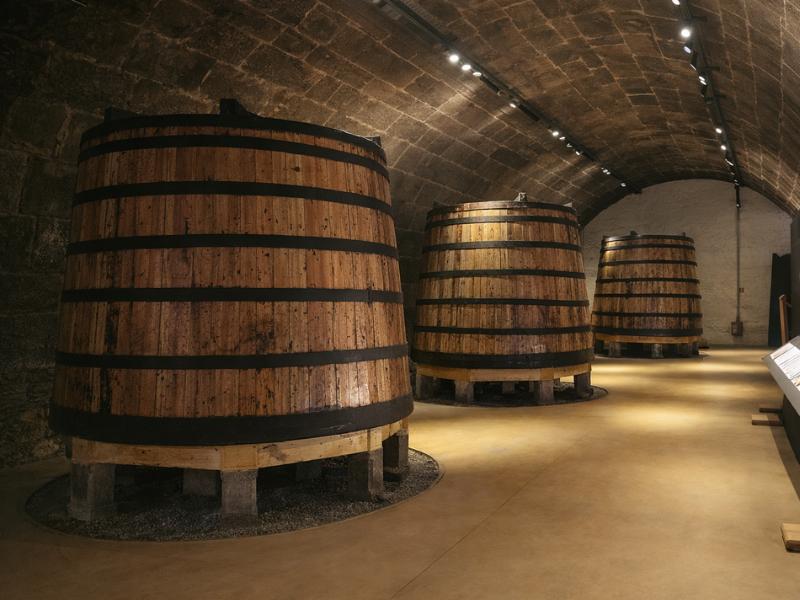
Booking Choice: Poças accepts a one-person booking for its guided cellar visit. The three-cellar walk is another solo-bookable option; the nine-tasting walk elsewhere on this page requires two people per booking. Explore Poças Cellar And Three Ports
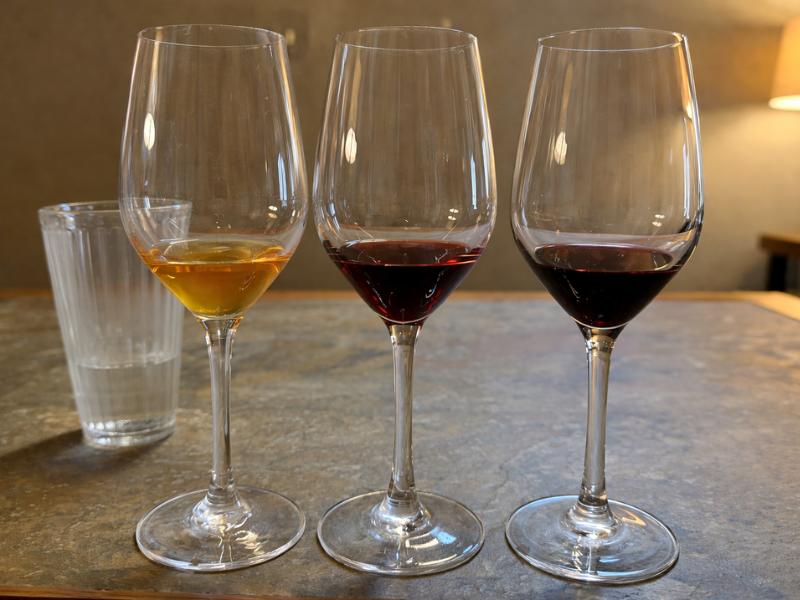
A small-group Port cellar tour here caps at twelve people. You book one of those twelve seats, pay $60, and for the next two hours you are simply part of the group, walking through three lodges and working through seven tastings while a guide runs the conversation. Nobody is counting couples. That structural detail is most of the case for solo wine travel in Porto.
At A Glance: A shared cellar visit can be booked alone, but some tours have a minimum party size. Plan the return journey and taste selectively. Explore Poças Cellar And Three Ports
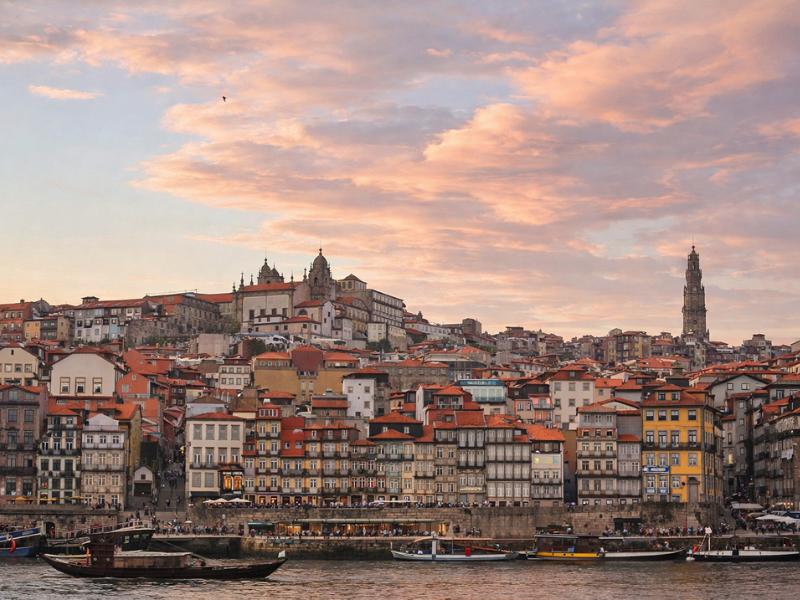
The rest of the case is geography. The Port lodges sit clustered in Vila Nova de Gaia on one slope above the river, a short walk across a single bridge from Porto's old town. You can taste all day without a car, a driver, a reservation strategy or a companion to coordinate with. Our team looked at every featured tour on this site through a solo lens: what one person actually pays, which formats supply company and which leave you paying for empty seats.
| Quick summary | Detail |
|---|---|
| Solo penalty on shared tours | None. Per-person pricing means you pay exactly what each half of a couple pays |
| Solo penalty on private tours | Total. A $337 charter costs $337 whether one person books it or six |
| Best format for solo travellers | Capped small-group cellar tours, $59 to $63, rated 4.7 to 4.9 |
| Most tastings per dollar | 9 tastings for $59 on the three-hour walking tour, about $6.56 a pour |
| Getting around | Porto and Gaia are compact and joined on foot by both decks of the Dom Luís I Bridge |
| General reputation | Portugal is widely regarded in travel media as one of Europe's safer, more solo-friendly destinations |
| The real risk to manage | Fortified wine at roughly 20 percent alcohol, seven to nine pours, and nobody pacing you |
| Ideal trip length | Three nights: one cellar day, one valley day, one river day |
Cost per tasting pour on Porto's shared cellar tours
Listed price divided by the number of tastings each tour advertises. All three are shared per-person tours, so a solo traveller pays exactly these figures with no single supplement. The nine-tasting walking tour offers the most breadth per dollar; the lodges tour pours more generously in each glass.
Is Porto a good city for solo wine travel?
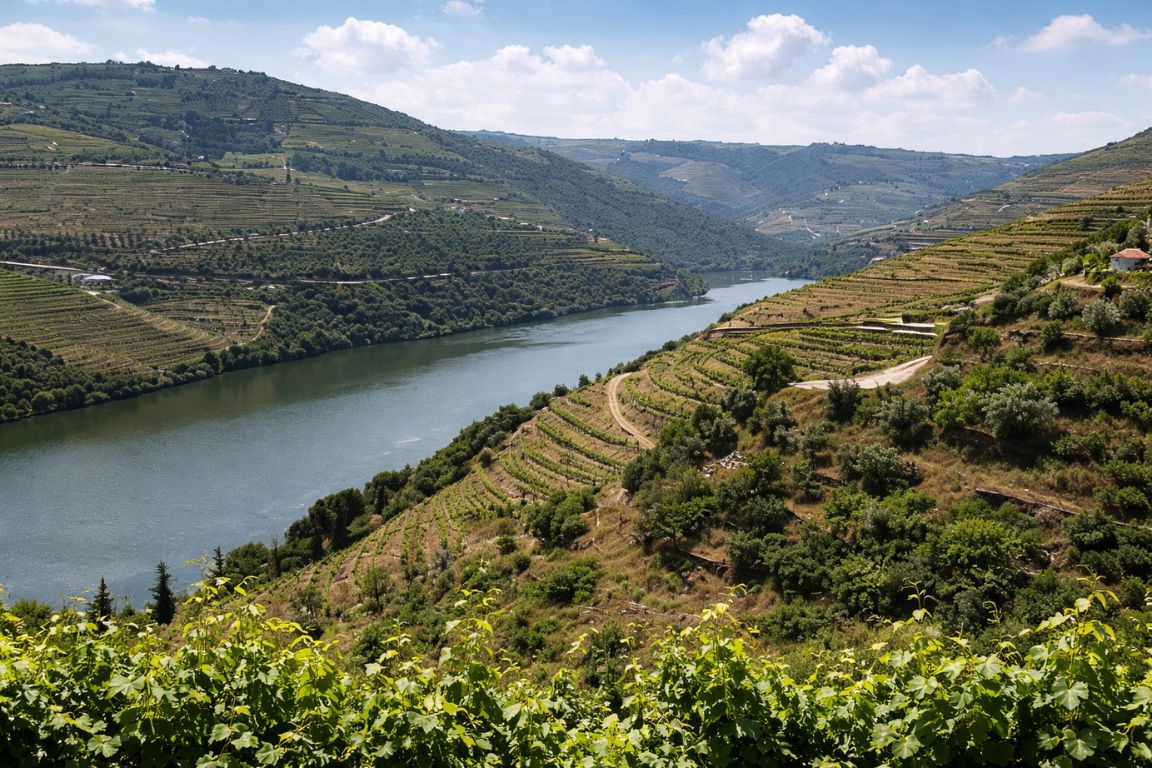
Yes, and the layout is most of the reason. Porto's Port lodges sit together in Vila Nova de Gaia, a short walk across one bridge from the old town. You can taste all day on foot without a car or a driver, and Portugal has a long-standing reputation as one of Europe's easier destinations to travel alone.
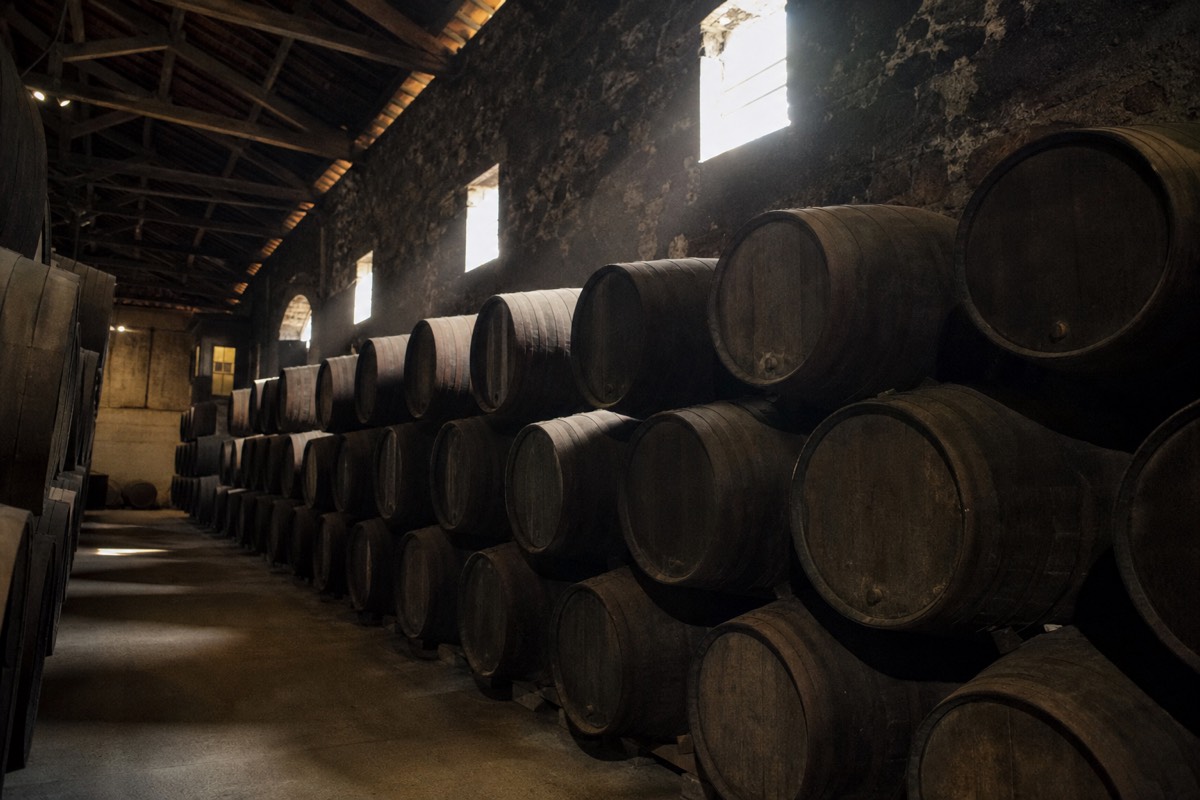
Compare that with almost any other major wine region. In Bordeaux, Napa or the Barossa, a solo taster faces a car problem immediately: the estates are spread across a landscape and you cannot drive between them after tasting. Porto solved that problem in the eighteenth century for entirely commercial reasons. The barrels came downriver to the mouth of the Douro to age, so the lodges were built where the boats stopped, side by side on the Gaia bank.
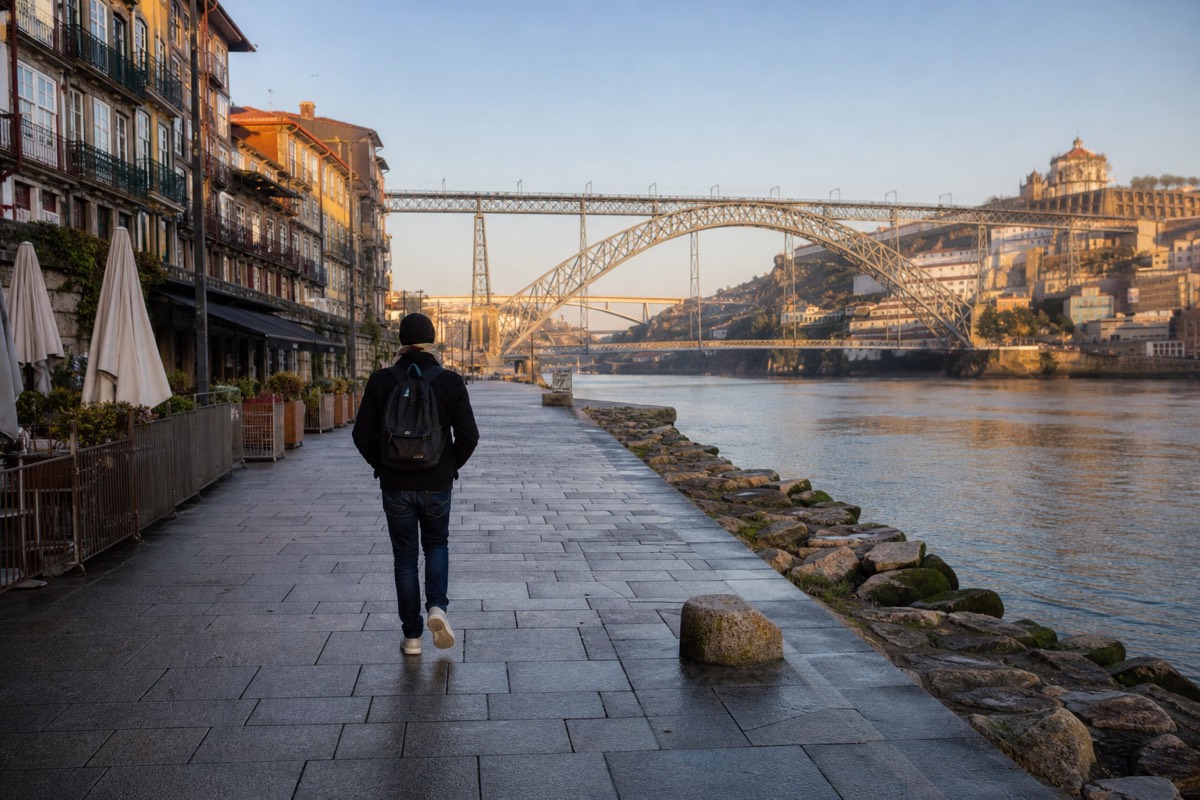
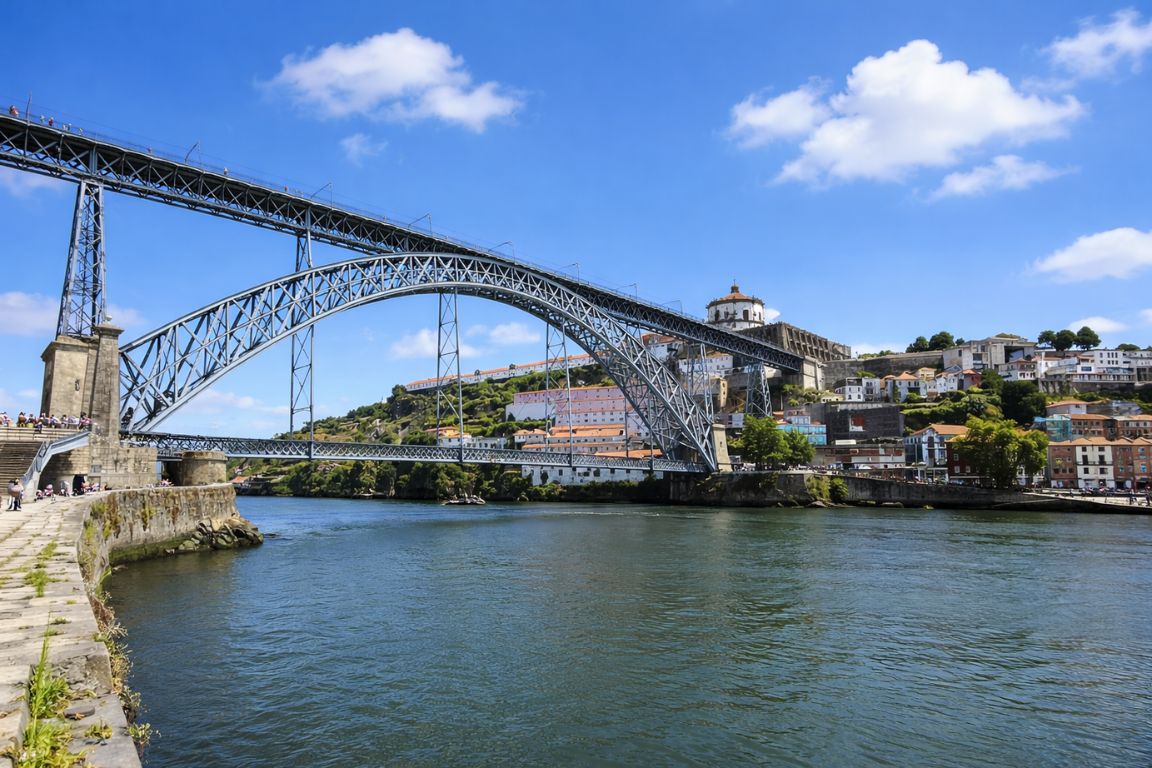
The practical result is that a solo traveller's wine day here needs no logistics at all. You walk down through Ribeira, cross the bridge, and the lodge district is right there. Both decks of the Dom Luís I are open to pedestrians, the metro runs across the upper deck, a cable car drops from Jardim do Morro to the Gaia quay, and a funicular climbs the Porto side. Everything is walkable, and the parts that are too steep have machinery.
The other half of it is atmosphere. Porto is heavily touristed, which sounds like a criticism but is genuinely useful when you are alone: guides speak English, tours run frequently, restaurants are used to single diners, and you are never conspicuous. Portugal's broad reputation among international travel media as a safe and welcoming place to travel solo is well established, and Porto fits that pattern.
Why do small-group tours suit solo travellers so well?
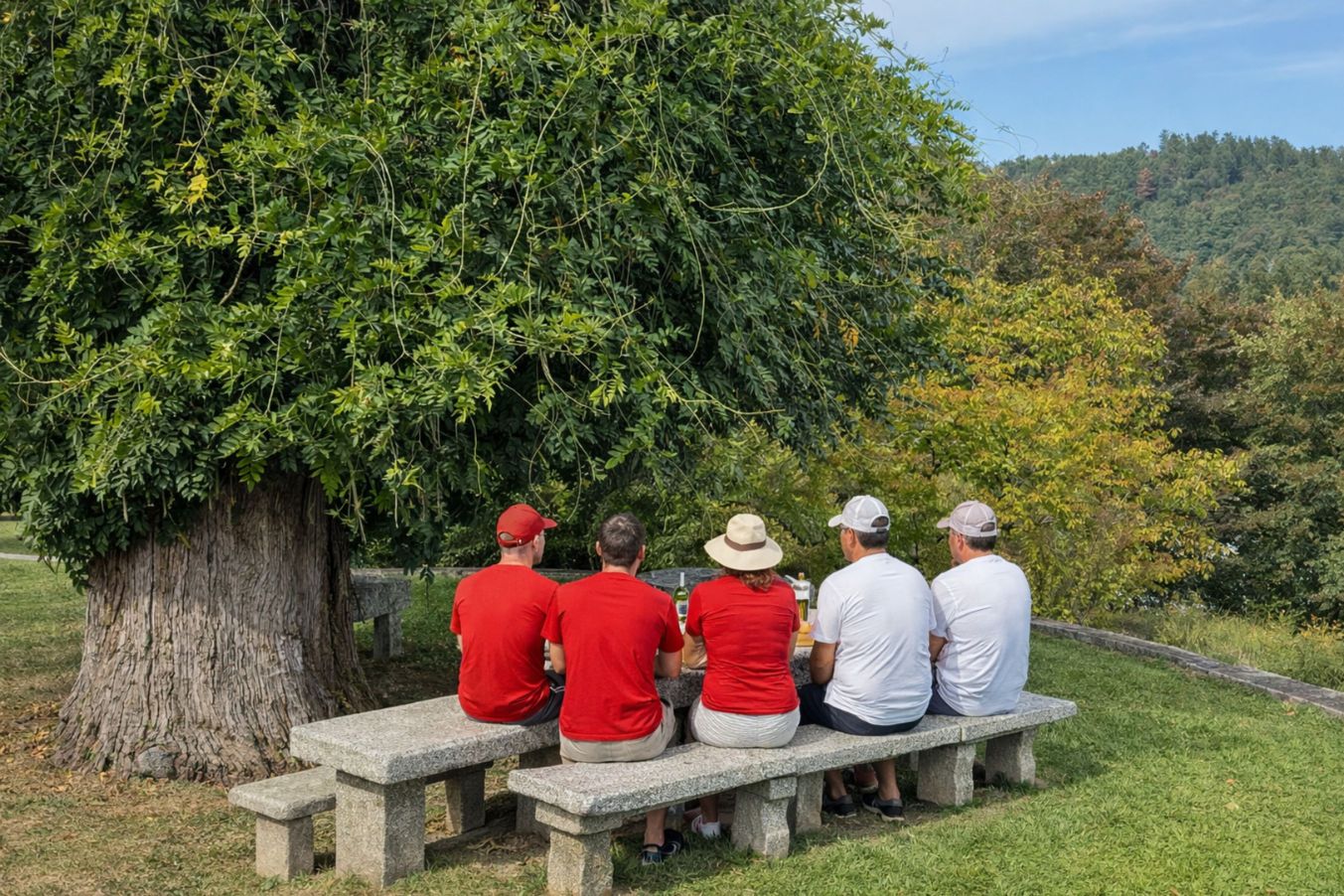
Because the format supplies the company for you. A capped small-group tour puts you with a set of other travellers for two or three hours, with a guide running the conversation and a shared thing to react to. You get people to talk to without organising anything, and you can walk away at the end owing nobody a plan.
This is a real structural feature of how small-group tours work, not a promise about any particular departure. Group size caps exist so the guide can be heard and the tasting room can seat everyone, and the side effect is a dozen strangers who spend a couple of hours together in a barrel hall. The tour featured here that caps at twelve is a good example of the shape.
What makes it work for solo travellers specifically is that the social contract is bounded. You are not committing to an evening. If the group is great, people frequently end up at a wine bar afterwards. If it is not, the tour ends and you go to dinner alone, which in Porto is an entirely comfortable thing to do. Contrast that with a hostel bar or a meetup, where extracting yourself takes effort.
Food-led tours amplify the effect because you sit down together. The four-hour Porto food and wine walking tour puts a group at shared tables several times across the afternoon, which produces more conversation than a walking cellar tour does. If meeting people is a goal rather than a bonus, that is the one to book.
| Format | Price | Company you get | Solo fit |
|---|---|---|---|
| Capped small group, around 12 people | $60 | A dozen travellers plus a guide for two hours | Best all round |
| Shared walking tour, 9 tastings | $59 | A walking group across three hours | Excellent, and the most wine per dollar |
| Classic lodges tour, 7 generous tastings | $63 | A guided group across three hours | Excellent |
| Shared river cruise | $47 | A full boat, no structured conversation | Good for a quiet, low-effort hour or two |
| Food and wine walking tour | $87 | A group plus shared tables | Best for actually meeting people |
| Full-day shared valley tour | $164 to $189 | The same small group for ten hours | Very good when the group clicks, long when it does not |
| Private tour or charter | $337 to $1,148 | Your guide alone | Expensive, and quiet in a way that suits some people |
What does a solo traveller actually pay in Porto?
Exactly the same as everyone else on a shared tour, and the entire bill on a private one. Per-person pricing means the $59 nine-tasting walking tour is $59 whether you are alone or one of six. Charters work differently: the $337 yacht and the $1,148 private Douro day cost the same total with one passenger aboard.
Solo travellers arrive braced for a single supplement, because that is the norm in cruise and package pricing, where the fare is built around two people sharing a room. Day tours are not built that way. They are priced per seat, so a solo booking carries no premium at all, and this is the single most useful thing to understand before you plan a Porto wine trip alone.
| Experience | Length | Listed price | What one person pays | Per hour |
|---|---|---|---|---|
| Douro river cruise with Port tasting | 2h | $47 | $47 | $23.50 |
| Porto wine walking tour, 9 tastings | 3h | $59 | $59 | $19.67 |
| Port wine tour, 3 cellars, 7 tastings, capped at 12 | 2h | $60 | $60 | $30.00 |
| Classic Port wine lodges, 7 generous tastings | 3h | $63 | $63 | $21.00 |
| Porto food and wine walking tour | 4h | $87 | $87 | $21.75 |
| Luxury Douro Valley day with private boat cruise | 10h | $164 | $164 | $16.40 |
| Private six-bridges yacht cruise | 2h | $337 | $337 | $168.50 |
| Private Douro Valley cruise with winery lunch | 10h | $1,148 | $1,148 | $114.80 |
There is a second way to read the shared tier that matters more to a solo traveller than to a couple, because you are paying the whole bill yourself. Cost per tasting. The three-hour walking tour with nine tastings comes to about $6.56 a pour. The classic lodges tour with seven generous tastings is $9.00. The two-hour small-group tour through three cellars with seven tastings sits at about $8.57, and buys you the tightest format and the highest rating.
Those three are close enough that the choice should come down to what you want from the afternoon rather than the arithmetic. Nine pours across three hours if breadth is the goal. Seven generous pours if you would rather have more in each glass. Three cellars in two hours if you want the most efficient version and intend to do something else afterwards.
How safe and walkable are Porto and Gaia on your own?
Porto is a compact, heavily visited European city with a long-standing reputation in travel media as one of the continent's safer and more solo-friendly destinations. The realistic things to manage are the ordinary ones: petty theft in crowded spots, steep wet cobbles, and the fact that you are drinking fortified wine without anyone pacing you.
We are deliberately keeping this general rather than quoting a ranking at you. The useful version for a solo traveller is not a statistic. It is knowing which practical details of this particular city are worth planning around, and in Porto the hills matter more than most people expect.
| Topic | Practical note |
|---|---|
| Emergency number | 112, the standard number across the European Union |
| Crossing between Porto and Gaia | On foot across either deck of the Dom Luís I Bridge, or by metro along the upper deck |
| The hills | Porto is steep and its granite setts get slick in rain. The funicular and the cable car exist precisely for this |
| Petty theft | The same care you would take in any busy European tourist district: viewpoints, transport, crowded riverfront terraces |
| The walk back | Plan your return leg before you start tasting, especially if it climbs away from the river |
| Eating alone | Portuguese restaurants are entirely used to single diners; counters and small tascas are the easy option |
| Telling someone your plan | Message a friend the tour name and finish time. It costs nothing and it is simply sensible |
| Cash | Cards are widely accepted, though small tascas and market stalls sometimes prefer cash |
One more thing that catches solo visitors out. The distance from the Gaia lodges back up to a hotel in the Baixa looks trivial on a map and is not, because it is vertical. After a tasting flight, that climb is the part of the day people underestimate. Either stay near the river, or use the funicular and the bridge rather than the direct route up.
How should you pace a solo tasting day?
One guided tour, one self-directed lodge at most, and a proper meal in between. Seven to nine pours on a morning tour is already a real amount of fortified wine. The honest plan is to taste in the morning, eat well at lunch, and give the afternoon to the river rather than a second flight.
The freedom is the point here. Solo, you never have to negotiate how long to linger over a 30 year tawny, whether to add a fourth lodge, or when to call it. You can leave a tour, walk straight into a lodge shop and spend forty minutes reading labels, and nobody is waiting. That is a genuine advantage over travelling as a pair, and it is worth actually using rather than filling with more bookings.
| Time | What you do | Why it works alone |
|---|---|---|
| 09:00 | Coffee and something from a pastelaria, then walk down to the river | Eat before you taste, not after |
| 10:00 | Small-group cellar tour: three lodges, seven tastings, two hours, $60 | Company is built into the format, capped at twelve |
| 12:00 | Lunch on the Gaia quay facing Porto | Spaces the alcohol and resets the day |
| 14:00 | Walk the upper deck of the bridge and sit a while at Jardim do Morro | Free, unbooked, and the best view in the city |
| 15:30 | Optional: one lodge on your own, one short flight only | Entirely your pace, no negotiation |
| 17:30 | Two-hour six-bridges river cruise, $47 | Low effort, good light, no conversation required |
| 20:00 | Dinner at a counter or a small tasca | Single diners are unremarkable in Porto |
If you have three nights, the shape that works best is a cellar day, a valley day and a river day. Put the ten-hour Douro Valley tour in the middle so you are neither jet-lagged at the start of it nor flying home the morning after, and keep the last afternoon for a cruise you can cancel out of without wrecking anything.
Which tour formats should a solo traveller skip?
Private charters and anything priced by the party. A $337 two-hour yacht and a $1,148 private Douro day are genuinely excellent products and terrible solo arithmetic, because there is nobody to split them with. Multi-day packages priced around a shared room are the other trap, since that is where a real single supplement lives.
This is not a judgement about the products. Both private options carry 5 out of 5 ratings, and on the six-bridges route a charter timed to golden hour with the deck to yourself is a lovely thing. It is simply that charter pricing assumes a group, and a solo booking absorbs a cost designed to be divided.
There are two exceptions worth naming honestly. If privacy is the actual product, for a milestone or because you want a guide's full attention for a day, then paying for it alone is a legitimate choice rather than a mistake. And if you have a mobility or access need that makes a shared coach day impractical, the private tier is solving a real problem, not selling you a feeling.
Everyone else is better served by the shared tier, where the ratings are already 4.7 to 4.9 and the per-person price is $47 to $189. On the Douro Valley day specifically, the ten-hour shared departures at $164 and $189 are the cheapest hours on the whole list, at $16.40 and $18.90 an hour, and the group you travel with is company for the drive rather than a compromise.
What should a solo traveller book ahead, and what can wait?
Book the guided tastings and the valley day before you travel, because a capped group of twelve fills up and a solo seat is still a seat somebody else wants. Almost everything else in Porto works on the day: cruises run through the afternoon, lodges take walk-ins, and restaurants are easy for one person.
Solo travellers sometimes over-book out of caution, then spend the trip running to appointments they made two months ago in a different mood. The opposite failure is arriving with nothing reserved and finding the well-rated small-group tours gone. The split below is the one that has held up for us: reserve the things with a hard headcount, leave the rest open.
| Item | Book ahead? | Why |
|---|---|---|
| Small-group cellar tour capped at 12 | Yes, before you travel | Twelve seats go quickly and there is no standby queue |
| Full-day Douro Valley tour | Yes, a week or more out | Ten-hour days run far fewer departures than short city tours |
| Food and wine walking tour | Yes | Shared tables mean the operator commits to fixed covers |
| Six-bridges river cruise | No, same day is usually fine | Departures run repeatedly through the day from both quays |
| Individual lodge visits | Usually not | Standard tasting flights take walk-ins, though reserve rooms may need a slot |
| Restaurants | Only the well-known ones | Counters and small tascas seat single diners on the spot |
| Airport transfer | No | The metro runs from Francisco Sá Carneiro straight into the city |
One scheduling note specific to travelling alone. Put your guided tour on the first full day rather than saving it, because a good group early gives you recommendations for the rest of the trip. Guides field the same questions all week and know which lodge is pouring something unusual, which bottle shop ships properly, and where to eat on a Sunday night. That intelligence is worth more on day one than on day three.
How do you taste responsibly when nobody is counting for you?
Port is fortified to roughly 19 to 22 percent alcohol, two to three times the strength of table wine. A seven-tasting tour is not seven glasses of wine, but it is not nothing. Eat first, use the spittoon without embarrassment, drink water between lodges, and do not get behind a wheel afterwards.
Travelling with someone builds in a natural brake: one of you notices when the other has had enough. Alone, that brake does not exist, and Porto makes it easy to keep going because the lodges are next door to each other and the shops pour by the glass. This is the one part of solo wine travel here that genuinely needs a plan rather than a shrug.
The mechanics are simple. Tasting pours are small by design, and spitting is standard practice in a tasting room rather than a snub to the house. Take water at every stop. Eat something substantial before the first tasting rather than promising yourself lunch afterwards. If you have a rental car, park it for the day and leave it parked; a guided tour exists in part so nobody in the group has to make that call.
| Situation | The easy solo move |
|---|---|
| Dinner alone | Counter seating at a tasca or a stall in a market hall. Arrive around 19:00, before the tourist rush |
| You want company again | Book a second small-group tour on a different theme, food rather than cellars, so the format is not repetitive |
| Buying bottles | Lodge shops and specialist bottle shops both work. Ask about shipping and customs limits before you commit to a case |
| A wet afternoon | Cellars are indoors and completely unaffected by weather, which makes them the reliable rainy-day booking |
| You have had enough | Stop, eat, and walk the flat riverfront rather than the hills. Nobody is waiting for you |
| Early flight the next morning | Do the two-hour cruise on your last afternoon, not a ten-hour valley day |
| Reaching the valley without a car | Shared full-day tours at $164 to $189, or the Douro railway line from Porto up to Régua and Pinhão |
Handled that way, Porto is close to an ideal solo wine city. The tours cost you no more than they cost anyone else, the format hands you a dozen people to talk to for a couple of hours, the lodges are all within a few minutes of each other, and the river is there whenever you would rather not talk to anybody at all. Book one guided tasting, keep the second day loose, and let the pace be the thing you actually came for.
See how this stacks up against the rest of the Porto and Douro wine tours on offer.