How Port Wine Is Made: Fortification, Aging and the Douro Terroir
Port is not wine with brandy poured in at the end. The spirit goes in while the yeast is still working, and that single interruption is what separates port from every table wine in Portugal.
Booking Choice: See the winery and vineyard side at Quinta da Foz in Pinhão, or the ageing side at Taylor’s in Gaia. Standard visits do not guarantee live harvesting, foot-treading or fortification. Explore Quinta da Foz In Pinhão
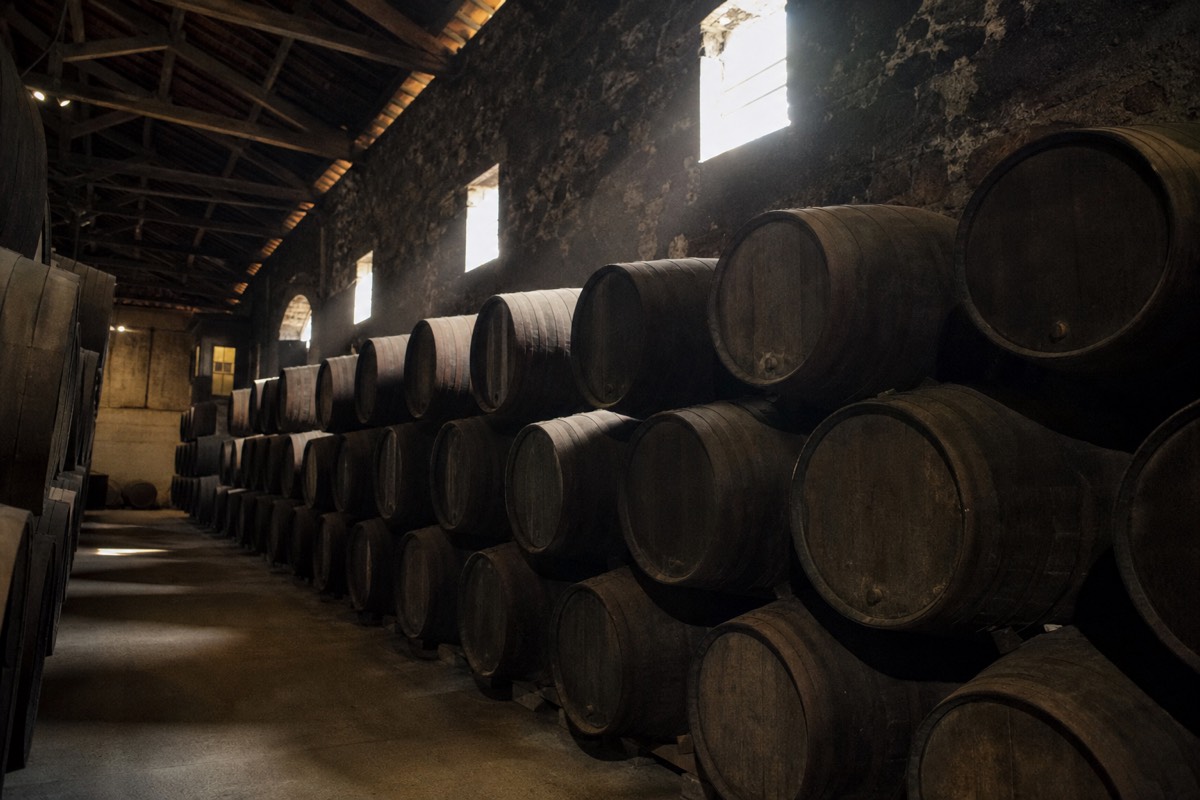
Walk into a Gaia lodge and the first thing you notice is the temperature, then the smell: damp stone, old oak, and something sweet underneath it. The barrels stacked along those walls hold wine that was made in a way almost no other wine is made, and the decisive moment happened months or decades earlier, up the valley, in a stone tank, when someone decided fermentation had gone far enough and stopped it dead.
At A Glance: Port begins in the Douro vineyards, is fortified during fermentation and develops through ageing. A cellar tour shows a different stage from a working-quinta visit. Explore Quinta da Foz In Pinhão
Understanding that one decision explains almost everything else about port: why it is sweet, why it is strong, why it can sit in a barrel for forty years, and why the grapes have to come off a hillside so steep that machines cannot climb it. This guide follows the process in order, from the rock the vines grow on to the vessel the wine finally rests in.
What fortification does to the numbers
Typical ranges. Fortification adds grape spirit partway through fermentation, which raises alcohol and leaves natural grape sugar in the wine.
What makes the Douro's schist terraces different from ordinary vineyard soil?
Schist is layered, fractured rock rather than soil. It holds heat through the day and releases it at night, and its fractures let vine roots drive deep to find scarce water. The result is small crops of intensely concentrated grapes on land that would defeat almost any other crop.
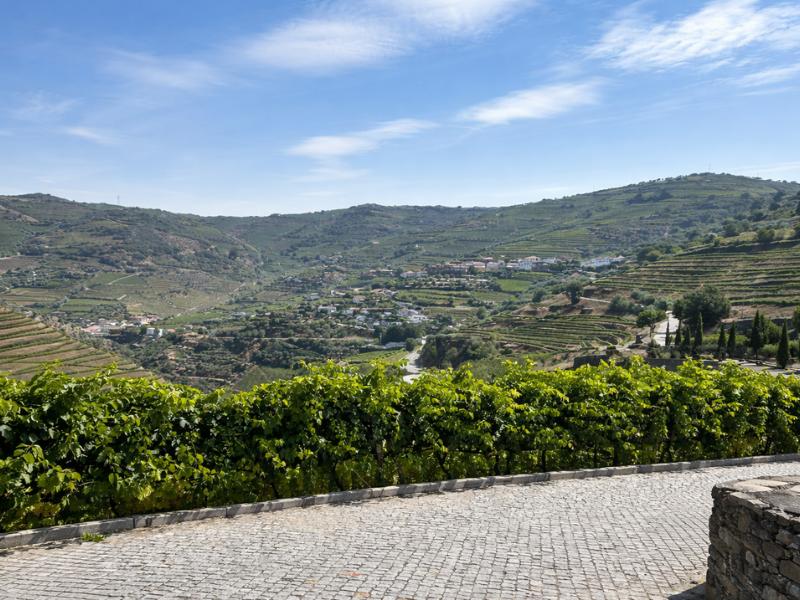
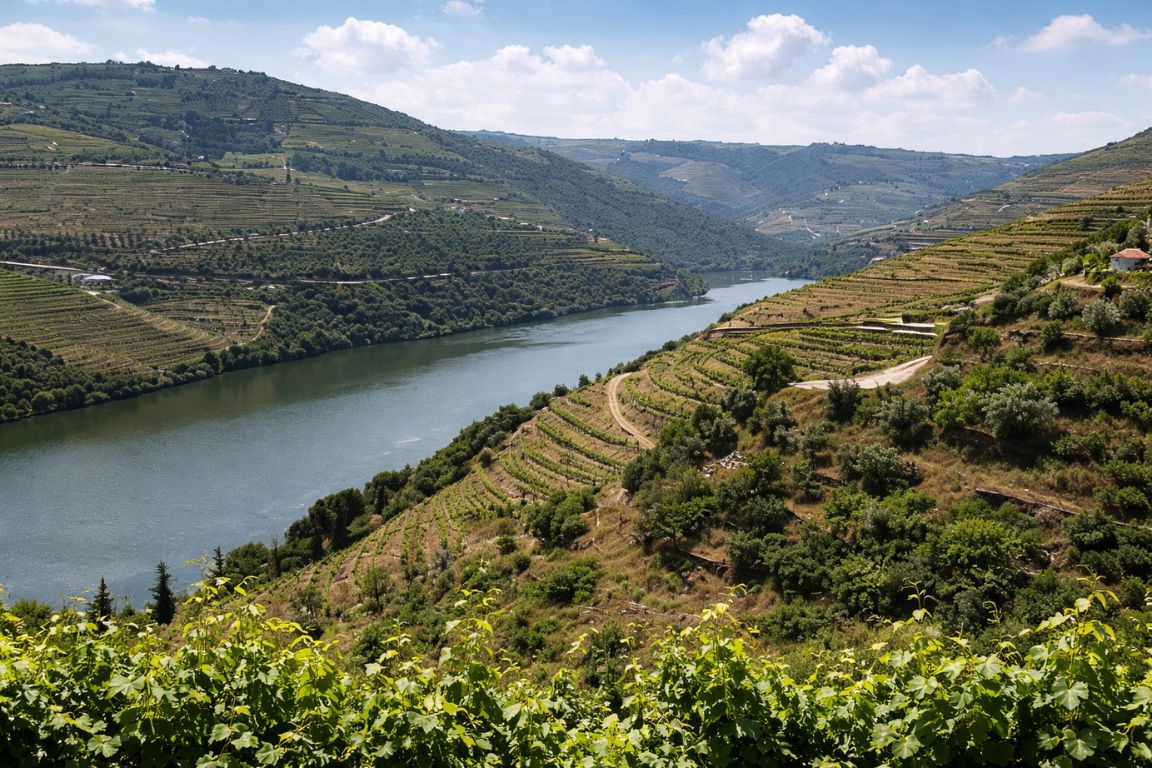
The Douro Valley is not gentle farmland with a nice view. It is a river gorge cut through rock, and the vineyards are planted on terraces carved into slopes that in places approach the limit of what a person can stand on. The rock underneath is schist, which splits into layers rather than sitting as a solid mass, and that structure turns out to be the reason the region can grow anything worth drinking.
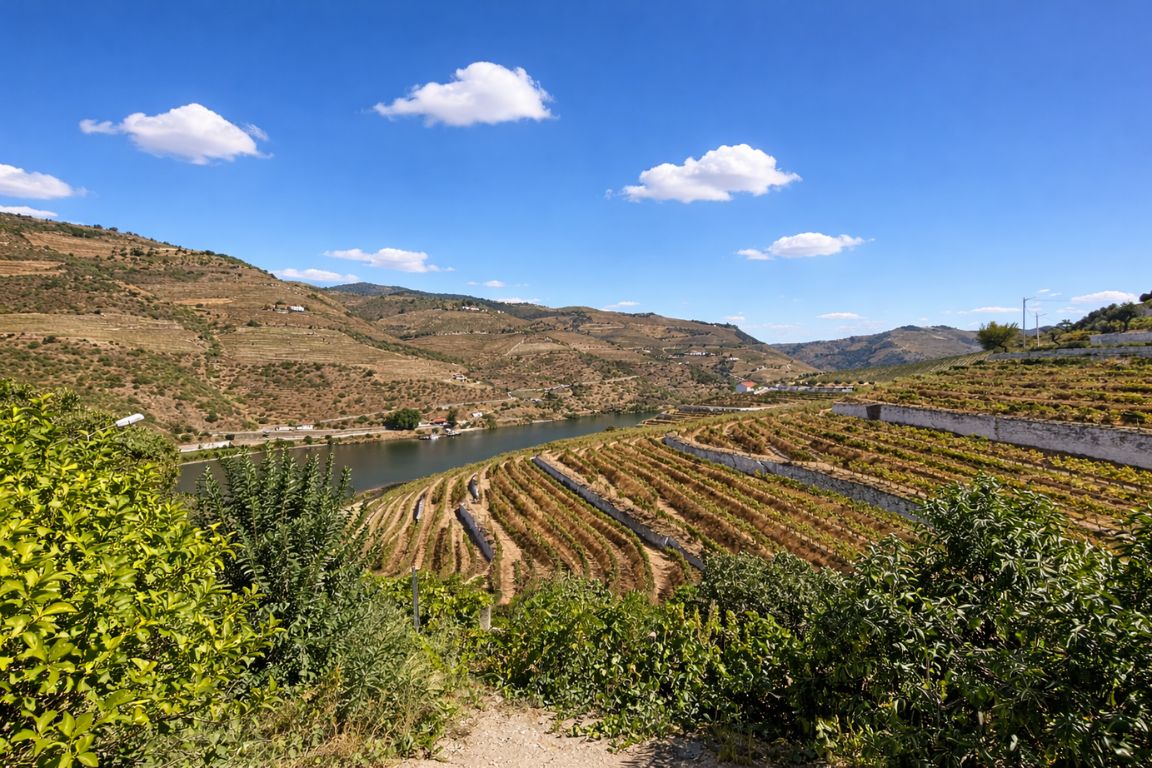
Two properties matter. The first is heat. Schist absorbs the summer sun, stores it, and radiates it back after dark, extending ripening past sunset in a way loose soil does not. Douro summers are already hot, and this pushes sugar levels in the grapes higher than most European regions can reach. The second is water. Rainfall is scarce in the growing season, but the fractures between schist layers hold moisture and give roots a path downward. Vines here send roots deep, sometimes remarkably deep, and reach water that surface-rooted plants never touch.
Add poor organic content to that, and the vines grow slowly, carry small crops, and put what they have into the fruit rather than into leaves. Low yield and high concentration is the whole game when the finished wine has to stand up to added spirit and decades in wood.
| Property of schist | Effect on the vine | Why it matters for port |
|---|---|---|
| Splits into layers, heavily fractured | Roots follow the cracks downward toward moisture | Vines survive hot, dry summers where water is scarce |
| Absorbs and radiates heat | Ripening continues into the evening | High natural sugar, which fortification then locks in |
| Poor in organic matter | Low vigour, small berries, modest crops | Concentrated flavour and colour rather than volume |
| Sits on very steep slopes | Excellent drainage and sun exposure, no machine access | Hand work at every stage, from pruning to picking |
Why is the harvest still done by hand?
Because the slopes are too steep for machines. Mechanical harvesters need gradients and row spacing that most Douro terraces cannot offer, so pickers work the terraces on foot, cutting bunches into baskets. Hand picking is expensive, but it also means every bunch is looked at before it goes in.
Terracing is what makes the valley farmable at all, and broadly there are three approaches to it, each with different consequences for how the harvest works. The oldest terraces are narrow shelves held up by dry stone walls, built by hand over centuries, often carrying only a row or two of vines. Nothing mechanical will ever work those. Later terraces are wider, cut by machine into the slope without stone walls, which lets a small tractor reach parts of the vineyard. On gentler ground, growers sometimes plant rows running straight up and down the slope instead of across it, which raises vine density and allows some machine access, though only up to a point of steepness.
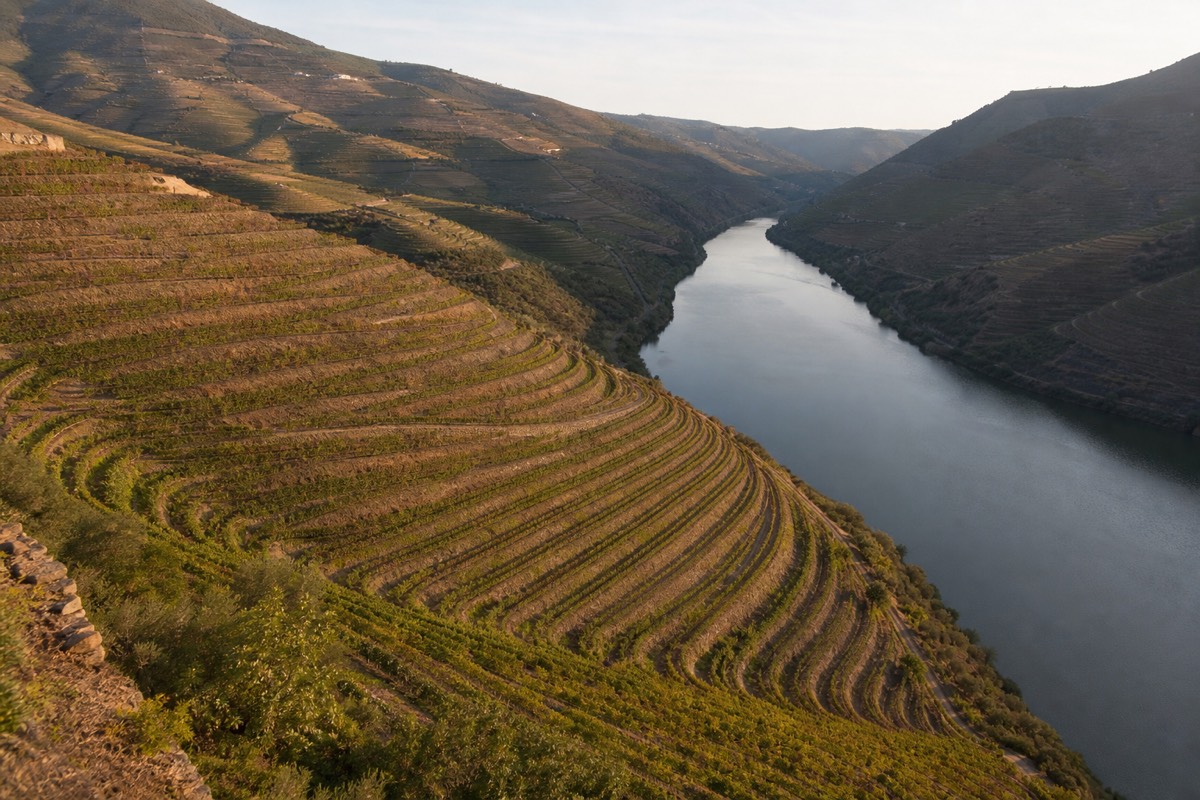
Whatever the layout, picking is a human job in most of the region. Teams work through the vineyard in the cool of the morning, cutting bunches into small containers that get emptied into larger ones and moved down to the winery. Because a person is holding every bunch, poor fruit can be dropped on the spot, and many quintas sort again on a table before crushing.
The other consequence of hand picking is timing. A machine harvests a block in hours. A team takes days, so the decision about when each parcel is ready has to be made parcel by parcel, and that judgement is a large part of what separates one producer's wine from another's. September is when all of this happens, and the harvest season is the single most interesting time to be in the valley for exactly this reason.
| Terrace style | What it looks like | Trade-off |
|---|---|---|
| Narrow walled terraces | Stone-walled shelves, often one or two vine rows wide | The classic Douro image, entirely hand-worked, expensive to maintain |
| Wide cut terraces | Broader earth platforms cut into the slope, no stone walls | A small tractor can reach them, but banks erode and vines per hectare drop |
| Rows up the slope | Vines planted vertically up the hillside rather than across it | Higher density and some machine access, only viable below a certain steepness |
What happens between the picking and the moment the spirit goes in?
Very little time, and a lot of extraction. Grapes are crushed, often by foot in shallow granite tanks called lagares, and fermentation starts. Because that fermentation will be cut short within days, colour and tannin have to be pulled out of the skins fast, which is exactly what treading does.
Here is the constraint that shapes port winemaking. A dry red wine ferments for a week or two, and all that time the wine sits in contact with the skins, slowly pulling out colour, tannin and flavour. Port does not get that time. Fermentation is going to be stopped part way through, typically a matter of days rather than weeks, so everything the skins have to give must be extracted in a fraction of the usual window.
The traditional answer is foot treading in a lagar, a wide, shallow granite tank where a team works the grapes methodically with their feet. Human feet break the skins thoroughly without crushing the pips, which would release harsh bitterness, and the shallow tank keeps the skins in constant contact with the juice. It is slow, it needs people, and for top wines many producers still consider it worth doing. Modern alternatives use mechanical or robotic lagares that mimic the same action, and pumping juice over the floating skin cap achieves a similar effect at scale.
While that is happening, fermentation is running. Yeast converts sugar to alcohol, heat rises, and the winemaker is watching the sugar level fall. The whole exercise is a race between extraction and sweetness, because when the sugar hits the target number, the process ends.
| Stage | What happens | Why it is done this way |
|---|---|---|
| Picking and sorting | Bunches cut by hand, poor fruit removed in the vineyard or on a table | Machines cannot work the terraces, and selection has to happen early |
| Crushing | Foot treading in a granite lagar, or a mechanical equivalent | Breaks skins thoroughly without crushing bitter pips |
| Fermentation begins | Yeast converts grape sugar into alcohol, temperature climbs | The clock starts, and it is a short one |
| Extraction | Continuous treading or pumping juice over the skins | Colour and tannin must be pulled out before fermentation is stopped |
| The cut | Grape spirit is added, fermentation halts | Locks in the remaining sugar and raises alcohol sharply |
What exactly is fortification, and why does it define port?
Aguardente, a neutral high-proof grape spirit, is added to the fermenting must partway through fermentation. The alcohol kills the yeast before it can convert all the natural grape sugar, so the wine stays sweet and finishes stronger, typically around 19 to 22 percent, against roughly 12 to 14 for table wine.
This is the step that makes port a category rather than a place-name. Everything before it, terraces, hand picking, treading, would produce a Douro red table wine if you left it alone. The interruption is the invention.
Mechanically it is simple. Yeast cannot survive above a certain alcohol concentration. Dosing the fermenting must with a strong grape spirit pushes the mixture past that threshold quickly, and the yeast stops working immediately. Whatever sugar was still unfermented at that moment stays in the wine as sweetness, permanently. Because a substantial volume of high-proof spirit has just been added, the finished wine also lands far stronger than any naturally fermented wine could reach.
The winemaker's real decision is when to pull the trigger. Fortify early and more sugar survives, giving a sweeter, lighter-bodied wine. Fortify later and the wine is drier and the alcohol comes proportionally more from fermentation. That single timing call, made once per lot and impossible to undo, sets the character of the wine before it ever sees a barrel.
The spirit itself matters more than people assume. It is a neutral grape spirit rather than a flavoured brandy, and its purpose is to stop fermentation without stamping its own taste over the fruit. A poor-quality spirit shows up in the glass and never goes away.
| Table wine | Port | |
|---|---|---|
| How fermentation ends | Naturally, when the yeast runs out of sugar | Deliberately, when grape spirit is added part way |
| Residual sugar | Little, most of it converted to alcohol | Substantial, unfermented grape sugar stays in the wine |
| Alcohol by volume | Roughly 12 to 14 percent | Typically 19 to 22 percent |
| Where the alcohol comes from | Fermented grape sugar only | Fermented sugar plus added grape spirit |
| Time on the skins | A week or two | Days, so extraction has to be aggressive |
Why does the size of the aging vessel change the wine so much?
Because oxygen exposure scales with surface area. A small oak barrel gives each litre far more contact with wood and slow air ingress than a huge vat does, so it oxidises faster: the colour fades from red toward amber and the flavours turn nutty and caramelised. Big vessels preserve fruit instead.
Once the wine is fortified and settled, the only remaining variable that matters is where it rests. This is not a matter of tradition or aesthetics. It is geometry.
Picture the same volume of wine in two containers. In a very large vat, most of the liquid sits far from any wood surface and far from any air. Oxidation is slow, wood influence is minimal per litre, and the wine holds onto the bright red colour and fresh fruit character it had when it went in. Move that wine into a stack of smaller barrels and the ratio flips. Every litre is now close to oak, oak breathes slightly, and the wine takes on oxygen steadily over years. Colour drops out. Fresh berry notes give way to dried fruit, nuts, toffee, orange peel. Some liquid evaporates through the wood, concentrating what remains.
Bottle aging is a third thing entirely. A sealed bottle admits almost no oxygen, so the wine develops reductively, slowly, over decades, and throws a heavy deposit as tannins and pigments bind together and fall out of solution. That deposit is why certain ports must be decanted rather than simply poured.
| Vessel | Oxygen and wood contact | What it does to the wine |
|---|---|---|
| Large vat or tank | Low surface area per litre, minimal exchange | Preserves deep red colour and fresh fruit character |
| Pipe or smaller oak barrel | High wood contact, steady slow oxidation, some evaporation | Colour fades toward amber, nutty and caramel notes develop |
| Bottle | Effectively sealed, no meaningful oxygen ingress | Slow reductive development over decades, heavy sediment forms |
How do ruby, tawny and vintage take different aging paths?
Same starting wine, three routes. Ruby rests briefly in large vats to keep its fruit bright. Tawny goes into smaller oak barrels for years, oxidising toward amber, nut and caramel. Vintage comes from one exceptional harvest, spends roughly two years in wood, then ages in the bottle for decades.
The styles of port are covered in depth elsewhere on this site, so what matters here is purely the production decision behind each one. After fortification, a producer is choosing a vessel and a duration, and those two choices produce the categories on the shelf.
Ruby is the shortest path. The wine stays in large vats or tanks where oxygen exposure is low, is bottled relatively young, and arrives tasting of dark fruit, deep in colour, with the vigour it had at the start. Nothing about that is a lesser process. It is a deliberate choice to preserve rather than transform.
Tawny is the long oxidative route. Wine moves into smaller barrels and stays there for years, sometimes many years, while air and wood work on it. The amber colour that gives the style its name is not added, it is what happens when red pigment gradually oxidises and drops out. Because the transformation happens in wood before bottling, tawny arrives ready to drink and does not throw sediment.
Vintage takes the opposite approach. Fruit from a single exceptional harvest, from the best parcels, spends only around two years in wood, and is then bottled while still young and tannic. From there it ages in glass for decades, developing without oxygen. That is why an old vintage bottle has a thick crust of sediment on the side that has been lying down, and why decanting it carefully is not optional.
| Style | Vessel after fortification | Rough time in wood | What the aging does | Sediment |
|---|---|---|---|---|
| Ruby | Large vats or tanks | Short | Preserves colour and fresh dark fruit | Minimal, no decanting needed |
| Tawny | Smaller oak barrels | Years, sometimes decades | Oxidises toward amber, nut, caramel, dried fruit | None, filtered and ready to pour |
| Vintage | Wood briefly, then bottle | Around two years | Develops in glass without oxygen, over decades | Heavy, decanting required |
Who decides what can legally be called port?
The IVDP, the Instituto dos Vinhos do Douro e do Porto, is the official regulator. Only wine grown inside the demarcated Douro region and produced and aged under its rules may be sold as port, and bottles carry a numbered guarantee seal issued by the institute.
The regulatory idea is old here. The Douro was drawn on a map and policed by a state company back in the eighteenth century, long before anyone else attempted it, and the modern institute is the direct descendant of that logic. Its job is to make the word on the label mean something specific.
In practice that covers several checks. The grapes must come from within the demarcated region, not from anywhere else in Portugal that happens to grow the same varieties. Production must follow the rules for the category, which includes how and when fortification happens. Age statements and category names on the label are regulated rather than marketing choices. And the seal applied to each bottle ties the finished product back to an approved lot.
For a visitor this is more useful than it sounds. It means the tasting you sit down to in a Gaia lodge is pouring a legally defined product, not a house interpretation of a general idea, and that the age statement on a tawny is a claim someone verified.
| What is regulated | What that means in practice |
|---|---|
| Origin of the grapes | Fruit must come from inside the demarcated Douro region |
| Production method | Fortification and handling must follow the rules for the category |
| Category and age claims | Style names and age statements are approved, not chosen freely |
| Bottle certification | A numbered guarantee seal ties the bottle to an approved lot |
| The name itself | Wine from outside the region cannot legally be sold as port |
Where does the wine actually age, and does the location matter?
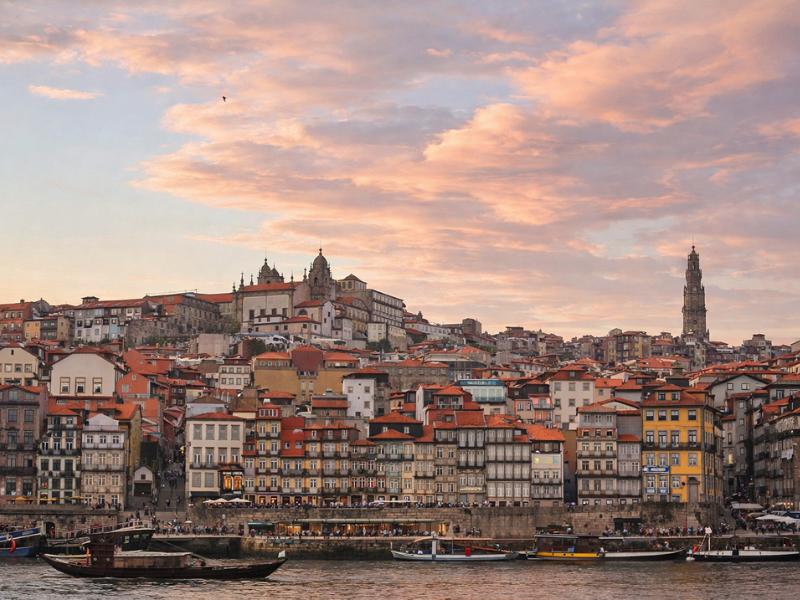
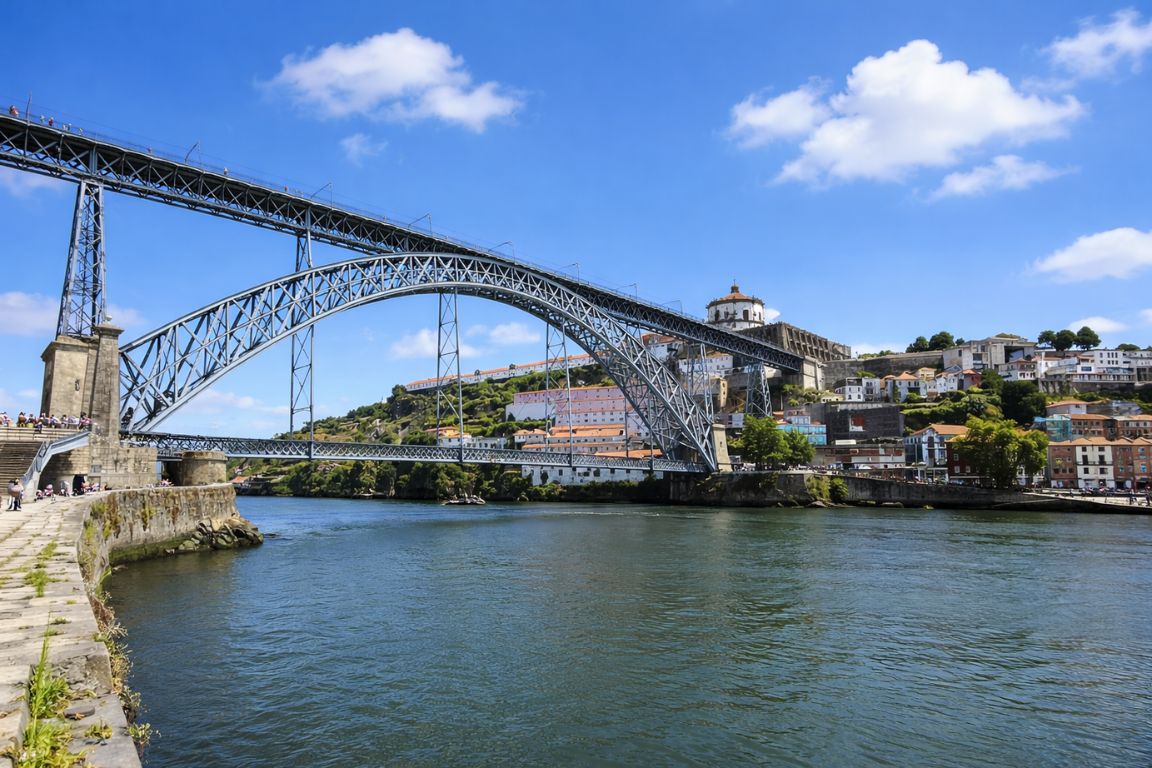
Some ages at the quintas up in the valley, and a great deal still ages in the lodges of Vila Nova de Gaia, across the river from Porto. The riverside cellars are cool and damp year round, which slows evaporation and gives the long, gentle oxidation that barrel aging depends on.
Historically the wine came downriver by boat and was stored in Gaia because that is where the ships were, and the lodges grew there as a result. That trade logic has gone, but the buildings and the conditions inside them remain useful. The cellars are thick-walled, dark, and hold a steady cool temperature with high humidity, which is close to ideal for wine that needs to sit in oak for a decade or four without cooking or drying out.
Aging up in the valley is a different environment: hotter summers, wider temperature swings, faster evaporation. Producers make deliberate choices about which lots rest where, and both routes are legitimate. What has not changed is that the Gaia riverside remains the biggest concentration of aging stock anywhere in the industry, which is exactly why the cellar district exists as a visitor experience at all.
The practical upshot for anyone walking into a lodge: the cold you feel on the skin at the door is not atmosphere for the tour. It is the working condition the wine needs, and it is the reason a light layer is sensible even in August.
What can you actually watch happen if you visit?
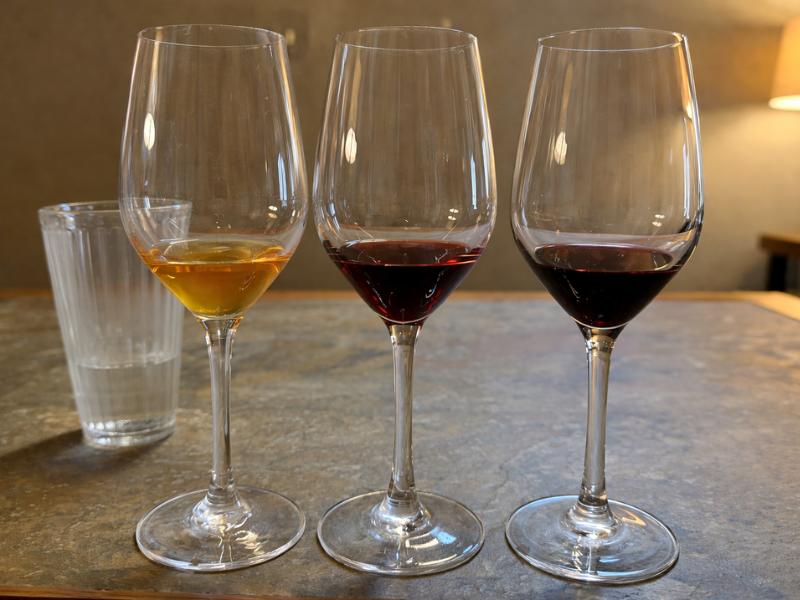
In a Gaia lodge, year round: the aging half of the process, rows of pipes and vats, the blending logic, and a tasting across styles. In the valley, the growing half: the terraces, the schist, the lagares. In September, the harvest itself, which is the only time the whole chain is running.
The process splits neatly across two visits, and most people who care about how the wine is made end up doing both. A cellar tour in Gaia is the aging story, told among the barrels themselves, and it runs about three hours with seven tastings on the guided options our team tracks, at roughly $63 per person and a 4.9 rating from past guests. Short versions covering three cellars with the same seven tastings run closer to two hours at around $60.
The valley visit is the other half, and it is a full day: roughly ten hours door to door, typically three vineyard stops with lunch included, at about $133. That is where the terraces stop being a photograph and become a slope you are standing on, and where the lagares are in the room rather than in a story.
Timing changes what you see. Outside harvest the lagares sit empty and clean, the cellars are quiet, and the emphasis falls on aging and blending. During the September harvest the whole apparatus is live: fruit arriving, treading underway, fermentation running hot, and the fortification decisions being made that week. It is busier, more expensive, and considerably more interesting.
| Part of the process | Where you see it | When |
|---|---|---|
| Schist terraces and vine training | The Douro Valley, on a vineyard visit | Any month, greenest in spring and early summer |
| Hand picking | The valley terraces | Harvest, generally September |
| Treading in a lagar | Quinta wineries in the valley | Harvest only, otherwise the tanks stand empty |
| Fortification | Working wineries during harvest | Harvest only, and rarely on a standard tour |
| Barrel and vat aging | Gaia lodges and quinta cellars | Year round, the core of every cellar tour |
| Blending and tasting across styles | Gaia lodge tasting rooms | Year round |
Once you have seen both halves, the glass in front of you reads differently. The sweetness is a fermentation that was stopped. The strength is a measured dose of grape spirit. The colour is a decision about a barrel, and the concentration goes back to a vine pushing roots into cracked rock on a slope too steep to drive a tractor up.
See how this stacks up against the rest of the Porto and Douro wine tours on offer.