Porto Wine Tours for Beginners: What First-Timers Should Know
Nobody expects you to know anything about port before your first tour. Here is exactly what happens on one, what to wear, how many tastings is sensible, and the handful of words worth knowing beforehand.
Booking Choice: For a first visit, Poças gives you a live guide and three Port styles in about 90 minutes. Taylor’s suits a self-paced visit; a Douro day needs a full day free. Explore Poças Cellar And Three Ports
The most common question our team hears from first-time visitors is not about wine at all. It is some version of: will I look like an idiot? People imagine a room of experts swirling glasses and discussing vintages, and they picture themselves standing in the corner holding something sweet and not knowing what to say about it.
At A Glance: Start with a focused cellar visit before stacking several tastings into one day. Choose between a live guide and a self-paced audio route. Explore Poças Cellar And Three Ports
That room does not exist. The guides working the Gaia lodges spend their days with visitors who have never tasted port and are perfectly happy to say so. The tours are built for beginners, the pours come in a deliberate order designed to make differences obvious, and the only real preparation worth doing is knowing roughly what will happen and how to dress for it. This guide covers both, plus the small handful of things that genuinely trip people up.
What Actually Happens on a First Porto Wine Tour?
You meet your guide at a set point in Gaia, get a short introduction to why the lodges sit on this side of the river, walk through a working cellar among the barrels, and then sit down to a guided flight of small glasses poured in a set order. Most city tours run two to three hours and visit two or three houses.
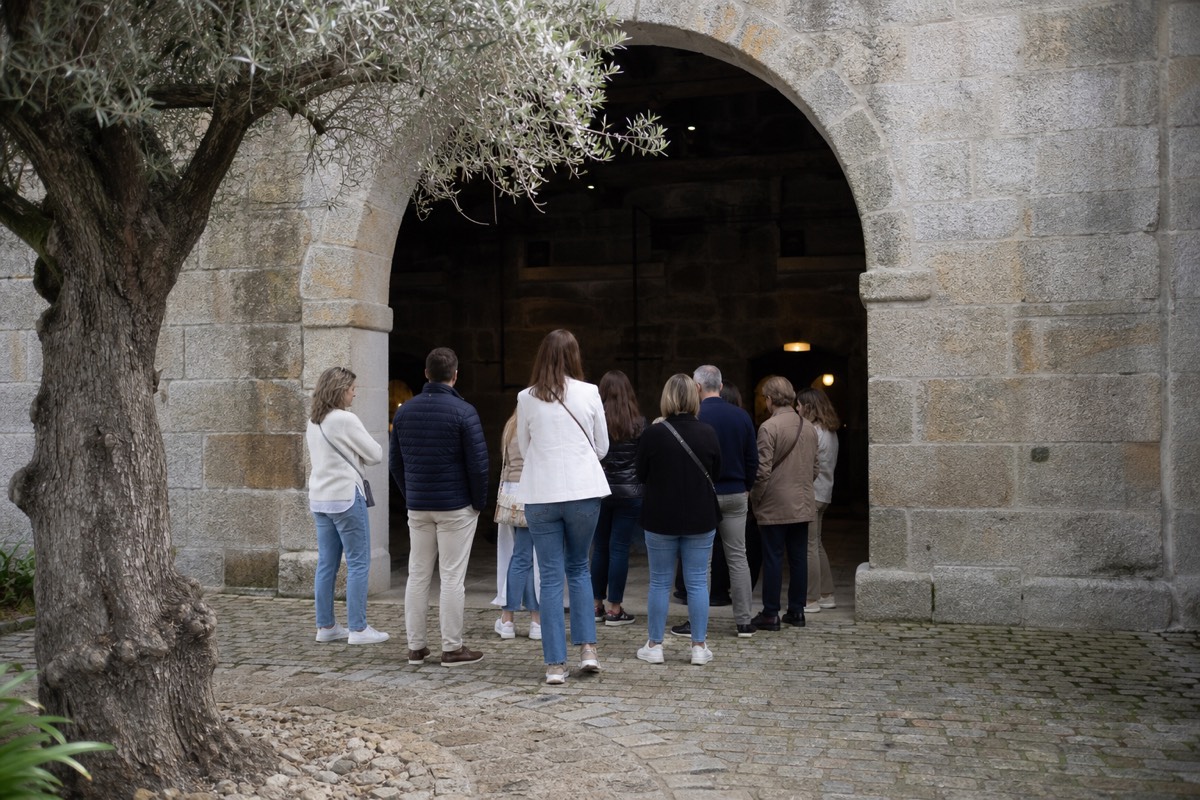
The shape barely varies. Arrive a little early at the meeting point, because groups leave on time and a capped group of twelve will not wait long. The guide checks names, gathers everyone, and starts with a short orientation covering the geography: the wine is grown in the Douro Valley upriver and aged in Vila Nova de Gaia, across the water from Porto, which is why every tour called a Porto wine tour actually happens in a different city.
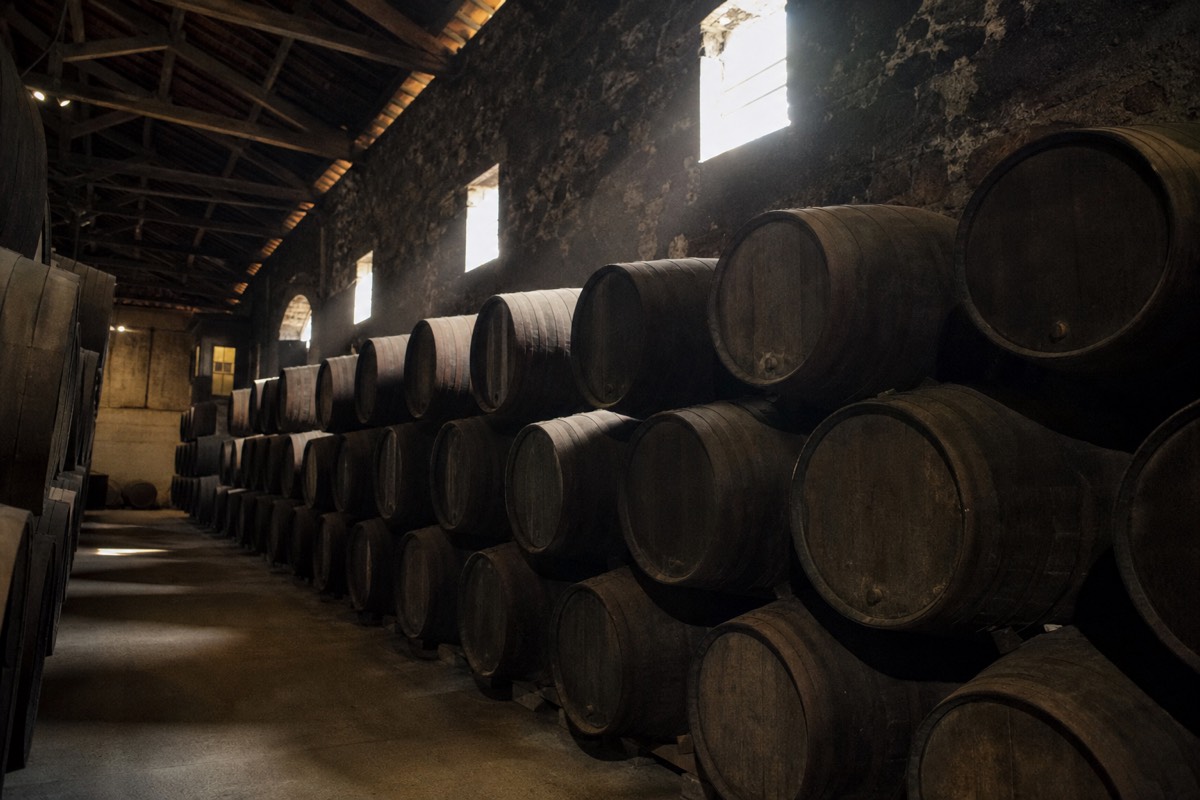
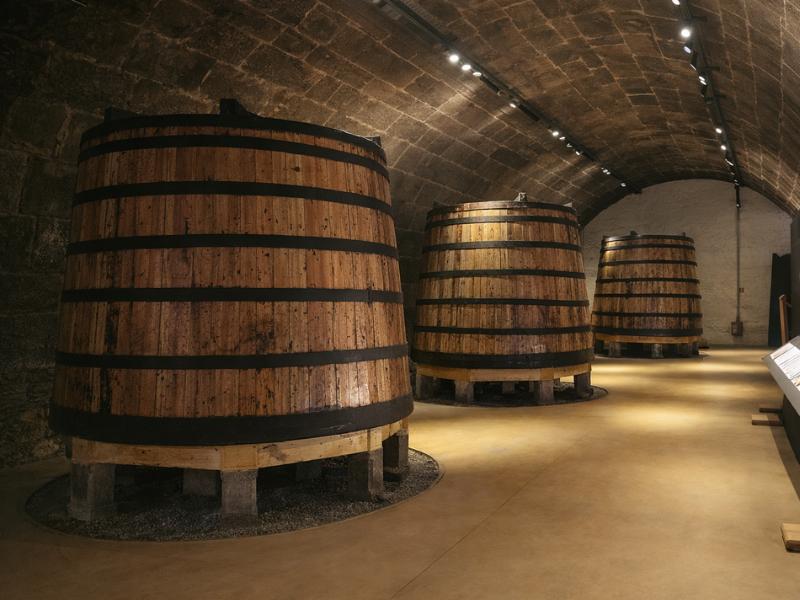
The cellar walk comes next, and it is the part people remember. Dim light, packed earth or old stone underfoot, and rows of barrels stacked in the cool. Guides usually explain fortification here, standing next to the evidence: grape spirit added partway through fermentation, yeast stopped, sweetness retained, alcohol lifted to somewhere around 19 to 22 percent. Photographs are generally fine, though it costs nothing to ask.
Then the tasting. Small glasses arrive in a set sequence, and the guide talks through each one while you look, smell and taste. On a three-cellar tour this happens more than once, in different rooms, with different houses pouring their own wines. Afterward there is usually a shop, and there is no obligation whatsoever to buy anything in it.
| Stage | What happens | What you should do |
|---|---|---|
| Meeting point | Guide gathers the group and checks names | Arrive early, find a bathroom first |
| Orientation | Short talk on the Douro, Gaia and how port is made | Ask your basic questions now, before the wine |
| Cellar walk | Walking among stacked barrels in a cool, dim room | Bring a layer, ask before photographing |
| The tasting flight | Small glasses poured in a deliberate order, guide narrating | Look, smell, taste, water between glasses |
| Next house | Short walk, repeat, different wines and a different style of guiding | Pace yourself, this is where people overdo it |
| Shop and questions | Chance to buy and to ask for recommendations | Buy nothing unless you want to |
Should Your First Tour Be a City Cellar Walk or a Full Douro Day?
Start in the city unless you have a full free day and know you want the landscape. A cellar tour costs around $59 to $63, runs two to three hours, and teaches you the vocabulary on foot. A valley day starts at $108, runs nine or ten hours, and delivers the vineyards, lunch and usually a river cruise.
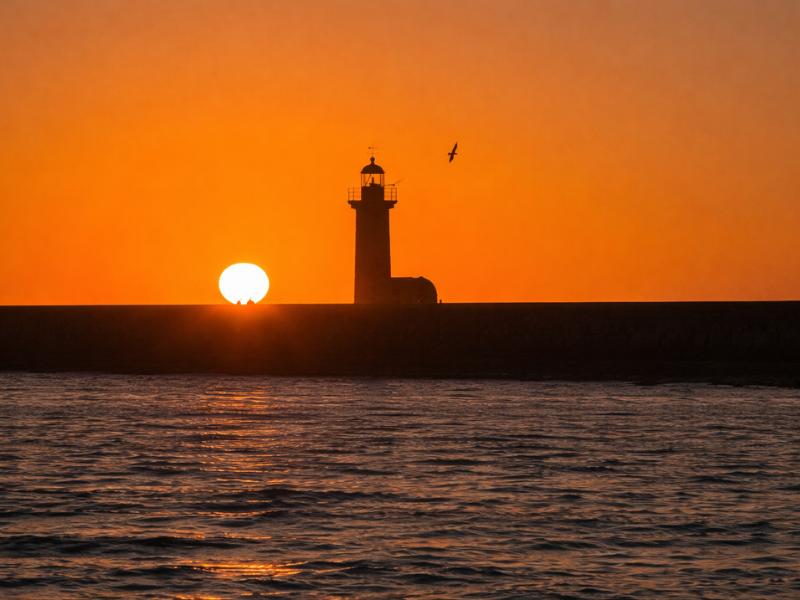
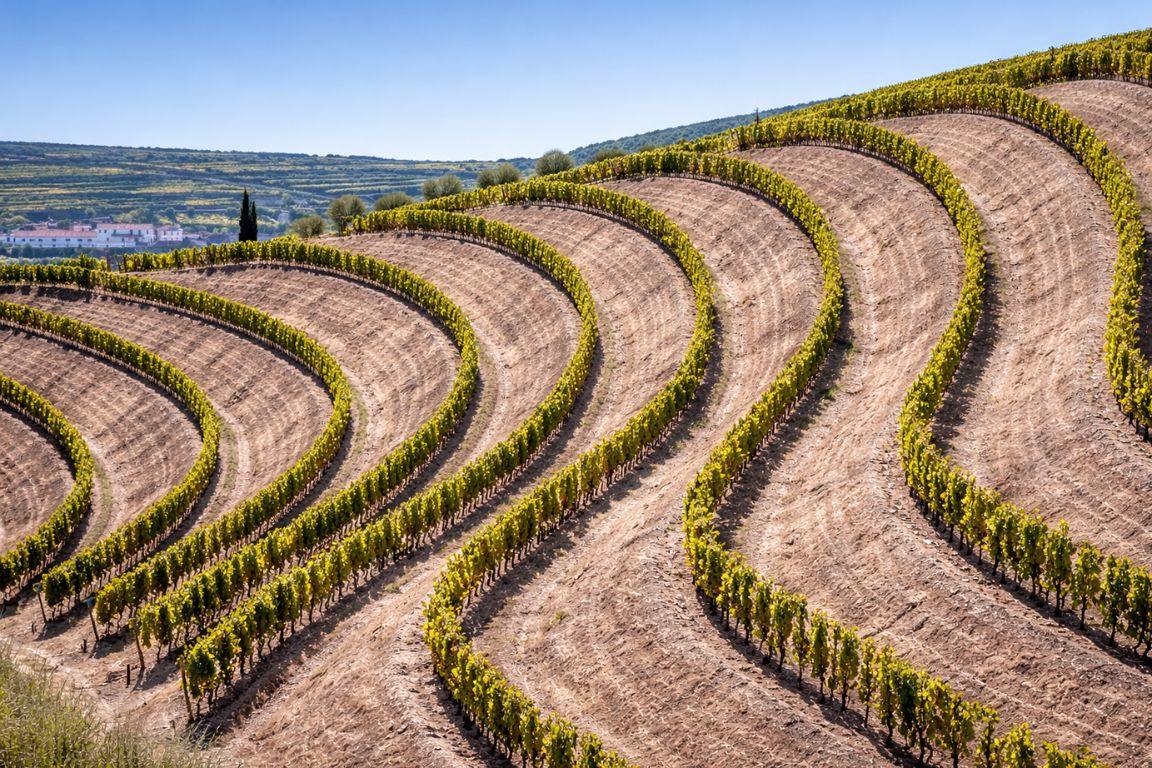
Both are good. They answer different questions. The city tour answers what port is, how it is made and which style you personally like, and it does that in an afternoon for about the price of a decent dinner. The valley day answers where it comes from, and the terraced hillsides above the Douro are the reason the region carries a UNESCO World Heritage listing.
For a first visit with a few days in Porto, doing the cellar tour first and the valley day second is the sequence that makes the most sense. You arrive in the valley already knowing what a tawny is and why it looks the way it does, which turns the estate visits from a pleasant drive into something you can actually follow. Reversing the order works, it just wastes some of the valley.
If you only get one, choose on time rather than on interest. Ten hours is most of a day, including several hours in a vehicle. Anyone with a single free afternoon should take the cellar tour without hesitation.
| Factor | City cellar tour | Douro Valley day trip |
|---|---|---|
| Listed price | $59 to $63 | $108 to $200 shared |
| Length | 2 to 3 hours | 9 to 10 hours |
| Getting there | On foot across the bridge | Minibus pickup in central Porto |
| What you see | Barrel cellars, two or three historic houses | Terraced vineyards, working estates, the river |
| Tastings | Usually 7, sometimes 9 | Two or three estate tastings |
| Lunch | Not included | Named in almost every listing |
| Best for | Learning the styles, short stays, first exposure | Scenery, a full day out, anyone already sold on wine |
What Port Vocabulary Do You Need Before You Go?
Six words carry you through: port, fortification, quinta, lodge, flight, and the three style names ruby, tawny and white. Guides explain everything else as it comes up. If you want the styles properly explained before you arrive, our separate page on the types of port wine covers them in far more depth than any tour has time for.
The vocabulary sounds more technical than it is, and most of it is just Portuguese geography. A quinta is an estate up the valley where the grapes grow. A lodge, sometimes called a cave in the tour listings, is the warehouse in Gaia where the wine ages afterward. Those two words alone explain the structure of the entire industry.
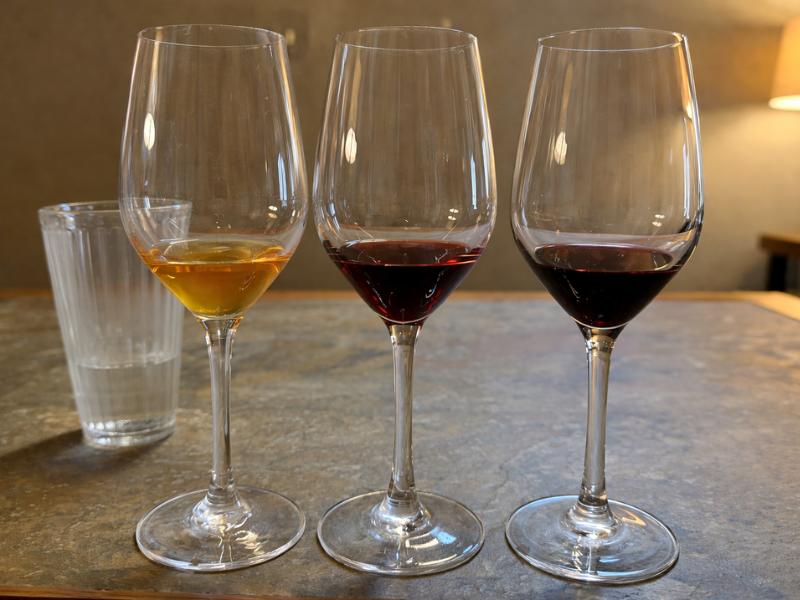
On the wine itself, keep it simple to start with. Ruby is young and fruity. Tawny spent years in barrel and turned nutty and caramel-toned. White port is made from white grapes and tastes of citrus and honey, which surprises nearly everyone. Vintage is the special case: a single exceptional year, aged in the bottle rather than the barrel, which throws sediment and gets decanted before serving. You do not need to memorize this. You need to recognize the words when your guide uses them.
One acronym is worth knowing on sight. The IVDP is the Instituto dos Vinhos do Douro e do Porto, the body that certifies genuine port, and its seal turns up on the bottles in every lodge shop you walk through. If a guide taps it while explaining a label, that small strip of paper is the shorthand for the wine having met the rules of the demarcated region rather than simply calling itself port.
| Term | What it means in one line |
|---|---|
| Port | Fortified wine from the Douro Valley, traditionally aged and shipped from Gaia |
| Fortification | Grape spirit added mid-fermentation, stopping the yeast, keeping sweetness, raising alcohol to about 19 to 22 percent |
| Quinta | A wine estate in the Douro Valley, where the grapes are actually grown |
| Lodge or cave | The Gaia warehouse where port ages in barrel, and where your tour takes place |
| Flight | Several small glasses poured side by side so you can compare them |
| Ruby | Young, deep red, fruity, the easiest entry point |
| Tawny | Aged in cask, paler and amber, nutty and caramel-toned |
| White | Made from white grapes, gold in the glass, citrus and honey notes |
| Vintage | A single outstanding year, bottle-aged, throws sediment, needs decanting |
| IVDP | The Instituto dos Vinhos do Douro e do Porto, the body that certifies genuine port |
| Vila Nova de Gaia | The city across the river from Porto where the lodges are |
How Many Tastings Is Reasonable for a First-Timer?
Seven is the standard offer on Porto cellar tours, and it is genuinely a lot for a beginner. Pours are small to compensate, but port is roughly 19 to 22 percent alcohol against 12 to 14 for table wine. Eat first, drink water between glasses, and use the pour bucket for anything you do not want to finish.
Look at what is actually on offer and the number seven repeats everywhere: seven tastings on a three-hour classic lodges tour, seven on a three-hour Gaia cellars tour, seven on two-hour tours that visit three cellars with the group capped at twelve. One walking tour goes to nine, mixing port with unfortified Douro wines across three hours. Nobody is being stingy with the wine in this city.
For someone tasting port for the first time, the honest advice is to treat the number as a maximum rather than a target. The tastings you will remember are usually the older, more expensive wines poured toward the end, and reaching them with a tired palate is the most common way a good tour gets wasted. Two habits fix this: eat a real meal beforehand, and put water between every glass rather than saving it for the end.
Leaving wine in a glass is completely normal. Every tasting room keeps a bucket on the counter, professionals use it constantly, and no guide in Gaia has ever been offended by a half-full glass going back. If you would rather take a lighter route entirely, a two-hour river cruise with a tasting on board lists at $47 and gives you one glass and a view instead of seven and a schedule.
| Tour | Tastings | Length | Rating | Pace for a beginner |
|---|---|---|---|---|
| Douro River Boat Cruise in Porto plus Port Wine Tasting | Tasting on board | 2 hours | 4.8 | Lightest introduction available |
| Porto Port Wine Tour: 3 Cellars, 7 Tastings, Max 12 | 7 | 2 hours | 4.9 | Brisk, three houses in two hours |
| Porto's Top Port Wine Tour: 3 Historic Cellars, 7 Tastings | 7 | 2 hours | 4.9 | Brisk, small capped group |
| Classic Port Wine Lodges Tour with 7 Generous Tastings | 7 | 3 hours | 4.9 | Comfortable, more time per glass |
| Port Wine Cellars of Gaia Tour with 7 Tastings | 7 | 3 hours | 4.9 | Comfortable, English guided |
| Best Porto Wine Walking Tour, 9 Tastings of Port and Douro Wines | 9 | 3 hours | 4.7 | Ambitious for a first tour |
What Should You Wear and Bring?
Closed, comfortable shoes and a light layer, every month of the year. Gaia's lanes are cobbled and steep, and the lodges are deliberately kept cool because that is what the wine needs, so a hot August afternoon outside becomes a chilly room inside within thirty seconds of walking through the door.
The shoes matter more than visitors expect. The cellar district climbs away from the riverfront on old stone that is uneven, often wet, and unkind to anything with a heel. You will also be standing for long stretches rather than walking continuously, which is a different kind of tiring.
The temperature catch surprises people every summer. Port lodges hold a steady cool through the year by design, and the contrast with the sun outside is sharp enough that a thin jacket or shirt over your shoulders makes the difference between concentrating on the wine and thinking about your arms. Bring it even in July.
Everything else is small. Water, because seven pours at high strength adds up. Something in your stomach beforehand, which is the single most useful preparation on this list. A notes app on your phone, because one line per glass will save you from staring blankly at the shop shelf twenty minutes later. And no strong perfume or aftershave, since everyone standing near you is trying to smell what is in their glass.
| Bring | Why |
|---|---|
| Closed, comfortable shoes | Cobbled, pitched lanes and old stone cellar floors, sometimes damp |
| A light layer | Lodges stay cool year round because the wine needs it |
| Water | Seven pours at roughly 19 to 22 percent alcohol adds up quickly |
| A proper meal beforehand | Tasting on an empty stomach ruins more first tours than anything else |
| Notes on your phone | One line per glass beats trying to recall seven wines at the shop |
| No strong scent | Perfume competes directly with the aromas everyone came to smell |
| A card, plus a little cash | Cards work nearly everywhere, cash is handy for a tip |
How Do You Get to the Cellars, and When Should You Book?
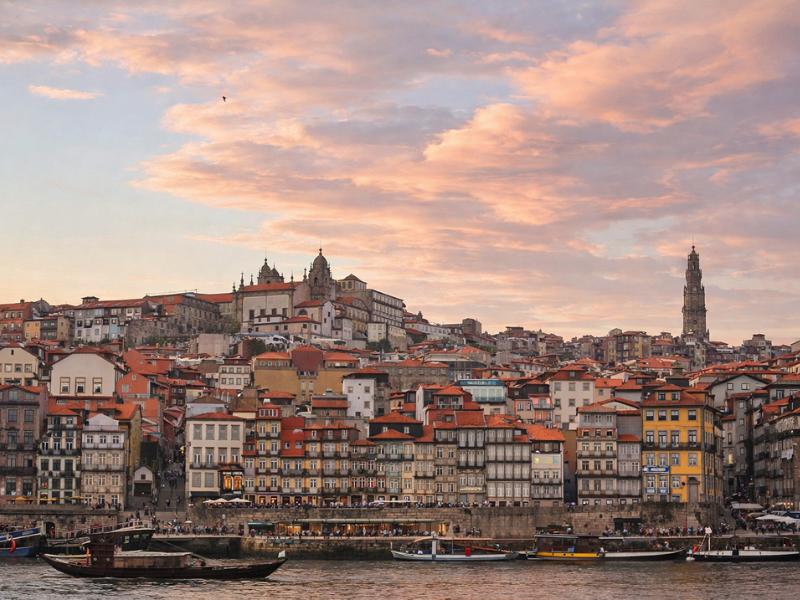
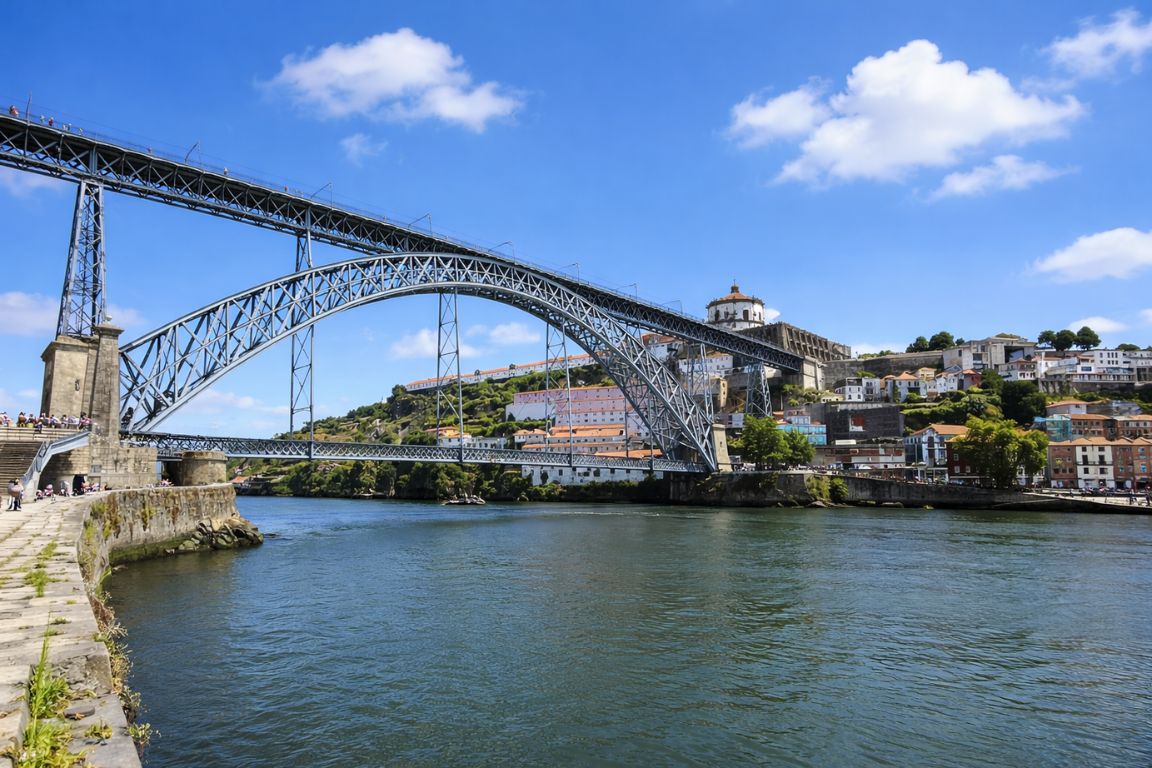
The lodges are in Vila Nova de Gaia, across the Douro from Porto's Ribeira, roughly a ten-minute walk over the lower deck of the Dom Luis I Bridge. The metro crosses the upper deck if you prefer. Book ahead in summer, when the better-known houses and the capped small-group tours fill days in advance.
Geography first, because it confuses almost everyone. Porto is on the north bank. Gaia is a separate city on the south bank, and it is where the port lodges have aged and shipped wine for centuries. When a tour listing says Porto, the actual walking happens in Gaia, and your meeting point will be over there.
Getting across is easy in any weather. On foot, the lower deck of the Dom Luis I Bridge takes you level from Ribeira to the Gaia quayside in about ten minutes, and the view alone justifies the walk. The metro runs across the upper deck and drops you at Jardim do Morro, from which you walk downhill to the riverfront. A taxi will put you on the quay directly, which is the sensible choice in heavy rain or with limited mobility.
On booking, the small-group tours are the ones to secure early. Two of the tours we track cap their groups at twelve people, which is exactly the feature that makes them fill up. Summer weekends are the pinch point. A valley day trip needs more planning still, since pickups happen early in central Porto and you want the exact meeting point confirmed the evening before rather than at seven in the morning.
| Route | How it works | Notes |
|---|---|---|
| On foot from Ribeira | Cross the lower deck of the Dom Luis I Bridge | Roughly ten minutes, level, the classic approach |
| Metro | Crosses the upper deck, alight at Jardim do Morro | Then walk downhill to the lodges on the quay |
| Taxi or rideshare | Drops you directly on the Gaia waterfront | Useful in rain or with limited mobility |
| Valley day trip | Minibus pickup at a set point in central Porto | Early start, confirm the exact spot the day before |
Do You Tip Your Guide in Portugal?
Tipping is appreciated but not obligatory in Portugal, and no guide will treat you badly for skipping it. Rounding up, or something around 5 to 10 percent for a guided tour where the guide genuinely taught you something, is a normal gesture. On a $63 cellar tour that lands at roughly $3 to $6.
There is no rigid rule here, which is exactly what makes visitors from tipping-heavy cultures anxious. Portugal simply does not run on gratuities the way some countries do. Service staff are paid, tips are a genuine extra rather than a hidden part of the wage, and a guide who receives nothing has not been insulted.
What tends to happen in practice is that groups who had a good time round up, and groups who had a guide going well beyond the script give a little more. If your guide spent twenty minutes answering questions about barrel sizes after the tour officially ended, that is the situation the 10 percent end of the range is for. Cash is easier than trying to add it to a card payment made online days earlier.
What Do First-Timers Worry About Unnecessarily?
Six things, and none of them survive contact with an actual tour: not knowing wine terms, having to finish every glass, being pressured to buy bottles, disliking sweet wine, the tipping question, and the total alcohol involved. Every one of them has a simple answer, and guides field all six daily.
The sweet wine worry deserves a sentence of its own, because it stops people from booking at all. Say it out loud at the start of the tasting. Guides will point you toward the drier end of what is available, white port comes in drier styles as well as sweet ones, and plenty of visitors find that an aged tawny reads far less sugary than a young ruby even though both carry sugar. Do not decide in advance that you know the answer.
The shop worry is equally overblown. Every lodge has one, none of them are aggressive, and walking out with nothing is entirely routine. If anything, guides tend to steer people away from the most expensive bottle rather than toward it, since the honest recommendation is usually somewhere in the middle of the range.
| The worry | What actually happens |
|---|---|
| I do not know any wine terms | Guides pitch the first tasting squarely at beginners, every single day |
| I have to finish every glass | You do not. Pour buckets sit on the counter for exactly this reason |
| I will be pressured to buy bottles | The shop is optional and nobody follows you out of it |
| I do not like sweet wine | Say so at the start, ask for the driest thing on the board, and try white port |
| Tipping will be awkward | It is optional in Portugal, and 5 to 10 percent covers you comfortably |
| Seven tastings is too much alcohol | Pours are small, you set the pace, and leaving wine behind is normal |
Which First Tour Should You Book?
For most first-timers, a three-hour cellar tour with seven tastings at around $63 is the right call: enough time per glass, two or three historic houses, and a guide talking you through the styles in English. Choose a group capped at twelve if you want questions answered rather than announced.
The three-hour format is the sweet spot for a first tour. Two hours across three cellars works and it is well rated, but it moves quickly, and a beginner benefits from the extra time standing in front of the barrels rather than walking between them. Seven tastings across three hours gives you room to look, smell and think before the next pour arrives.
If you already drink wine regularly and want more range, the nine-tasting walking tour at $59 adds unfortified Douro wines alongside the port, which is a useful contrast and the lowest cost per glass in the city. If you want the smallest possible group, the two tours capped at twelve people list at $60 and $61 and both sit at a 4.9 rating.
Whichever you pick, book it for early in your stay rather than the last afternoon. Almost everyone who enjoys their first cellar tour ends up wanting a second one, or a day up the valley, and leaving yourself the option is worth more than the fifty or sixty dollars the first tour costs.