Taylor's Port Lodge Guide: What to Expect on a Tour
Taylor's has been shipping Port since the 1690s, and its Gaia lodge is one of the few places where the history, the barrel halls and the river view all land inside a single afternoon. Here is what a visit covers and how to time it.
Booking Choice: For Taylor's itself, choose the cellar ticket with English audio. A multi-cellar walk is a different experience and does not promise Taylor's admission. Explore Taylor's Cellar Ticket
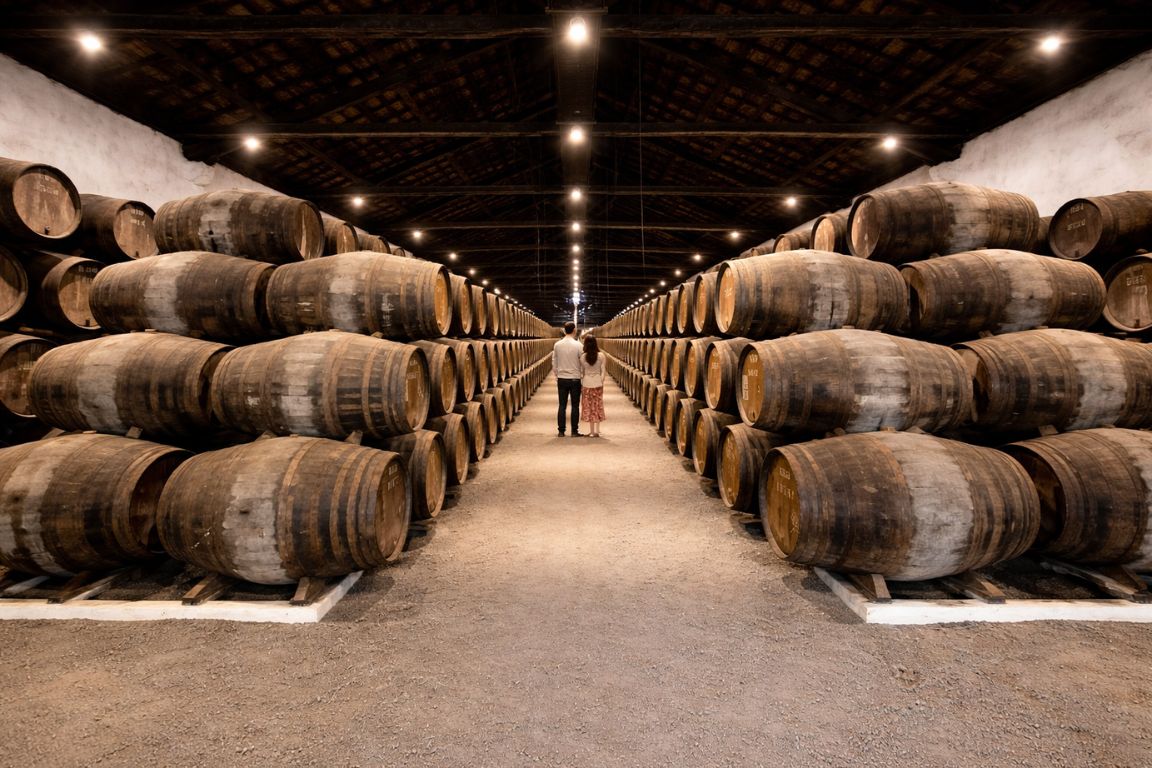
Step out of the Gaia sunshine into a Port lodge and two things change at once. The temperature drops. The air turns dense with oak, dried fig and something faintly nutty you will not smell anywhere else in the city. Taylor's has been making that smell since the 1690s, which puts it among the oldest names still shipping Port under the identity it started with.
At A Glance: Taylor’s combines the house story with a tasting in Gaia. Allow separate time for the uphill journey and any restaurant visit. Explore Taylor's Cellar Ticket
That age is why most first-time visitors put it on the list. It is also why the lodge fills up by mid-afternoon in July. This guide covers what a visit to a major Gaia lodge like Taylor's generally includes, which styles reward your attention in the tasting, whether the rooftop terrace is worth planning an afternoon around, and how going independently compares to a guided walk that takes in three or more houses in one run.
What the number on an aged Tawny label means
Aged Tawny indications describe a blended house style, not the literal age of every drop in the bottle. Categories are certified by the IVDP.
Why is Taylor's considered one of Porto's most important Port houses?
Taylor's, formally Taylor Fladgate, dates to the 1690s and sits among the oldest and most prestigious houses still shipping Port. Its reputation rests on two pillars: Vintage Port, released only in the strongest years, and aged Tawny, matured for decades in small oak casks. Both are house signatures rather than sidelines.
Port houses tend to fall into two camps. Some are known for volume and for the everyday ruby that ends up in supermarket aisles across Europe. Others built their name at the top of the quality ladder and stayed there. Taylor's belongs firmly in the second camp, and it has been there long enough that the name carries weight even with people who have never set foot in Portugal.
The 1690s founding date matters more than it sounds. Port as a defined, fortified, shipped product was still taking shape then. The Douro was not yet the demarcated region it became in 1756, and the trade was largely in the hands of British merchant families who had set up in Porto to move wine north. Taylor's grew out of exactly that world, and unlike many of its contemporaries it never disappeared into a drinks conglomerate.
What that means for a visitor is simple. You are not walking through a heritage set built for tourism. You are walking through working cellars belonging to a house that still declares Vintage years, still ages Tawny in cask for decades, and still stakes its reputation on both. The exhibits are there to explain a business that is very much running, not to memorialise one that stopped.
| Aspect | Detail |
|---|---|
| Founded | 1690s, making it one of the oldest surviving Port houses |
| Full name | Taylor Fladgate, often shortened to Taylor's on labels and signage |
| Location | Vila Nova de Gaia, on the hillside above the Douro rather than directly on the quay |
| Best known for | Vintage Port and aged Tawny |
| Style of visit | Exhibition rooms, a cellar walk, a seated or standing tasting, shop |
| Typical time needed | Around an hour to ninety minutes without the restaurant |
One honest note before you build expectations. Formats at the big Gaia lodges change, sometimes between seasons. Some houses run fixed guided departures at set times, some hand you an audio device and let you set your own pace, and several offer both. Check the current listing on the day rather than trusting a blog post, this one included, for the exact shape of the visit.
What happens on a visit to Taylor's, step by step?
A visit to a major Gaia lodge follows a predictable arc. You start in exhibition space covering the Douro, the harvest and the fortification process, move into the cool barrel halls where the wine actually ages, then finish with a tasting flight and access to the shop. Budget an hour minimum, longer if you linger.
The exhibition section usually comes first because it does the explaining that makes the rest land. Expect displays on the terraced vineyards upriver, the old rabelo boats that once carried barrels downstream, the tools of the trade, and the moment that defines the whole category: grape spirit added partway through fermentation, killing the yeast, locking in natural sweetness and pushing the wine to roughly 19 to 22 percent alcohol.
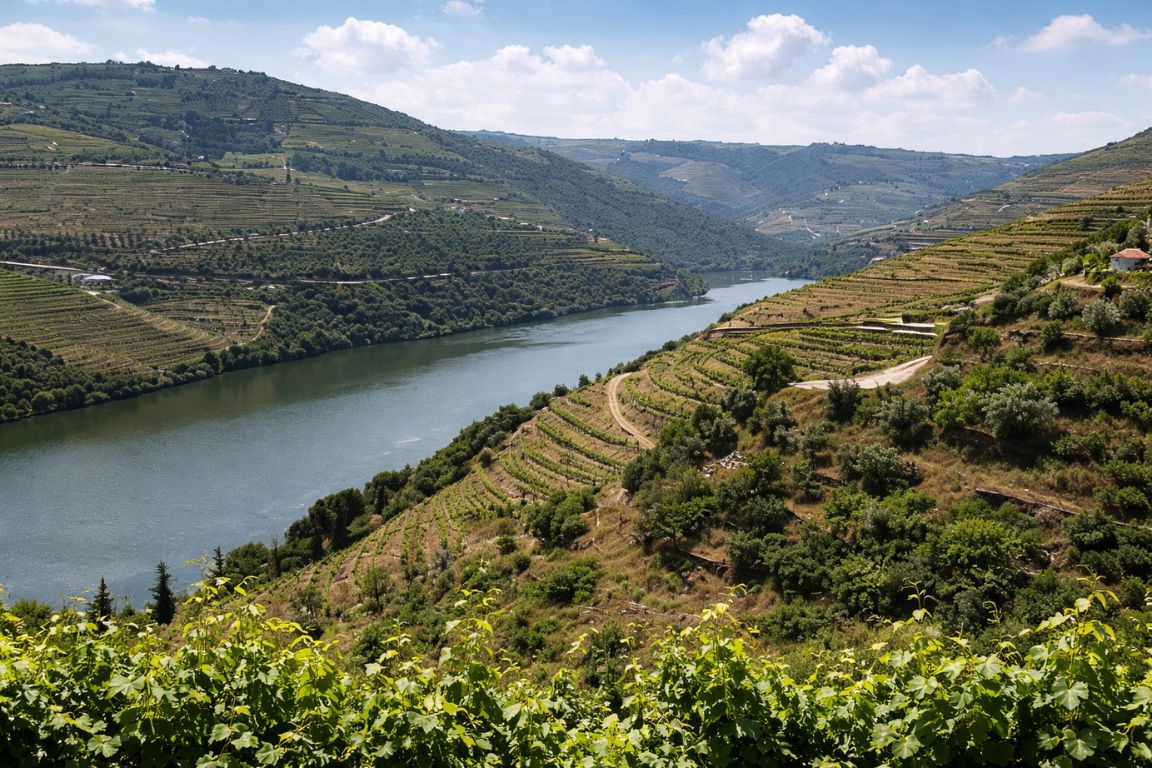
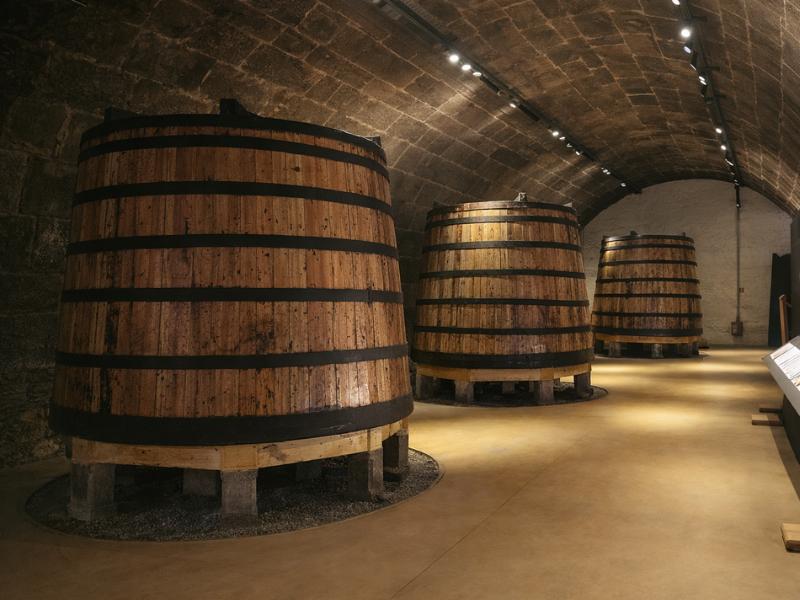
Then you go underground, or at least into the deep, dim, thick-walled halls that pass for underground in Gaia. This is the part people photograph. Rows of casks stacked several high, chalk markings on the heads, the temperature noticeably cooler than the street, and a smell that gets stronger the further in you walk. Guides tend to explain the difference between the huge wooden vats used to keep ruby styles fresh and the smaller casks, called pipes, where tawny slowly oxidises into caramel and walnut.
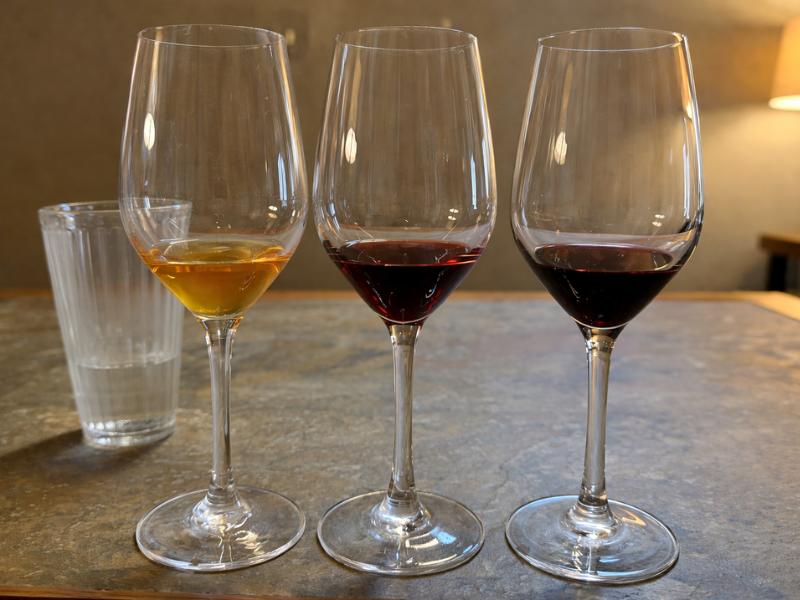
The tasting comes last, and it is deliberately last. By then you know what a pipe is, why 1994 is a name people say with reverence, and why the glass in front of you is amber rather than purple. Flights vary by ticket tier. A standard visit generally pours two wines, while upgraded tickets step up to older or rarer bottlings.
| Stage | What you get | Rough share of the visit |
|---|---|---|
| Arrival and ticketing | Entry, audio device or guide assignment, orientation | 5 minutes |
| Exhibition rooms | Douro geography, harvest, fortification, house history | 20 to 30 minutes |
| Cellar walk | Barrel halls, vats versus pipes, aging explained | 20 to 25 minutes |
| Tasting | Flight of two or more Ports depending on ticket tier | 15 to 25 minutes |
| Shop | Full house range, including bottlings rarely exported | As long as you like |
The shop deserves a word. Gaia lodge shops routinely stock things that never reach general export, particularly older colheitas and single-year tawnies. If you are going to buy Port anywhere on the trip, buying it at the house that made it is rarely the wrong call, and staff can usually tell you which bottles travel well in a suitcase and which need care.
Which Ports should you focus on in the tasting?
At a house built on Vintage and aged Tawny, spend your attention there. Ruby styles show fresh berry fruit and are pleasant but widely available. Aged Tawny is the one most visitors underestimate and then buy a bottle of. Vintage is the showpiece, dense and structured, and generally the priciest pour on any tier list.
Our team's honest read after many Gaia tastings is that people arrive expecting to love Vintage and leave loving Tawny. Vintage Port is undeniably impressive, but it is also young when bottled, built to age in glass for decades, and often served at a stage where it is still tightening rather than opening. Aged Tawny, by contrast, has already done its waiting for you in cask.
The number on a Tawny label is an indication of style, not a literal age of every drop in the bottle. A 20 Year Old Tawny is blended to hit the profile expected of that category. Move up the ladder and the fruit recedes while the nuts, dried orange peel and caramel come forward, and the finish stretches out considerably.
| Style | Ages in | Typical character | Who it suits |
|---|---|---|---|
| Ruby and Reserve | Large vats, a short spell | Bright berry fruit, purple, simple and fresh | First-timers, mixing, cheaper entry point |
| Late Bottled Vintage | Cask, four to six years | Darker fruit with some structure, usually no decanting needed | Anyone who wants Vintage character without the price |
| 10 Year Tawny | Small oak casks | Amber edge, light nuttiness, still fruit-forward | The easiest tawny entry, good chilled |
| 20 Year Tawny | Small oak casks | Caramel, walnut, dried apricot, long finish | The sweet spot for most tasters |
| 30 and 40 Year Tawny | Small oak casks, decades | Concentrated, savoury, almost spirit-like intensity | Committed tawny drinkers, special occasions |
| Vintage | Two years in cask, then bottle | Dense, tannic, needs decanting and time | Collectors and anyone celebrating a specific year |
Two practical points. Tawny is served cool, around cellar temperature, and it survives an open bottle for weeks because it has already been exposed to oxygen for years. Vintage is the opposite. Once opened it wants drinking within a day or two, and it throws sediment, which is why decanting is standard rather than fussy.
If you want the full breakdown of how the categories relate to each other before you taste, our separate explainer on Port styles goes deeper into the classification than a tasting-room conversation usually allows.
Is the rooftop terrace worth building your afternoon around?
Taylor's rooftop restaurant and terrace, the Barão de Fladgate, is a genuinely well-known spot with panoramic views across the river to Porto's old town. It operates as a proper restaurant rather than a snack stop, so treat it as a booked meal rather than something you wander into after the cellar walk.
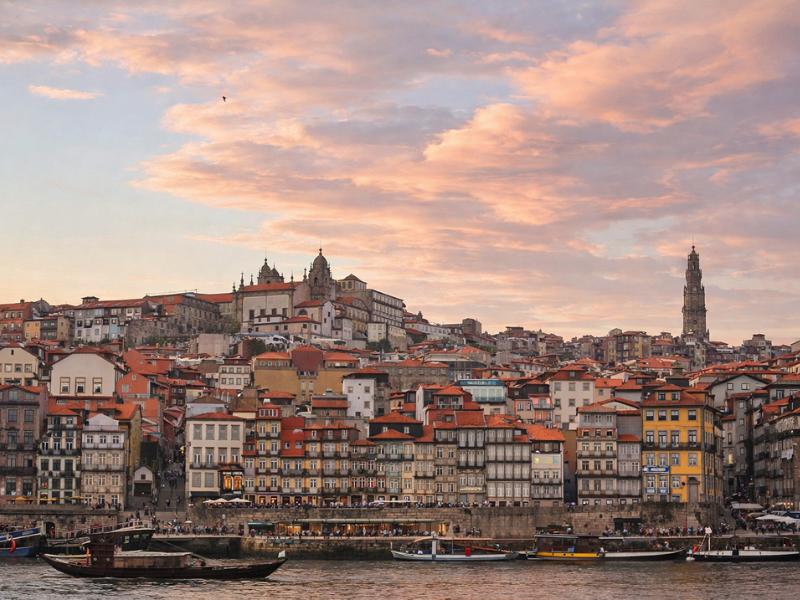
Gaia's hillside geography does the work here. Because the lodge sits above the quay rather than on it, the terrace looks over the rooftops toward the far bank, where Porto's old town climbs from the water in that stacked, tilted way that ends up on every postcard. Not many Port houses can offer both a working cellar and a view like that on the same ticket path.
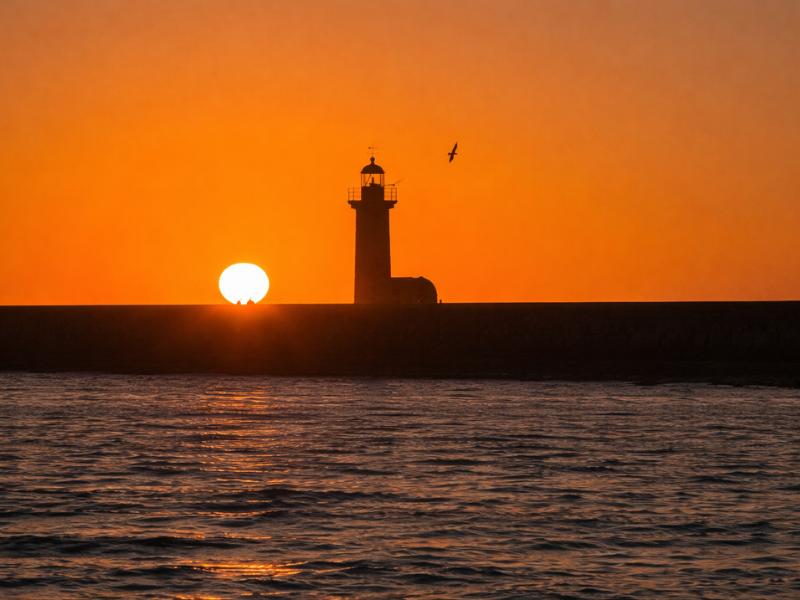
Timing changes the experience more than most people expect. Late morning light is flat and the river reads grey. Mid-afternoon is bright and hot in summer, with the terrace exposed. The hour or two before sunset is when the low sun hits the Ribeira facades directly and the whole opposite bank goes gold, which is also, predictably, when demand peaks.
| When | What the view does | Practical reality |
|---|---|---|
| Late morning | Flat light, river looks pale | Quietest window, easiest to seat |
| Lunch service | Bright and open, strong contrast | Shade matters in July and August, book ahead |
| Mid afternoon | Harsh overhead sun, hazy in summer | Good for a drink, less good for photos |
| Golden hour | Opposite bank lit warm, best photography | Highest demand of the day, reserve well in advance |
| After dark | Bridge and Ribeira lit up across the water | Cooler, quieter than sunset, still worth booking |
The honest caveat: a rooftop restaurant with a view like that prices accordingly, and it is a sit-down meal with a full service structure. If your plan is three lodges in an afternoon, the terrace does not fit into that plan. Pick one or the other. Trying to do both usually means eating in a rush and rushing the cellars too.
When is the lodge quietest, and how much time should you allow?
Allow an hour to ninety minutes for the visit itself. The quietest slots are the first hour after opening and the last hour before close. Peak congestion runs from roughly late morning through mid-afternoon in summer, when cruise arrivals and day-trippers converge on the Gaia waterfront at the same time.
Gaia has a rhythm you can plan around. Mornings start slowly because most visitors eat breakfast in Porto, walk the Ribeira, and only cross the bridge once the day has warmed up. That leaves an early window where the barrel halls are close to empty and you can actually hear the guide. By half past eleven the balance has tipped.
Season matters as much as time of day. July and August bring the heaviest crowds and the real heat, which is ironic given that the cellars are the coolest place in the city. September carries harvest energy and strong demand without August's temperatures. The winter months are genuinely quiet, and the trade-off is shorter daylight and reduced hours at some houses.
| Period | Crowd level | What to plan for |
|---|---|---|
| January to March | Low | Easy walk-ins, shorter opening hours at some lodges, cool riverside |
| April to June | Moderate and rising | Mild weather, green vines upriver, book ahead for weekends |
| July and August | Peak | Real heat, cruise traffic, advance booking effectively required |
| September | High | Harvest season interest, warm evenings, strong demand across Gaia |
| October and November | Moderate | Good light, thinning crowds, occasional rain |
| December | Low to moderate | Quiet cellars, festive city, check holiday closures |
Opening hours shift seasonally at nearly every Gaia lodge, and the last admission usually falls well before the stated closing time. If you are arriving late in the day, look up the current last-entry time rather than the closing time, or you will make the walk up the hill for nothing.
How do you get to Taylor's from central Porto?
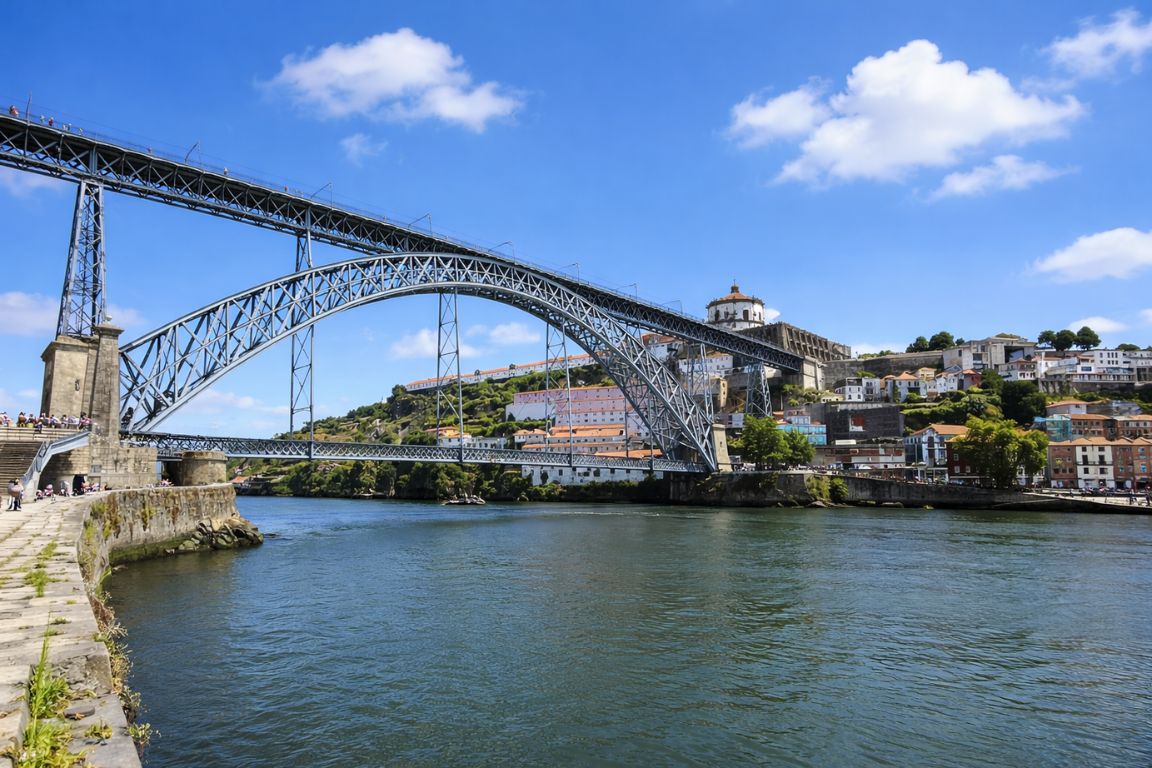
Taylor's sits on the Gaia hillside above the riverfront, not on the quay itself. The classic approach is walking across the upper deck of the Dom Luis I Bridge, which lands you at the top of the hill with a short walk to the lodge. The metro and the Gaia cable car both cover the same climb.
Most Gaia lodges cluster along Avenida de Diogo Leite, the riverside strip directly opposite Porto's Ribeira, and you can hop between several of them on the flat. Taylor's is one of the ones that is not down there. It is up the hill behind the waterfront, which is exactly why it has the view, and it is also why the approach you choose matters.
Walking the upper deck of the Dom Luis I Bridge is the best of the options if your legs and your head for heights are willing. The bridge's top level carries pedestrians and the metro across at roughly the height of the hilltop, so you arrive already up rather than facing the climb. The view down onto the river from mid-span is one of the genuinely great free things in Porto.
| Route | How it works | Effort |
|---|---|---|
| Upper deck of the bridge on foot | Cross from the Porto side near the cathedral, arrive at hill level in Gaia | Low, flat crossing, some exposure |
| Metro across the upper deck | Line D crosses the bridge and stops at Jardim do Morro on the Gaia side | Lowest, short walk at the end |
| Lower deck plus the cable car | Walk the quay from Ribeira, ride the Gaia cable car up the hillside | Low effort, extra cost, good views |
| Lower deck on foot, then climb | Cross at river level and walk up through Gaia's streets | Highest, a real hill in summer heat |
| Taxi or ride-hailing | Direct drop-off, useful with mobility needs or in rain | None, traffic dependent near the bridge |
Whichever way you arrive, plan the return differently. Walking down the hill to the quay afterwards puts you on Avenida de Diogo Leite with the rest of the lodge district, the rabelo boats moored in front of you, and an easy flat walk back over the lower deck into the Ribeira. Doing the visit uphill and the walk downhill is the sensible order.
Should you visit independently or take a guided multi-cellar tour?
Going independently gives you one house in depth at your own pace. A guided walk gives you three or so cellars, seven or more tastings, and a guide who can compare houses side by side. If Taylor's specifically is the goal, go direct. If the goal is understanding Port, the multi-cellar walk teaches more per hour.
These two options answer different questions, and travellers who are disappointed usually chose the wrong one for what they actually wanted. The single-house visit is deep and narrow. You get one producer's story, one cellar, one house style, and as much time as you feel like taking. That suits anyone with a particular attachment to the name on the door.
The guided walks that run through the Gaia district work differently. They move between historic cellars in a single circuit, usually pouring seven or more tastings across the houses, and the value sits in the comparison. Tasting one house's 10 Year Tawny is pleasant. Tasting three of them back to back, with someone explaining why they differ, is where the category finally clicks.
| Independent lodge visit | Guided multi-cellar walk | |
|---|---|---|
| Houses covered | One | Typically three historic cellars |
| Tastings | Two upward, by ticket tier | Seven or more across the route |
| Duration | One to one and a half hours | Around two to three hours |
| Typical cost | Entry-level ticket price per house | Roughly 60 to 65 dollars for the standard cellar walks |
| Pace | Entirely yours | Fixed, group-led, small groups often capped near 12 |
| Best for | One house you care about, photography, the shop | Learning the styles fast, first visit to Porto, no planning |
There is a middle path that works well over two days. Take a guided walk first to build the vocabulary, notice which house style you actually respond to, then go back independently to that one house for a deeper tasting tier. That order costs a little more and produces far better results than doing it the other way round.
What do we tell first-time visitors before they go?
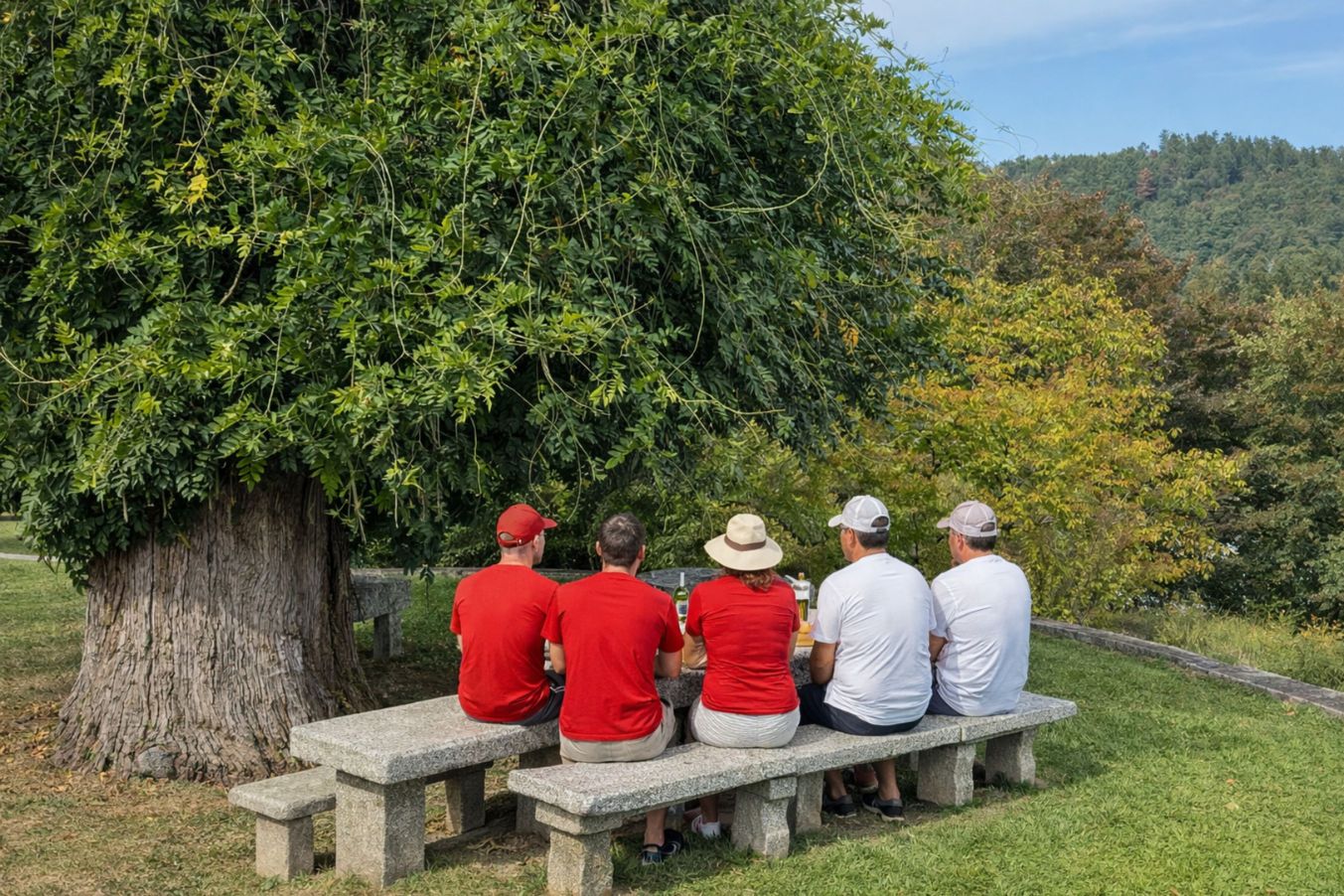
Book ahead in high season, bring a layer for the cellars, eat something first, and do not try to fit more than three tastings into an afternoon. Port is fortified to roughly 19 to 22 percent, so a seven-tasting walk carries considerably more alcohol than seven glasses of table wine would suggest.
That last point is the one we repeat most often. Visitors pace themselves by glass count out of habit, and Port does not behave like table wine. Small pours help, but the arithmetic still runs against you across an afternoon. Drink water between houses, eat before you start, and treat the cellar district as a slow half-day rather than a checklist to clear.
The temperature difference catches people out too. Cellars are kept cool and stable year-round because that is what the wine needs, so on a 35 degree August afternoon you go from full sun into what feels like air conditioning. A light layer in the bag makes the barrel halls a lot more comfortable, especially on a longer guided route.
| Before you go | Why it matters |
|---|---|
| Check current hours and last admission | Both shift seasonally, and last entry falls before closing |
| Book in advance from June to September | Peak-season slots at the well-known houses go early |
| Bring a light layer | Cellars run cool year-round by design |
| Wear shoes with grip | Cellar floors are old, uneven and occasionally damp |
| Ask about accessibility first | Historic lodges vary widely, some routes involve steps |
| Eat before the tastings | Fortified wine at 19 to 22 percent adds up fast |
| Look for the IVDP seal when buying | The regulator certifies genuine Port, and the seal is your check |
One final piece of context that helps at the till. Every genuine bottle of Port carries certification from the Instituto dos Vinhos do Douro e do Porto, the regulatory body for the region. It is the reason the categories on the labels mean something consistent across houses, and it is the simplest sanity check when you are buying from anywhere other than the lodge itself.
The complete lineup of wine tours is worth checking before you commit.