How to Serve Port Wine: Glasses, Temperature and Decanting
A sixty euro bottle can be flattened in four seconds by the wrong glass at the wrong temperature. None of the fixes cost anything. They are just not obvious.
Booking Choice: A cellar tasting lets you compare how Port styles are served before opening bottles at home. Taylor’s offers a self-paced introduction; Poças adds a live guide, and Graham’s adds food pairings. Explore Taylor's Cellar Visit
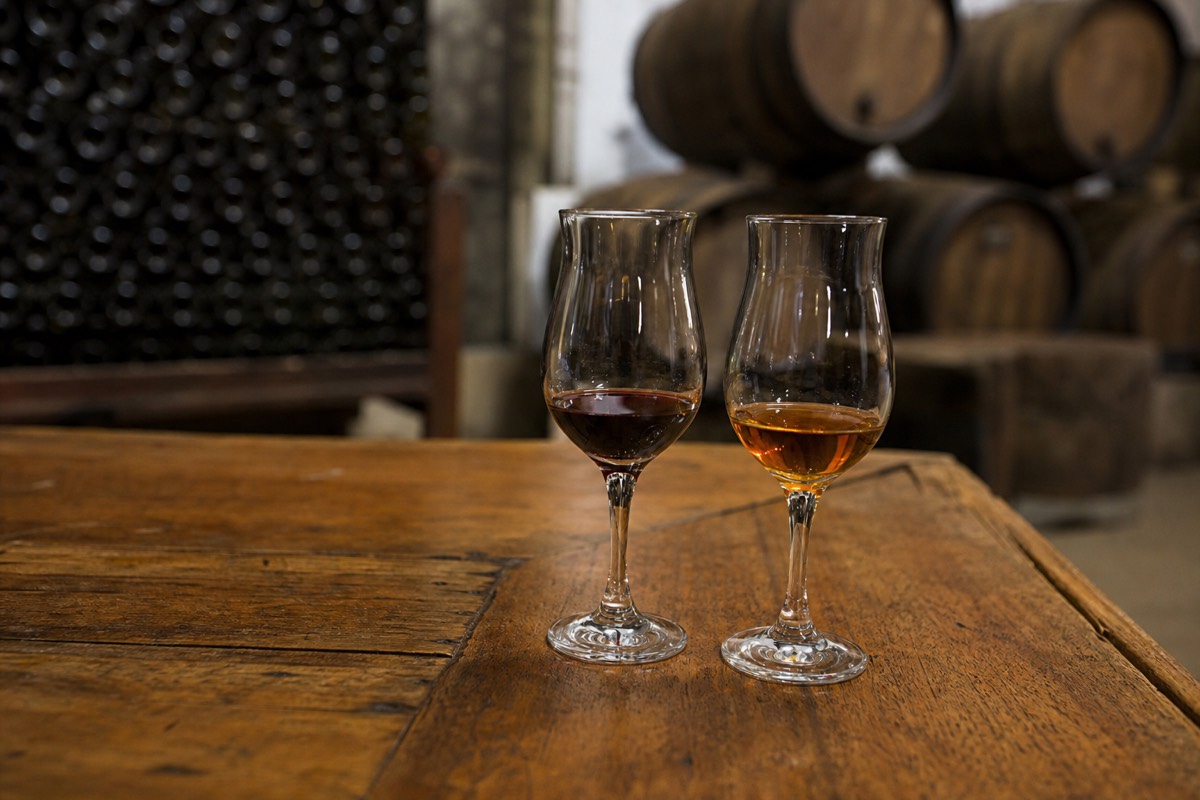
A twenty year old tawny that cost sixty euros in a Gaia lodge shop can be ruined at home in about four seconds. Pour it straight from the fridge into a large Bordeaux glass and most of what you paid for either stays locked up in the cold or burns off as alcohol vapour before it reaches your nose. Nothing was spilled. The wine is simply not doing what it was built to do.
At A Glance: Serving temperature, glassware and whether a bottle needs decanting depend on the Port style. Open-bottle storage also varies by style. Explore Taylor's Cellar Visit
Search behaviour suggests people sense this. The glassware question alone runs to several thousand searches a month, more than most questions about the wine itself, which is a reasonable instinct badly served by the answers most people find. So here is the whole serving problem in one place: glass, temperature, decanting, pour size, and what happens to the bottle after the first night.
None of it requires equipment you cannot buy in a supermarket. Two of the four fixes cost nothing at all.
Serving temperature by Port style
The bands most Port houses and the trade work to. Fridge and room temperature are marked for reference: almost every serving mistake is a bottle sitting at one of those two extremes instead of somewhere in between.
What glass should you pour Port into?
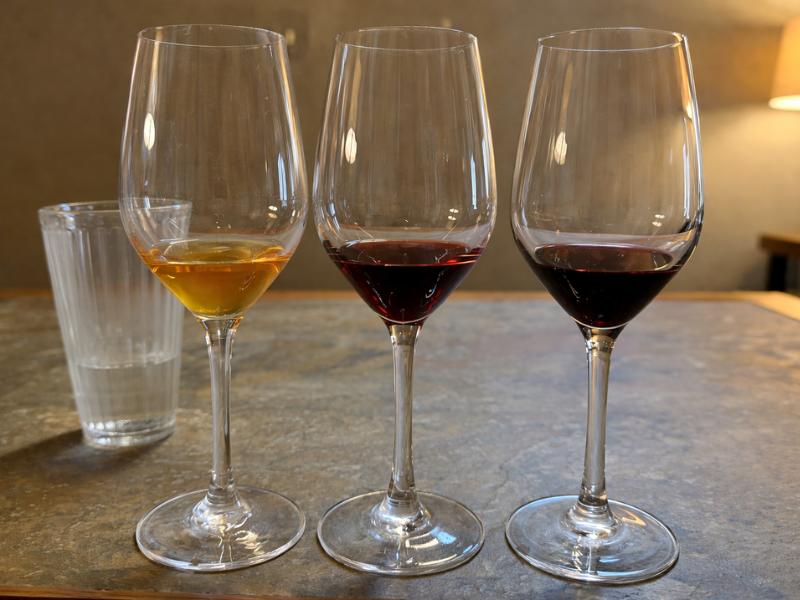
Use a small tulip-shaped glass, larger than a sherry copita and much smaller than a red wine glass, filled no more than a third. The narrowing rim gathers the aromatics over a small pour instead of letting them spread and evaporate. A standard ISO tasting glass, 215 ml in capacity, does the job perfectly.
The physics here are simple. Port is served in pours of around 70 ml. Put that in a 600 ml Bordeaux bowl and the liquid forms a shallow film with an enormous surface area relative to its volume. At 19 to 22 percent alcohol, evaporation from that film is aggressive, and what rises out of the glass is ethanol carrying very little of the fruit, spice and nut character underneath. The wine smells hot and reads as simpler than it is.

Shrink the bowl and narrow the rim and the same 70 ml sits deeper, evaporates more slowly, and delivers the aromatic compounds in a concentrated column. This is why every serious tasting room in Gaia pours into something small. It is not tradition. It is the only shape that works.
| Glass | Rough capacity | How it treats Port | Verdict |
|---|---|---|---|
| Dedicated Port glass | 150 to 215 ml | Concentrates aroma over a small pour, tapered rim | Ideal, and cheap |
| ISO tasting glass | 215 ml | The standard tasting shape, designed for exactly this job | Excellent, and works for every other wine too |
| Sherry copita | 120 to 150 ml | Right shape, slightly tight for a full pour | Very good, pour a little less |
| Small white wine glass | Around 300 ml | A bit generous but the taper still helps | Fine substitute |
| Large red wine bowl | 600 ml and up | Alcohol dominates, fruit disappears | Avoid |
| Tumbler or shot glass | Varies | No taper, so no aroma concentration at all | Only for Porto Tonico over ice |
The one exception is white Port served long. If you are building a Porto Tonico with tonic water and ice, a tumbler or a highball glass is correct, because at that point you are making a mixed drink and the ice needs somewhere to go.
What temperature should each style be served at?
Cooler than a red table wine and warmer than a fridge. Tawny wants 12 to 14 degrees, ruby and LBV 15 to 16, vintage 16 to 18, and white Port 8 to 10. Almost every serving error in the world is a bottle poured straight from the fridge door or from a heated 22 degree room.
The old rule about serving Port at room temperature was written when rooms were unheated stone. A modern living room at 22 degrees is well above the range these wines were built for, and the effect is the same as an overheated glass of red: the alcohol pushes forward, the sweetness turns cloying, and the structure goes soft.

Getting it right takes one appliance and a little patience. From a warm room, roughly half an hour in the fridge brings a bottle down about five degrees, and ten minutes in a bath of ice and water does it faster. Both figures are approximate and depend on your kitchen, which is exactly why a cheap digital wine thermometer settles more arguments than any amount of guessing.
| Style | Serve at | How to get there | If you get it wrong |
|---|---|---|---|
| White Port, dry or sweet | 8 to 10 C | A couple of hours in the fridge, or serve over ice | Too warm and it turns flat and sugary |
| 10-year tawny | 12 to 14 C | About 40 minutes in the fridge from room temperature | Too warm and the nut and caramel notes blur |
| 20-year tawny and colheita | 12 to 14 C | Same, and let it warm slightly in the glass | Too cold and decades of complexity go silent |
| Ruby and reserve ruby | 15 to 16 C | Around 25 minutes in the fridge | Too warm and it reads as jammy and hot |
| LBV | 15 to 16 C | Around 25 minutes in the fridge | Too warm and the tannin turns coarse |
| Vintage | 16 to 18 C | A cool cupboard is usually enough | Too cold and it closes up completely |
Two refinements. First, aim slightly below your target, because a glass in a warm hand climbs a degree or two within minutes and a wine that arrives a touch cool opens up as you drink it. Second, the aged tawnies genuinely reward a little movement across the range. Pour one at 12 degrees and taste it again twenty minutes later at 15 and it will not be the same wine.
Which Ports need decanting, and which never do?
Vintage Port always needs decanting, because it ages for decades in the bottle and throws a heavy sediment. Crusted and unfiltered traditional LBV usually do too. Ruby, filtered LBV, tawny, colheita and white Port do not, because they were filtered or clarified before bottling and have nothing left to leave behind.
The confusion here comes from a false generalisation. People learn that Port needs decanting, apply it to the ten year tawny in the cupboard, and end up pointlessly aerating a wine that spent a decade in contact with oxygen already. Decanting a tawny gains nothing and costs a little freshness.
The distinction runs on where the wine did its ageing. Vintage is bottled young, after roughly two years in wood, and everything that follows happens inside the glass in the absence of oxygen. Over years, colour pigments and tannins bind together and fall out of solution as a thick crust. Pour that bottle carelessly and half the glass is grit.
Tawny does the opposite. It sits in smaller oak barrels for a decade or more, oxidising gently, losing colour toward amber and gaining nut, caramel and dried fruit. By the time it is bottled it is clarified, stable and ready. There is nothing left to separate.
| Style | Decant? | Why | How far ahead |
|---|---|---|---|
| Vintage | Always | Decades of bottle ageing leave a heavy crust | Stand upright for days first, decant 1 to 3 hours before serving |
| Crusted Port | Always | Bottled unfiltered by design | Same as vintage |
| Traditional unfiltered LBV | Usually | Bottle-matured and not filtered, so it can throw a deposit | Stand upright a day, decant an hour ahead |
| Filtered LBV | No | Filtered before bottling and ready to pour | Open and serve |
| Ruby and reserve ruby | No | Short vat ageing, no deposit | Open and serve |
| 10, 20, 30, 40-year tawny | No | Clarified after long barrel ageing | Open and serve |
| Colheita | No | Single-harvest tawny, same logic | Open and serve |
| White Port | No | Nothing to separate | Chill and serve |
If a label says filtered, ignore the decanter. If it says unfiltered, bottle-matured or traditional, treat it like a small vintage. When in doubt, hold the bottle up to a lamp: a deposit is visible long before it reaches your glass.
How do you decant a vintage Port without wrecking it?
Stand the bottle upright for at least 24 hours so the crust settles, cut the capsule away entirely, draw the cork slowly, then pour in one continuous motion over a light source and stop the instant sediment reaches the shoulder. Rushing the standing time is the only step that cannot be recovered.
The whole operation takes five minutes and one uninterrupted pour. What it does not tolerate is a bottle that has been carried home from a shop that morning, because the sediment is still suspended through the wine and no amount of careful pouring will separate it.

- Stand it up, and be generous with the time. Twenty four hours is the minimum, several days is better, and a bottle that has just travelled by plane or car wants a week. The crust needs to collect at the base rather than smeared along the side.
- Remove the whole capsule. Cut it away below the lip so you can see the wine through the neck as it moves. Half-cut capsules hide the exact moment you need to watch for.
- Handle the cork carefully. Corks from very old bottles crumble. A long-bladed corkscrew helps, and the traditional answer is a pair of port tongs, heated until glowing, clamped around the neck, then chilled with a wet cloth so the glass cracks cleanly below the cork. That is a party trick with a real purpose, and it is genuinely useful on a fifty year old bottle.
- Pour in one motion, over a light. A candle is traditional, a phone torch behind the neck is more practical. Tilt slowly, keep the flow steady, and never let the bottle drop back down between pours, because that sends the crust surging forward.
- Stop early. When the first dark thread reaches the shoulder, stop. Losing a centimetre of wine is cheaper than serving a glass of sediment. If you want that last measure, filter it separately through clean muslin or an unbleached coffee filter.
- Serve within a couple of hours. An hour or so in the decanter helps a young vintage relax. Much longer and you are just oxidising it.
One caution about the decanter itself. Wide-bottomed display decanters are designed for young red wine that needs air. For an older vintage, something narrower is kinder, and if you plan to keep it more than a day, pour it back into the rinsed bottle and stopper it.
How much Port counts as one serving?
Around 70 ml, roughly half a standard glass of table wine, which gives about 10 to 12 servings from a 750 ml bottle. Because Port sits at 19 to 22 percent alcohol, that smaller pour contains less pure alcohol than a normal 150 ml glass of table wine, not more.
Do the arithmetic once and it changes how the bottle feels. A 70 ml pour at 20 percent carries about 14 ml of pure alcohol. A 150 ml glass of 13 percent table wine carries about 19.5 ml. The reputation Port has for knocking people over comes from pour size and from being served last, after everything else, rather than from the wine being unmanageable.

Fortification is why the numbers land where they do. Grape spirit goes into the fermenting must partway through, killing the yeast before it has converted all the sugar. That leaves the wine sweet and strong at the same time, which is precisely what the small pour is designed for.
| Format | Volume | Servings at a 70 ml pour | Best for |
|---|---|---|---|
| Half bottle | 375 ml | 5 to 6 | Drinking alone, or trying a style before committing |
| Standard bottle | 750 ml | 10 to 12 | A dinner for four to six |
| Magnum | 1.5 L | 20 to 24 | Vintage laid down for an occasion |
| Tasting pour | 30 to 40 ml | 18 to 25 per bottle | Running a flight of several styles at home |
Fill the glass to about a third. It looks mean if you are used to table wine, and it is correct: the empty space above the wine is where the aromatics collect, and taking it away is the second most common way to flatten a good bottle after serving it too warm.
How long does an open bottle actually last?
Far longer than table wine. An aged tawny keeps one to two months, ruby and LBV about a week, white Port a couple of weeks in the fridge, and a decanted vintage only two or three days. The higher alcohol resists spoilage, and tawny has already done its oxidative ageing in barrel, so a little more air changes almost nothing.
This is the single best argument for buying tawny as your house bottle. A ten or twenty year old tawny opened tonight will still be good in six weeks, which means one person can work through it slowly without racing a clock. Try that with a bottle of Burgundy.
Vintage is the mirror image. It has been sealed away from oxygen for twenty or thirty years and has no tolerance for it at all. Once decanted, the clock runs fast: drink it that evening, finish it the next day, and accept that by day three the fruit has flattened.
| Style | Keeps roughly | Store it | Why |
|---|---|---|---|
| 20 to 40-year tawny, colheita | 1 to 3 months | Upright, cool and dark, cork in tight | Already aged oxidatively in barrel for decades |
| 10-year tawny | 1 to 2 months | Upright, cool and dark | Same logic, slightly less resilient |
| White Port | 2 to 3 weeks | In the fridge | Cold slows oxidation, and you want it cold anyway |
| Ruby and reserve ruby | About a week | Cool and dark, fridge is fine | Fresh fruit character is the first thing to fade |
| LBV | About a week | Cool and dark | More structure than ruby, still fruit-driven |
| Vintage, once decanted | 2 to 3 days | Back in the rinsed bottle, stoppered, cool | Decades of protection from oxygen, now gone |
Three small habits extend all of those numbers. Keep opened bottles upright so the wine touches as little air-facing surface as possible and the T-cork stays dry. Move a half-finished bottle into a clean half bottle once it is down to that level, since less headspace means less oxygen. And if you keep expensive aged tawny around, a can of inert gas is a better investment than a vacuum pump, which removes some air but also pulls out aromatics.
How do you run a Port tasting at home?
Six styles, 30 to 40 ml each, poured light to heavy and dry to sweet: white, ruby, LBV, ten year tawny, twenty year tawny, then vintage. That is around 200 ml a head, so one bottle of each covers six people with wine to spare, and it takes about ninety minutes.
Six bottles is a serious outlay in one go, which is why this is also the best argument for working out which bottles to bring home while you are still standing in a Porto wine shop with someone knowledgeable behind the counter. Buy across the range rather than three variations on the same thing.
The reason to do it in that order is contrast. Each wine should make the next one legible. Start on the chilled white and the ruby that follows tastes vivid rather than sweet. Move through the LBV and the shift from vat ageing to wood becomes obvious. Then the two tawnies side by side, which is the moment most people finally understand what barrel time does, and finally the vintage.
| Order | Wine | Serve at | What to look for |
|---|---|---|---|
| 1 | Dry white Port | 8 to 10 C | Citrus and almond, and how little it resembles the others |
| 2 | Ruby or reserve ruby | 15 to 16 C | Bright dark fruit, the baseline for everything after |
| 3 | LBV | 15 to 16 C | Same fruit, more structure and grip from wood time |
| 4 | 10-year tawny | 12 to 14 C | Colour shifting to amber, first nut and caramel notes |
| 5 | 20-year tawny | 12 to 14 C | Dried fig, toffee, and a finish that runs far longer |
| 6 | Vintage | 16 to 18 C | Density and tannin, and how differently it ages in glass |
Put something on the table between wines: plain crackers, a bowl of almonds, a hard cheese. There is a case for pairing port with cheese as you go, which turns a tasting into a dinner, though it does make the wines slightly harder to compare against one another. Water too, in more quantity than feels necessary. And if you would rather have somebody else pour six or seven wines and explain the differences, that is exactly what the small-group cellar tastings in Gaia do in a couple of hours, usually across three different houses, which is a comparison no single home tasting can match.
What kit is worth buying, and what is not?
Buy six small tulip glasses and a cheap digital thermometer. Add a decanter only if you drink vintage. Everything else, including port tongs and vacuum stoppers, is optional, and one of them actively works against you.
Our team's honest view is that the glasses do ninety percent of the work. They cost less than a bottle of reserve ruby and they improve every wine you own, not just Port.
| Item | Worth it? | Why |
|---|---|---|
| Small tulip or ISO glasses | Yes, first purchase | The single biggest improvement available for the money |
| Digital wine thermometer | Yes | Ends the guesswork that ruins more bottles than anything else |
| Decanter | Only for vintage or crusted | Useless for tawny, ruby or filtered LBV |
| Muslin or unbleached coffee filter | Yes, and nearly free | Rescues the last measure from a sedimented bottle |
| Long-bladed corkscrew | Yes if you open old bottles | Driven corks in old vintage crumble under a short screw |
| Port tongs | Fun, rarely necessary | Genuinely useful only when a very old cork has failed |
| Inert gas spray | Yes if you keep aged tawny | Blankets the wine without removing anything |
| Vacuum stopper | Marginal | Pulls out aromatics along with the air |
What mistakes ruin a good bottle?
Six errors account for nearly every disappointing glass: fridge-cold tawny, room-warm vintage, an oversized glass, an overfilled one, a pointlessly decanted tawny, and an opened bottle left standing for weeks. All six are free to fix and none of them require buying anything.
- Serving straight from the fridge. At 4 degrees an aged tawny is mute. Give it twenty minutes on the counter and it comes back.
- Serving at modern room temperature. The convention was written for unheated eighteenth century rooms, not a living room at 22 degrees. Vintage wants 16 to 18, and that gap is easy to feel.
- Pouring into a big red wine glass. The surface area does the damage. Alcohol rises, fruit stays behind.
- Filling the glass. A third is right. The headspace is where the aroma collects.
- Decanting things that do not need it. Tawny, colheita, ruby and filtered LBV gain nothing and lose a little freshness.
- Leaving an opened vintage on the sideboard. Two or three days is the honest window. Aged tawny is the bottle you can leave open, and even that belongs somewhere cool and dark.
- Storing a T-corked bottle on its side. Stoppered corks on ruby, tawny and white Port are made for upright storage. Only driven corks, the kind in vintage and LBV, want horizontal.
- Pouring it against something sweeter than itself. A dessert with more sugar than the wine will strip the Port of everything except alcohol. Match the sweetness or stay below it.
Fix the temperature and the glass and everything else is a refinement. Those two decisions are made before the cork comes out, they cost nothing, and they are the difference between a bottle that justifies its price and one that leaves you wondering what the fuss was about.
It is worth comparing this against the other wine tour options before deciding.