Best Quintas and Wineries to Visit in the Douro Valley
A quinta is a working farm, not a museum. Here is which Douro estates open their gates, what happens once you are through them, and how to build a day that does not end in a scramble.
Booking Choice: For an independent valley visit, Quinta da Foz starts in Pinhão and includes five wines. From Porto, choose a full-day route with transport; a private vehicle does not automatically include tasting fees. Explore Quinta da Foz In Pinhão
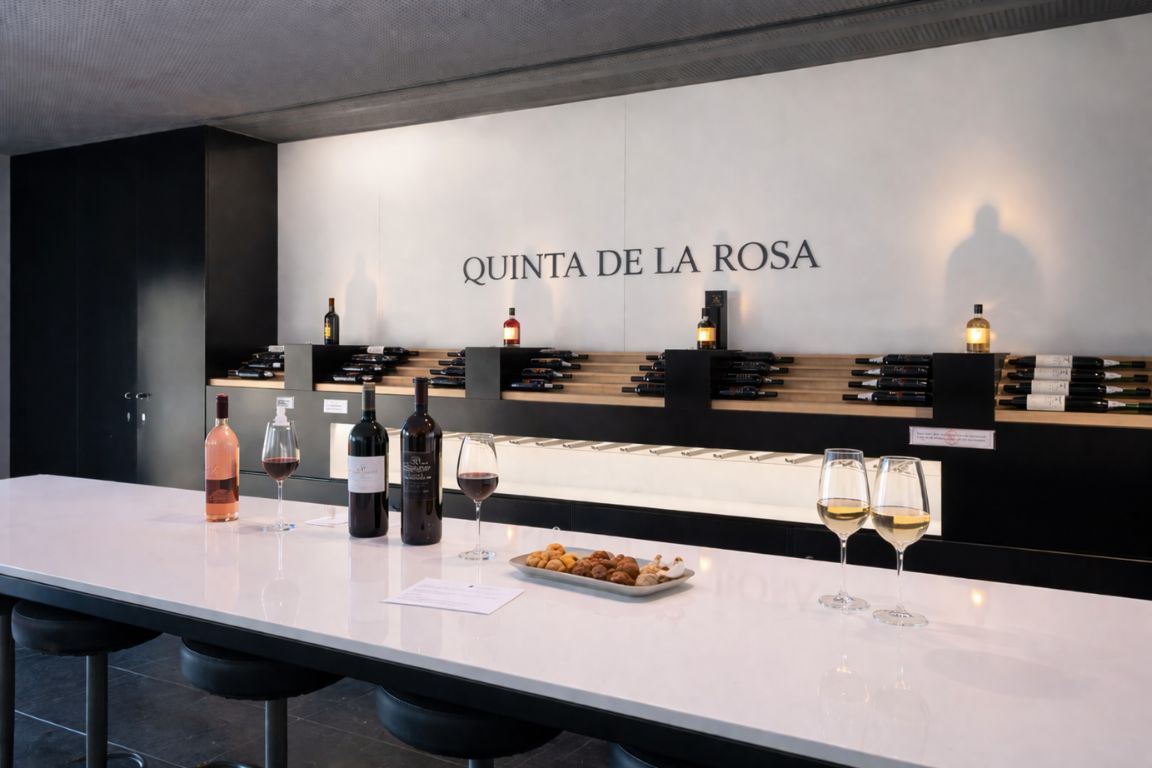
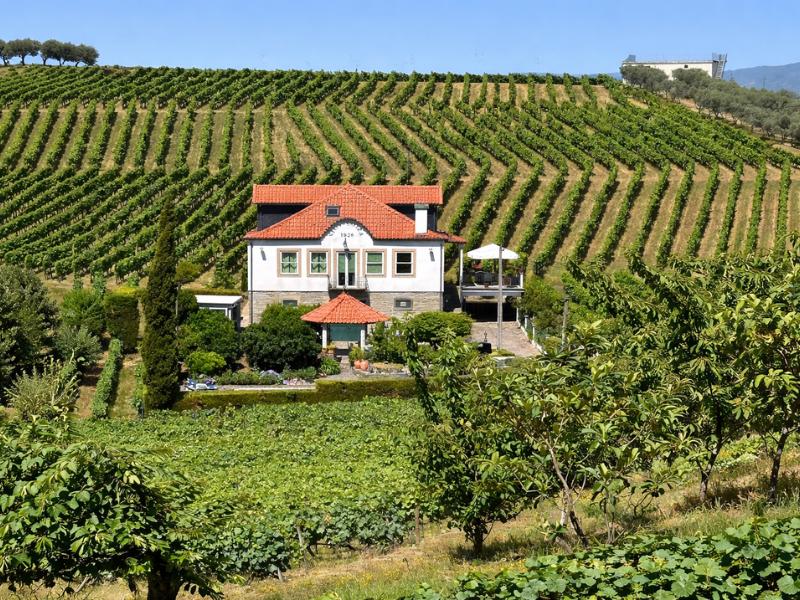
The word quinta does a lot of work in northern Portugal. On a bottle it names the estate the grapes came from. On a road sign it points at a farmhouse. In the Douro it means something more specific: a working wine property cut into schist terraces, with a press house, a cellar, and a family that has been arguing about picking dates for several generations.
At A Glance: Quintas differ in access, tasting format and location. Book the winery appointment together with the journey rather than assuming estates work like walk-in city bars. Explore Quinta da Foz In Pinhão
Ninety minutes east of Porto, a few dozen of those estates have opened their gates to visitors. Some run polished visitor centres with hourly slots and a glass wall over the river. Others sit you at a kitchen table with the person who made the wine. Our team matches travelers to Douro operators every week, and the mistake we see most is not picking the wrong estate. It is not realising that a Douro quinta and a Vila Nova de Gaia lodge are two completely different days out.
What a full day at the Douro quintas actually costs
Per-person prices from the live operator listings we track for the Douro Valley, all full-day departures from Porto. Prices move with season and party size; the listing always shows the current figure.
What is a quinta, and how is it different from a Porto cellar visit?
A quinta is a working wine estate out in the Douro Valley: vineyards, a press house, a cellar, usually a family living on site. A Gaia lodge is a riverside aging warehouse in the city, across the bridge from central Porto. One is a farm you walk through over most of a day. The other is a cool dark hall you tour in under ninety minutes.
Both are real port experiences and both deserve your time. They answer different questions. The lodges in Gaia explain what happened to the wine after it left the valley: how it was shipped downriver, blended, aged in wood for years or decades, and sold under an English or Scottish merchant name. That naming quirk goes back to the 1703 Methuen Treaty, which cut tariffs on Portuguese wine in exchange for English textile access and pulled a generation of British traders into the trade.
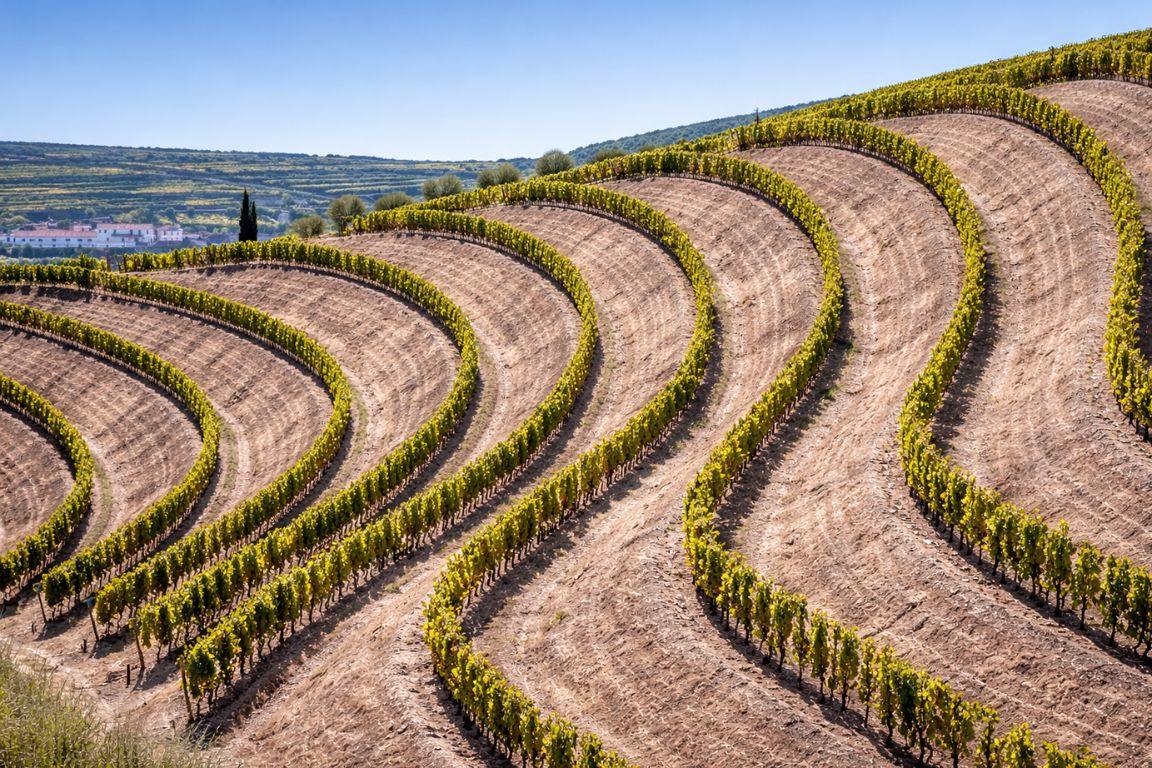
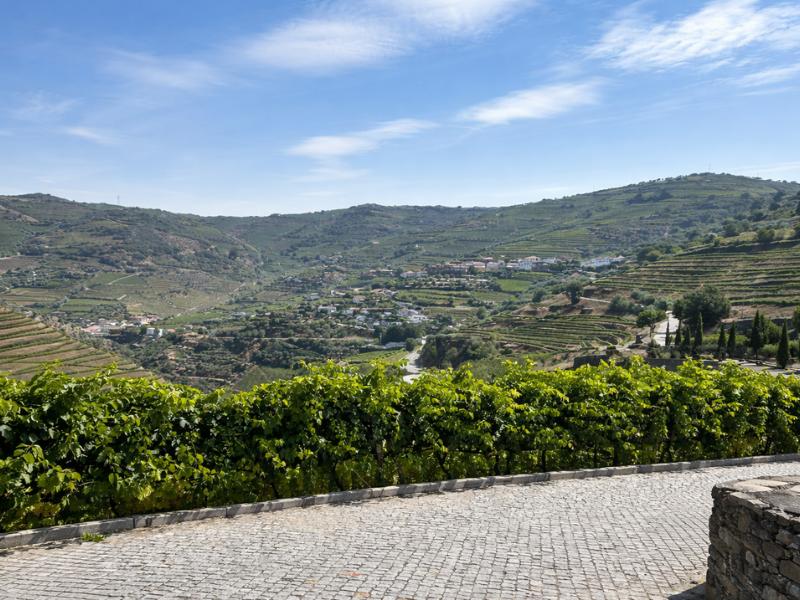
An estate visit works the other way round. It starts with the ground. You see which slope faces which way, how thin the soil is, why the vines are trained on terraces that machinery cannot climb, and why almost everything here is still picked by hand. The Alto Douro Wine Region was inscribed as a UNESCO World Heritage Site in 2001 precisely because that landscape is the product, not just the setting.
The practical gap is bigger than the philosophical one. A Gaia cellar visit costs you a walk over the Dom Luis I Bridge and an hour of an afternoon. A quinta visit is a commitment: transport out of the city, a full day gone, and lunch somewhere along the way. Nobody visits a Douro quinta by accident.
| Douro Valley quinta | Vila Nova de Gaia lodge | |
|---|---|---|
| Where it is | In the demarcated Douro, roughly 90 minutes east of Porto | On the riverfront directly across from central Porto |
| What you see | Terraces, granite lagares, the press house, the estate cellar | Rows of aging casks in a cool warehouse |
| Getting there | Car, train to Regua or Pinhao, boat, or a guided day tour | A ten-minute walk from the Ribeira |
| Time needed | Half a day at absolute minimum, realistically a full day | 45 to 90 minutes |
| Group size | Often six to fifteen people, sometimes just two | Fifteen to thirty on a scheduled slot |
| Who pours | Frequently the winemaker or a family member | A trained house guide |
| Food | A long terrace lunch is the norm, not an extra | Rarely more than a small pairing plate |
| Booking | Almost always needed in advance | Walk-in is often possible outside summer |
If you have one free day in Porto and want to understand port as a drink, the Gaia cellars do that efficiently and cheaply. If you want to understand it as a place, go up the river. Our honest advice for anyone with three days or more: do both, valley first. The cellar tour lands very differently once you have stood on the terraces the wine came off.
Which Douro quintas should top your list?
The estates around Pinhao give you the most famous river views and the tightest cluster of open cellars, with Quinta do Bomfim, Quinta da Roeda, Quinta do Seixo, Quinta de la Rosa and Quinta das Carvalhas all within a few kilometres of one another. Further downstream near Peso da Regua, Quinta da Pacheca, Quinta do Vallado and Quinta do Crasto are easier to reach and usually quieter.
Geography decides most of this for you. The valley narrows and steepens as you go east, and the concentration of visitable estates peaks around the bend at Pinhao, where the Pinhao river meets the Douro. That single stretch of water is the postcard everyone has already seen. Downstream around Regua the terraces are gentler, the roads are easier, and the estates tend to be less booked out in high season.
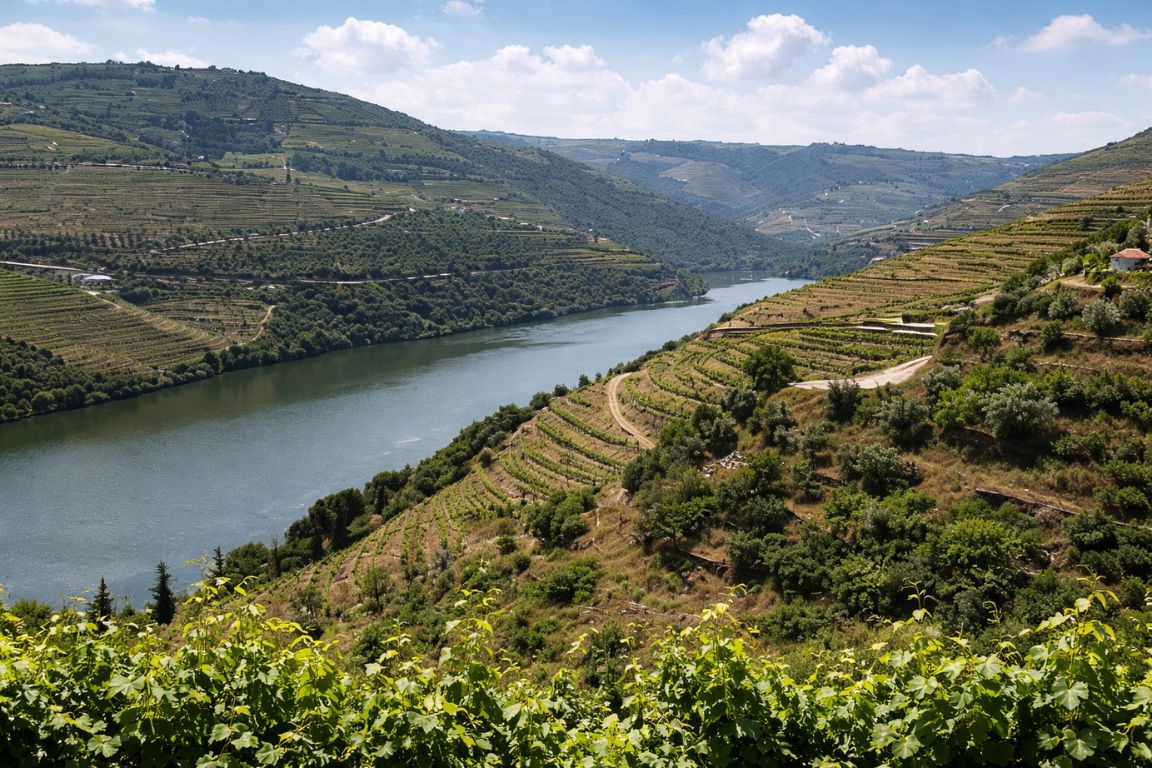
Quinta da Roeda sits right on the river just outside Pinhao and belongs to the Croft house, one of the older names in the trade. It is a classic river-bend estate: vines running down to the water, a working cellar, and the sort of view that makes people stop talking mid-sentence. Visits here tend to be structured and well-run rather than improvised.
Quinta de la Rosa, a short way along the same stretch, is the family-owned counterweight. Production is small by Douro standards, the estate has rooms and a restaurant on site, and the whole operation feels closer to a working farmhouse than a visitor centre. It suits people who would rather sit still for two hours than be walked through a script.
Quinta do Seixo, on the south bank near Tabuaco, is the Sandeman estate and the modern one. Its visitor centre was built to frame the view, with a wide terrace over one of the most photographed bends in the valley. If somebody in your group cares more about the landscape than the fermentation chemistry, this is the stop that wins them over.
| Quinta | Nearest town | Known for | Best for |
|---|---|---|---|
| Quinta do Bomfim | Pinhao | The Symington family's Dow's estate, with a visitor centre set above the river | First-timers who want a polished, well-explained visit |
| Quinta da Roeda | Pinhao | Croft's riverside estate on the Pinhao bend | Anyone chasing the classic port-house experience |
| Quinta do Seixo | Tabuaco, opposite Pinhao | Sandeman's modern visitor centre and its terrace view | Photographers and big-view seekers |
| Quinta de la Rosa | Pinhao | Small family production, rooms and a restaurant on the property | Slow visits and travelers who want to stay the night |
| Quinta das Carvalhas | Facing Pinhao across the river | Vineyard drives up to the ridge and the widest panorama of the bend | Walkers and anyone who wants to get above the valley |
| Quinta do Panascal | Tavora valley, near Pinhao | Fonseca's estate, with a self-guided walk through the vineyards | Independent visitors who dislike being herded |
| Quinta da Pacheca | Lamego side of Peso da Regua | Long claimed as one of the first Douro estates to bottle under its own name, now a wine hotel | Travelers based in or near Regua |
| Quinta do Vallado | Peso da Regua | Deep Ferreira family history paired with a sharply modern winery and hotel | Design-minded visitors and architecture fans |
| Quinta do Crasto | Between Regua and Pinhao | Douro table wines as much as port, plus a much-photographed pool on the ridge | People who do not only want to drink fortified wine |
That list is a starting point, not a ranking. Several dozen more estates take visitors, and small producers open and close their visitor programmes from year to year. The reliable filter is simple: pick estates that are genuinely close to one another, then let the schedule follow the map rather than the wish list.
What actually happens during a quinta visit?
A standard estate visit runs 90 minutes to two hours: a short orientation, a walk into the vineyard, the press house with its granite lagares, the cellar where the wine sits in wood, then a seated tasting of three to five wines. Add lunch and you are looking at three to four hours at a single quinta.
The order rarely varies much, because the story follows the wine. You start outside, usually on a terrace where the guide points across the valley and explains what you are looking at: which exposure gets the punishing afternoon sun, how the schist splits vertically so roots can drive down through it, why a vineyard planted on a 40-degree slope has to be worked by hand.
Then the press house. This is the part people remember. Many Douro estates still ferment at least some of their port in open granite tanks called lagares, and at a few of them treading by foot survives as a working method rather than a folk demonstration. Outside harvest the lagares sit empty and scrubbed, which is honestly still worth seeing, because the scale of them explains a lot about how the wine gets its colour.
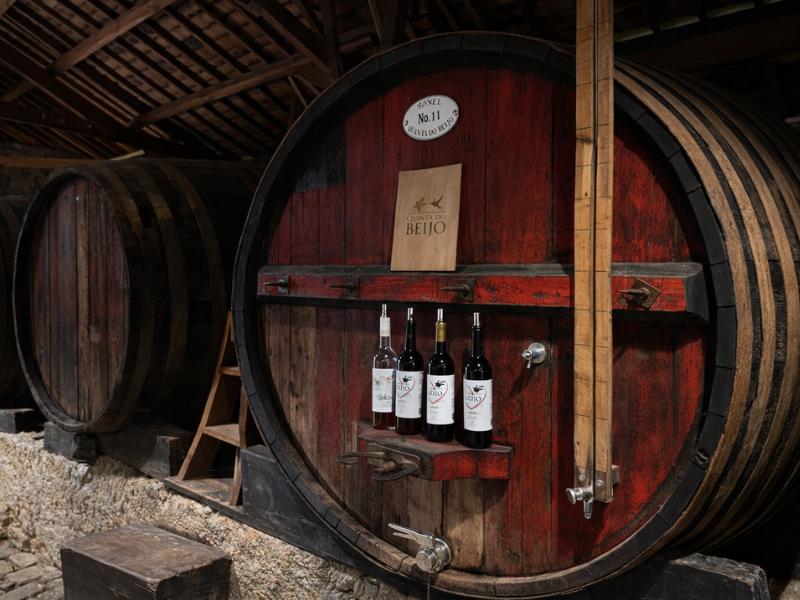
The cellar comes next, and it is usually smaller than visitors expect. Historically most aging happened downriver in Gaia, where the cooler, damper coastal air suited long wood aging. Rules changed in the 1980s so that port can now be aged and shipped from the Douro itself, and plenty of estates keep serious stocks on site, but the estate cellar is still typically a working room rather than a cathedral.
| Stage | Roughly how long | What you get out of it |
|---|---|---|
| Arrival and orientation | 10 minutes | The view, the estate's history, who owns it now |
| Vineyard walk | 20 to 40 minutes | Terracing, soil, grape varieties, why it is hand-picked |
| Press house and lagares | 15 minutes | How the grapes are crushed and how colour is extracted |
| Cellar and barrel room | 15 to 20 minutes | Fortification, cask sizes, how aging style changes the wine |
| Seated tasting | 30 to 45 minutes | Three to five wines, usually a white, a ruby style and a tawny |
| Lunch, when included | 90 minutes or more | Estate table wines, regional cooking, the slow part of the day |
| Shop | 10 to 15 minutes | Bottles you will not easily find at home, shipping options |
One thing worth setting expectations on: the tasting itself is not always the highlight. Pours are small and deliberate, and a guide who knows their material will spend more time on why the 1756 demarcation happened than on how many points a critic gave the vintage. The Douro was the world's first legally demarcated and regulated wine region, marked out with 335 granite pillars under the Marques de Pombal, more than a century before the French appellation system existed. Every estate in the valley still works inside those boundaries, certified by the IVDP.
How many quintas can you realistically visit in one day?
Two is the sensible number. Three is possible if the estates are close together and you keep lunch short. One deep visit plus a long lunch and a boat hour is the most relaxed version and the one most repeat visitors end up preferring. Four is a bad idea in a valley where the roads are slow and the tastings are not.
The arithmetic is unforgiving. Porto to the heart of the valley is around 90 minutes each way in good traffic, so a Douro Valley day trip loses three hours to the road before anything else happens. A full estate visit with a tasting is two hours. Lunch at a quinta is ninety minutes if nobody lingers, and people linger. Add twenty to forty minutes between estates on winding valley roads and the day fills itself.
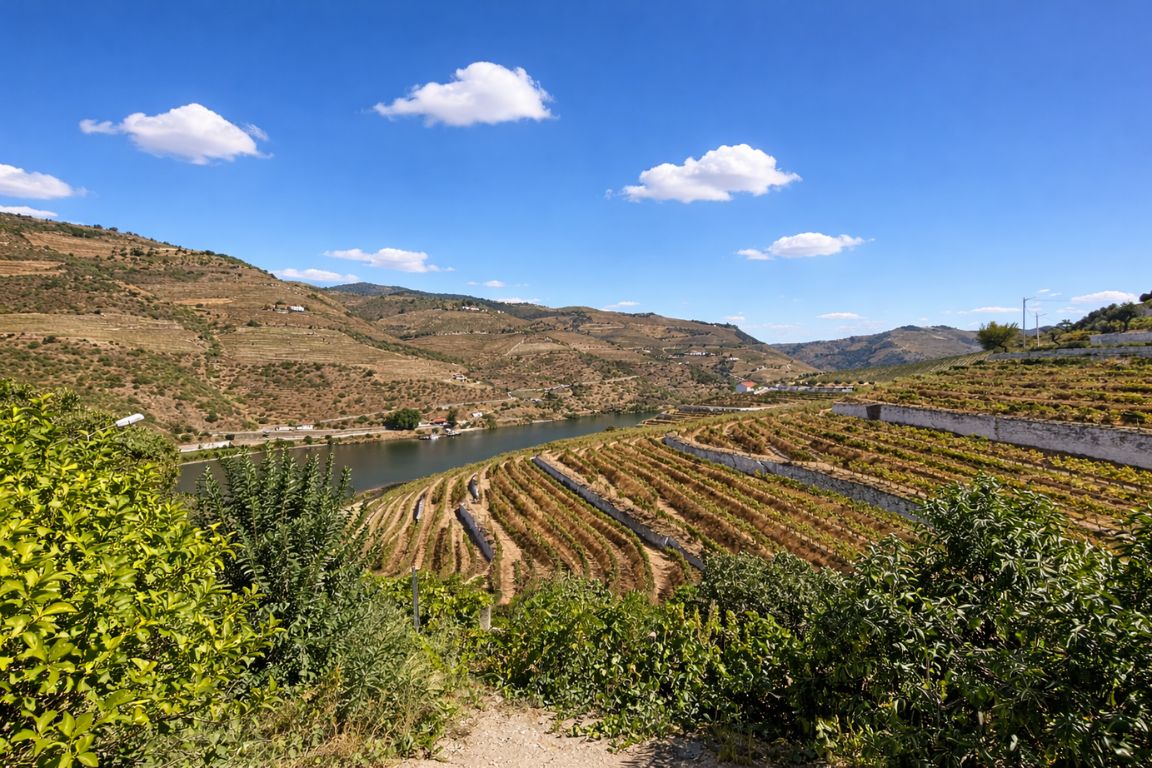
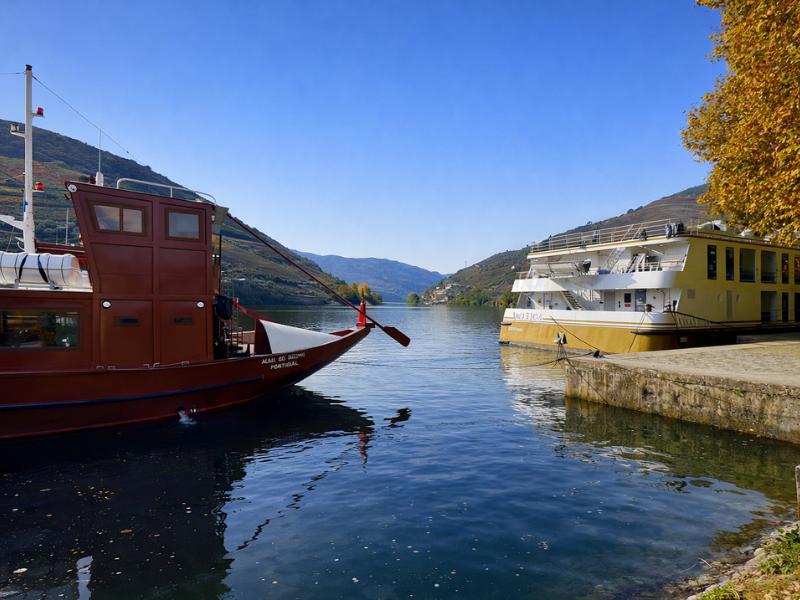
This is why almost every well-reviewed full-day operator lands on the same shape: two quinta visits, a proper sit-down lunch, and an hour on the water. Not because two is a magic number, but because the third stop is the one that turns a good day into a forced march. The operators who do run three tastings usually do it by pairing shorter, tasting-only stops rather than three full property tours.
| Estates in a day | What the day feels like | What you give up | Who it suits |
|---|---|---|---|
| One | Unhurried. Long visit, long lunch, time on the terrace | Comparison between houses and styles | Repeat visitors, couples, anyone travelling with kids |
| Two | The standard. One big-name estate, one smaller one, lunch between | Very little. This is the balanced option | Almost everyone on a first Douro day |
| Three | Full and fast. Works only if the estates are clustered | Downtime, photo stops, the second glass of anything | Serious wine drinkers who came to compare |
| Four or more | A transfer schedule with wine attached | The valley itself. You will remember the van | Nobody, in our experience |
If you are staying overnight in the valley the maths change completely, because you delete the three hours of driving. Two nights in the Douro comfortably supports four or five estate visits across two full days, with time left for a village lunch and an afternoon doing nothing.
Which quinta fits which kind of traveler?
Match the estate to the reason you came. Big houses with visitor centres explain port clearly and handle groups well. Small family estates give you access to the person who made the wine. View-first estates are worth booking for the terrace alone. Table-wine producers suit anyone who does not want six fortified pours before lunch.
The single most useful question to ask before booking is what the group actually wants. A traveler who has never tasted a tawny port needs structure, a good guide and a clear story. Someone who already keeps port at home wants access, older stock, and a chance to ask about picking decisions rather than about how fortification works.
Group composition matters more than most people plan for. Estates vary widely in how they handle non-drinkers, children and mobility. Terraced vineyards are, by definition, steep, and a vineyard walk on loose schist is not for everyone. The larger visitor centres tend to have accessible tasting rooms and a shorter, flatter route; smaller family estates often do not, and will say so honestly if you ask before booking.
| If you are | Look for | Ask before booking |
|---|---|---|
| New to port | A big-house estate with a structured guided visit and a three-wine flight | Whether the tour runs in English at your time slot |
| An experienced drinker | A smaller producer, or a premium tasting with aged tawnies and vintage | Which wines are actually open that day, not just the menu |
| Here for the landscape | A view-first estate on the river bend, or one with a ridge-top vineyard drive | Whether the terrace is part of the standard visit or the premium one |
| Travelling with kids | An estate with grounds, a garden and a restaurant rather than a cellar-only route | Minimum age for the tour and whether under-18s are welcome at the tasting |
| Not drinking | Estates that make table wine, olive oil or juice and pour something for everyone | Whether the non-drinker pays a reduced rate |
| Short on time | An estate close to Regua rather than deep upriver | Total door-to-door time, including the drive back |
| Celebrating something | A private booking with a winery lunch and a boat hour attached | Whether the private boat is genuinely private or a shared charter |
Do you need to book a quinta visit in advance?
Yes, in almost every case. Douro estates are working farms with small visitor teams, not walk-in attractions. Book at least a few days ahead outside summer, a couple of weeks in spring and autumn, and considerably further for harvest, weekends, and anything involving lunch or a private tasting.
The reason is structural rather than commercial. A Gaia lodge can absorb a hundred extra visitors on a wet Tuesday because that is what the building is for. A quinta might have one guide on duty, a tasting room that seats twelve, and a harvest to run. Turning up unannounced usually means a locked gate and a long drive back.
Lunch is the part people underestimate. Estate restaurants are small, often seat a single sitting, and close out early in peak weeks. If a winery lunch is the thing you actually want from the day, book that first and arrange the tastings around it, not the other way round.
| When you are going | Book estate visits | Book winery lunch | Why |
|---|---|---|---|
| November to February | A few days ahead | A week ahead | Quietest stretch, though some estates cut their visiting hours |
| March to May | One to two weeks ahead | Two to three weeks ahead | Green vines, mild weather, steadily rising demand |
| June to August | Two to three weeks ahead | Three to four weeks ahead | Peak season and real heat in the valley |
| September to mid-October | Three to four weeks ahead | As early as you can | Harvest. The best time to be there and the hardest to get in |
| Any weekend | Add a week to the above | Add two weeks | Domestic visitors from Porto fill Saturday slots first |
A guided day tour sidesteps the whole problem, since the operator holds standing arrangements with the estates on its route. That is a genuine part of what you are paying for, and it is most valuable in exactly the weeks when booking direct is hardest.
What does a quinta day cost compared with a city tasting?
A Gaia cellar tour with tastings runs around $59 to $63 for two or three hours. A full day in the valley with two estate visits, lunch and a river cruise starts near $108 and sits in the $110 to $150 band for most well-rated group departures. Private and premium days run from roughly $164 to $249, and charter-level days go far higher.
Those figures are per person, from the operator listings our team tracks, and they bundle the transport that is otherwise your biggest hidden cost. Booking estate visits directly is cheaper per tasting, generally in the region of fifteen to thirty euros for a standard flight and more for aged or vintage pours, but you still have to solve the 200-kilometre round trip yourself.
The gap between the tiers is mostly vehicle size and lunch quality. Around $108 to $133 you are in a shared van of perhaps fifteen people with a set lunch at a valley restaurant. In the $150 to $180 range the group shrinks, the lunch usually moves onto an estate, and the boat hour is more likely to be a smaller private-style vessel rather than a scheduled cruise. Past $200 you are buying your own schedule.
| Tier | Typical price per person | What is included | Trade-off |
|---|---|---|---|
| Gaia cellar tour | $59 to $63 | Two or three historic lodges, six or seven tastings, two to three hours | No vineyards. You never leave the city |
| Shared full-day valley tour | $108 to $142 | Two estates, tastings, lunch, roughly an hour on the river, around ten hours door to door | Fixed schedule, larger group, set lunch menu |
| Small-group premium day | $151 to $182 | Smaller vehicle, three tastings, winery lunch, private-style boat | Still a fixed route, just a better one |
| Premium with private cruise | $164 to $171 | Winery lunch and a private river cruise, often better wines poured | Prices climb quickly at weekends and in harvest weeks |
| Fully private, customizable | Around $249 | Your estates, your pace, private guide and vehicle for nine hours | Only worth it if you actually use the flexibility |
| Charter-level private day | Well over $1,000 | Private cruise plus lunch at an award-winning winery | A special-occasion purchase, not a value one |
One cost people forget entirely: wine. Estate shops sell bottles you genuinely cannot buy at home, particularly single-quinta vintages and colheita tawnies from smaller producers. Most estates ship, though rates vary a lot, and EU customs allowances mean the arithmetic works out differently depending on where you are flying back to. Budget for it rather than being surprised at the till.
When does a working quinta feel most alive?
September into early October, during the vindima. That is when the lagares fill, the yards are busy, and the estate is doing the thing it exists to do. April through June is the calmer alternative: green terraces, mild days, and staff who have time to talk. July and August are hot enough in the valley to change how you plan the day.
The harvest season is not a marketing invention in the Douro, it is a whole year compressed into a few weeks. Pickers work the terraces from first light, trucks come and go, and the estates that still tread by foot run treading sessions in the evening. Some open those to visitors. It is loud, sticky and genuinely memorable, and it is also the hardest time of year to get a booking, which is not a coincidence.
Spring is the quiet argument in the other direction. The terraces are green rather than the burnt gold most photographs show, almond and olive trees are out, and a guide who is not simultaneously running a harvest can spend forty minutes answering your questions. Rooms and tastings are easier to get, and the valley roads are far less busy.
Summer needs planning rather than avoiding. The Douro is a deep river gorge and it traps heat, so afternoons in July and August can be brutal on an exposed terrace. Book morning visits, treat lunch as the middle of the day rather than a pit stop, and put the boat hour in the late afternoon when there is shade and a breeze on the water.
Winter is the underrated one. Estates are open, prices soften, mist sits in the valley bottom, and you may be the only visitors in the tasting room. The trade-off is short daylight, some reduced visiting hours, and the fact that a bare terraced hillside in January is a more austere sight than the brochure version.
There is no single best time to visit the Douro Valley, only a set of trade-offs you get to choose between: heat against crowds, harvest energy against harvest scarcity, winter quiet against four hours less daylight. Pick the one you can live with and build the booking calendar around it.
What do first-time visitors get wrong about Douro quintas?
Four things, over and over: treating the valley as a half-day trip, booking too many estates, assuming a quinta visit is the same product as a Gaia cellar tour, and forgetting that somebody has to drive. Fix those and the day works. Ignore them and you will spend the best part of it in a vehicle.
The half-day mistake is the most common. Operators do sell shorter valley products, but a genuine Douro estate day is a ten-hour commitment door to door, and pretending otherwise means arriving, drinking quickly and leaving. If your Porto trip only has room for a half day, spend it on the Gaia lodges and save the valley for a trip where you can give it properly.
The second mistake is over-scheduling, which we covered above and which people still do. The third is a naming problem: several city lodges use the word quinta in their branding, and some valley estates keep a tasting room in Gaia, so it is entirely possible to book what you think is a vineyard visit and find yourself in a warehouse a ten-minute walk from your hotel. Check the address, not the name.
The fourth is the drinking-and-driving problem, and it is the reason guided day trips dominate this market. Portugal's legal limit is low by international standards, and a day built around five or six tastings is not compatible with a rental car unless one person opts out entirely. That is a real cost, and it belongs in the comparison when you are pricing a self-drive day against a guided wine tour.
One last thing, less a mistake than a missed opportunity. Ask your guide what the estate does not sell to visitors. Many quintas make small volumes of table wine, olive oil or aguardente that never reaches a shop, and the answer is usually the most interesting five minutes of the whole visit.