Where to Stay in the Douro Valley: Best Towns and Villages
The valley has one postcard village, one working town and a hilltop city, and they suit very different trips. Here is what each base actually gives you once the day tours have gone home.
Booking Choice: For a valley stay, use a local starting point: Quinta da Foz meets in Pinhão; Sobre a Fonte is near Régua. The Porto day trip is only for readers keeping a Porto base. Accommodation is not included. Explore Quinta da Foz In Pinhão
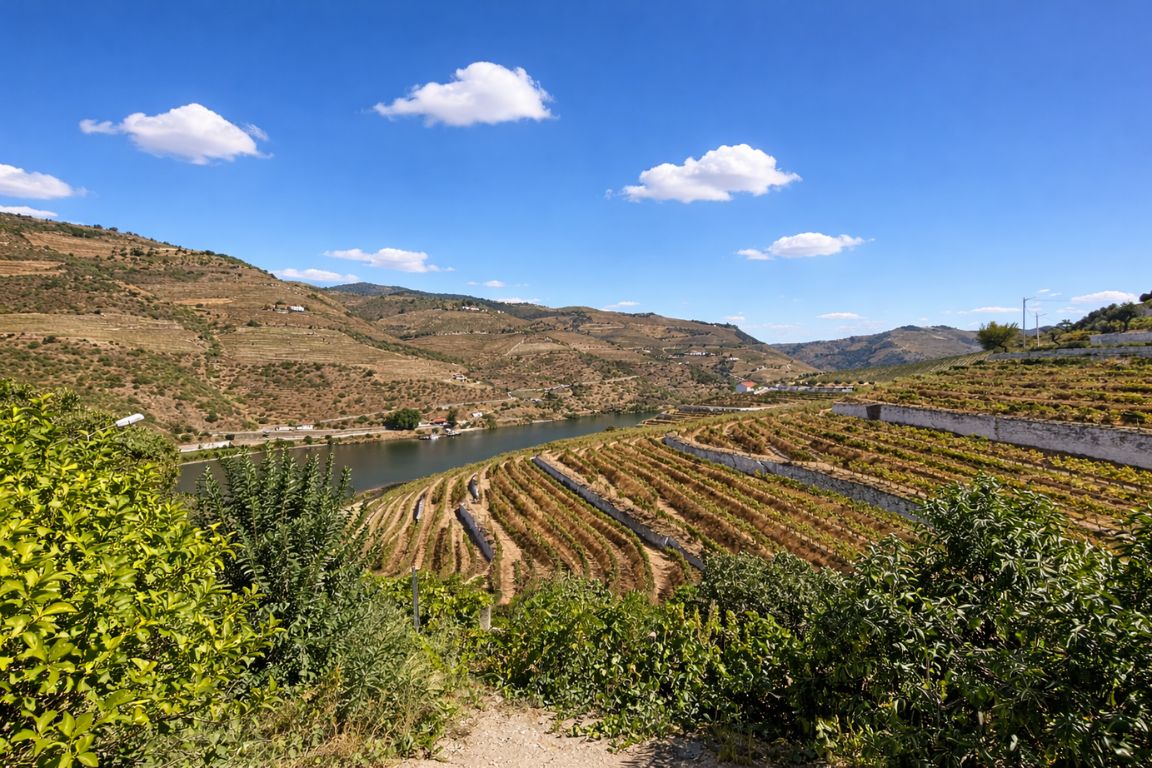
Most people meet the Douro Valley between about eleven in the morning and five in the afternoon, which is when the day tours from Porto are in it. Stay the night and you get the other version: the vans leave, the river goes flat and silver, and the terraces above the water hold the light for an extra hour. It is a genuinely different place after six o'clock.
At A Glance: Pinhão, Régua, Lamego and a rural quinta offer different practical bases. Choose nearby visits and plan the journeys before committing to the stay. Explore Quinta da Foz In Pinhão
The hard part is not getting from Porto to the Douro Valley, it is deciding where to put your bag once you arrive. The valley is not really a destination with a centre. It is a river with towns strung along it, none of them large, each one solving a different problem. Choose wrong and you will spend your holiday driving switchbacks in the dark. Our team fields this question constantly, so here is the honest breakdown of each base, including the ones we often talk people out of.
The valley, west to east
The Linha do Douro runs from Porto's Sao Bento station along the river to Pocinho. Porto to Pinhao takes roughly 2 hours 20 minutes on an Inter-Regional service, with about six trains a day.
Which Douro Valley town makes the best base?
Pinhao for a wine-focused trip, because the greatest concentration of visitable estates sits within a few kilometres of it. Peso da Regua if you want shops, buses and easier access. Lamego for a quieter, more historic town with better restaurants. A working quinta if you would rather wake up in a vineyard than in a village.
Start with what you are optimising for. Almost everybody who asks us this question actually wants one of three things: minimum driving between estates, maximum scenery from the room, or a town with enough life in it to eat well two nights running. No single base delivers all three, and pretending otherwise is how people end up disappointed.
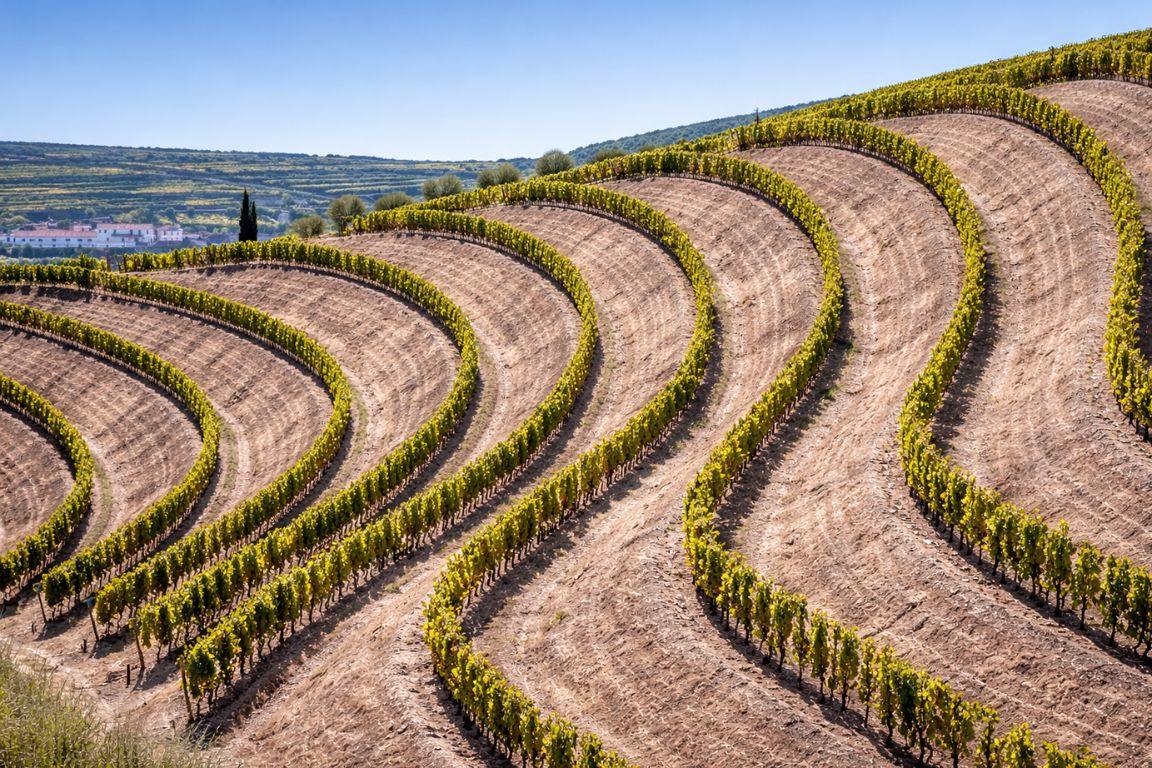
Distances are short on the map and long in practice. Regua to Pinhao is about 27 kilometres of the N222, a road with international press recognition as one of the world's most scenic drives, which is another way of saying it bends a great deal. Allow forty minutes rather than twenty, and considerably more if you stop for photographs, which you will.
| Base | Scenery | Amenities | Reachable by train | Best for |
|---|---|---|---|---|
| Pinhao | The best in the valley. River bend, terraces on three sides | Limited. A handful of restaurants and a small shop | Yes, directly | Wine trips where estate access is the priority |
| Peso da Regua | Pleasant but workmanlike. Wider valley, less drama | Good. Supermarkets, pharmacies, buses, a hospital | Yes, and it is the main junction | Travelers without a car, longer stays, families |
| Lamego | Hilltop town views rather than river views | Very good. A proper small city with real restaurants | No, but Regua is roughly 10 km away | Food, history and a quieter evening |
| A working quinta | Outstanding, and private | Whatever the estate provides, and nothing else | Rarely. A car or a transfer is usually needed | Couples, wine lovers, anyone wanting to stay put |
| Upper Douro villages | Wild and remote. Far fewer visitors | Minimal | Only as far as Pocinho | Second visits and people who want emptiness |
| Porto, as a day-trip base | None. You commute | Everything | The line starts there | Short trips with one Douro day in them |
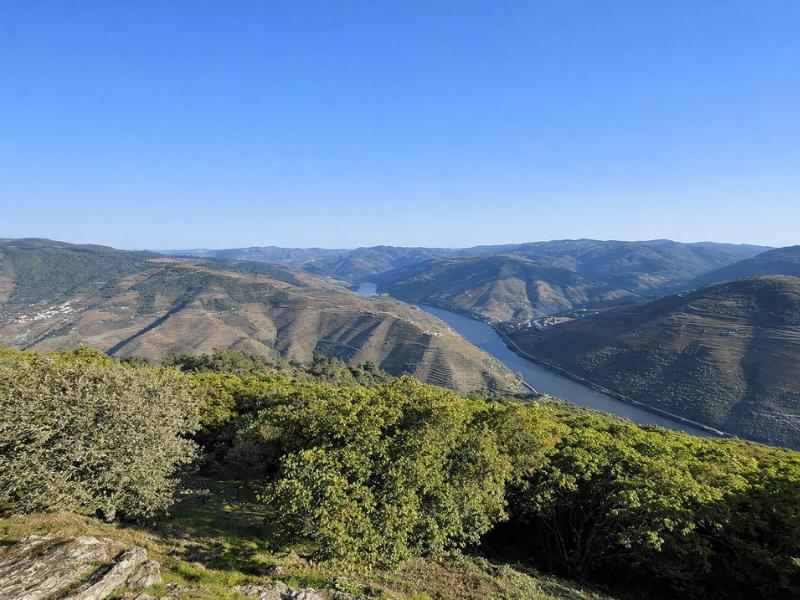
One structural point that saves a lot of argument: the valley is a UNESCO World Heritage Site because of the terraced landscape, and the terraces are what you came to see. Any base that puts a hillside between you and the river is trading the main event for convenience. Sometimes that trade is right. Just make it knowingly.
Why does Pinhao suit most first wine trips?
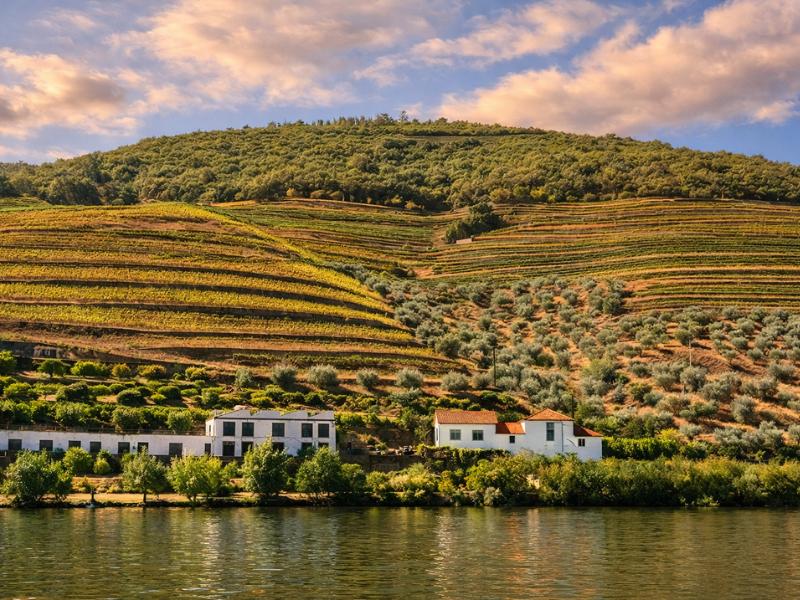
Pinhao sits at the bend where the Pinhao river meets the Douro, ringed by the highest concentration of visitable estates in the valley. Its station is decorated with hand-painted azulejo panels showing the harvest, boats leave from the quay, and several quintas are close enough to reach without a long drive. The village itself is small, and that is the trade-off.
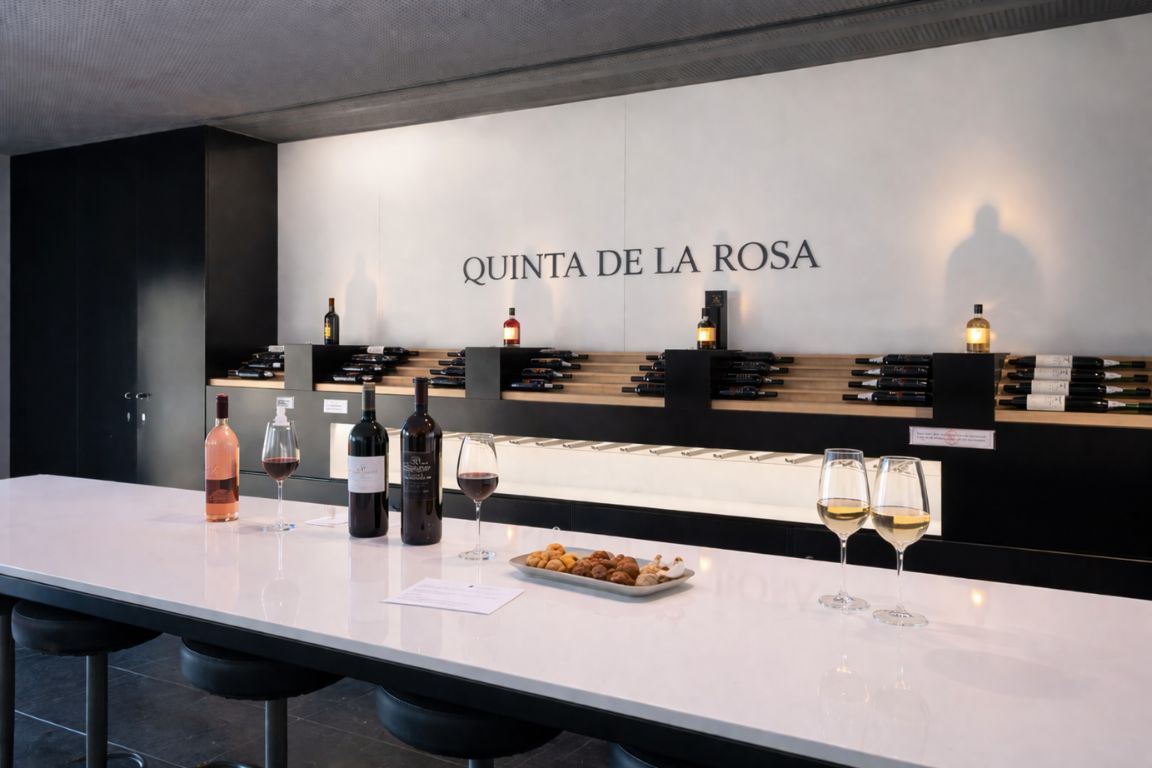
Nothing else in the valley puts you this close to this many estates. Quinta do Bomfim is essentially in the village. Quinta da Roeda, Quinta de la Rosa and Quinta das Carvalhas are a few minutes away, and Quinta do Seixo is across the river. If your plan is three or four estate visits over two days without a hire car, this is the only base that makes that plausible, and it shrinks the question of which quinta to visit down to a few kilometres rather than an hour of hairpins.
The tiled station is worth ten minutes even if you arrive by road. Those azulejo panels are among the most photographed in northern Portugal, and they document the working year of the valley: the picking, the treading, the boats. Small, free, and a better introduction to the harvest than most museum displays.
Now the honest part. Pinhao is a village of a few hundred people. There are not many restaurants, several of them close early or shut on set days, and in low season you can find yourself with two options and one of them full. Nightlife does not exist. Groceries are basic. If you are the sort of traveler who likes to wander out at nine and find somewhere new, this will frustrate you by the second evening.
It also gets busy in a specific, concentrated way. Cruise boats and tour vans converge on the quay in the middle of the day, so the village between noon and four in high season feels far larger than it is. Book somewhere with a terrace, plan your estate visits for the morning, and let the crowd wash through while you are somewhere up a hill.
| Pinhao | Peso da Regua | |
|---|---|---|
| Size | A village. Walkable end to end in ten minutes | A small town of several thousand people |
| Estates within 15 minutes | Many, including several of the best-known | Several, mostly on the Lamego side of the river |
| Restaurants | A handful, some with limited opening days | A decent range, open year round |
| Rail connections | On the line, but fewer services and no junction | The main junction for the valley |
| Onward transport | Taxis are limited and should be pre-arranged | Regional buses plus a larger taxi pool |
| Views from town | Exceptional in every direction | Good, though the valley is wider and flatter here |
| Room prices | Higher for the location, and they spike in harvest | Generally softer, with more mid-range choice |
| Feels like | Wine country | A working river town that happens to sell wine |
When is Peso da Regua the smarter choice?
When you do not have a car. Regua is the valley's transport junction, with the most rail services, regional buses, a real taxi pool and shops that stay open. It is also the historic administrative heart of the port trade, where wine was gathered before going downriver. What it lacks is the postcard drama of Pinhao.
Regua does the unglamorous work. It has supermarkets, pharmacies, a hospital, ATMs that are not empty on a Sunday, and restaurants that are open when you actually want to eat. For a stay of three nights or more, or with children, or without a car, those things quietly matter more than a better view from the balcony.
The town also carries genuine history. This is where the Companhia Geral da Agricultura das Vinhas do Alto Douro exercised its authority after the 1756 demarcation, and where wine from the whole upper valley was assembled before the rabelo boats took it down to Gaia. The riverside museum covers that story properly, and it is the best indoor hour in the valley on a wet day.
Scenery is the honest weakness. The valley is wider here, the terraces are further back, and the town itself is a mix of old riverfront and unremarkable later building. It is a pleasant place to stay and not a beautiful one. Nobody comes home with a photograph of Regua the way they do of Pinhao.
Where it wins outright is as a hub. Estates on both banks are within half an hour, Lamego is a short drive up the hill, the boat services stop here, and the train gets you back to Porto without a change. If your plan involves a lot of moving around and you are relying on public transport and taxis, this is the base that works.
Is Lamego worth basing yourself in?
Yes, if you value dinner and quiet over waking up beside the river. Lamego is a proper hilltop town about 10 km south of Regua, with a cathedral, a genuinely monumental baroque staircase climbing to the Nossa Senhora dos Remedios sanctuary, good restaurants, and a food culture of its own. You will need a car most days.
The staircase alone justifies a visit. It climbs several hundred steps in a series of blue-and-white tiled landings from the town up to the sanctuary, and it is one of the great baroque set-pieces in Portugal. Walk it early, before the heat, and the view back down over the town and the vineyards beyond is the payoff.
Lamego also eats well. This is smoked-ham country, and the town is the home of Raposeira, the sparkling wine that a large share of Portugal drinks at Christmas. After several days of fortified reds and long tasting menus, a town where you can get a plate of presunto and a glass of something with bubbles is a relief nobody anticipates until they need it.
The catch is geography. Lamego is not on the river and not on the railway, so every trip into the valley proper starts with a drive down the hill. That is ten minutes to Regua and about fifty to Pinhao, each way, every day. With a car and a two-base trip it works nicely. Without one, it is the wrong choice.
Which Douro village is the prettiest?
Pinhao wins on setting, since no other village sits in that river bend. For old-stone village character, Provesende and Favaios up on the plateau are the ones people remember, along with Barcos and the hill villages above the south bank. The prettiest places to look at are rarely the most practical places to sleep.
This is the question we get asked more than any other about the valley, and it has two honest answers depending on what "pretty" means to you. If it means landscape, the winner is whichever village has the river in front of it, and that is Pinhao by a distance. If it means architecture and atmosphere, you have to leave the water and go up.
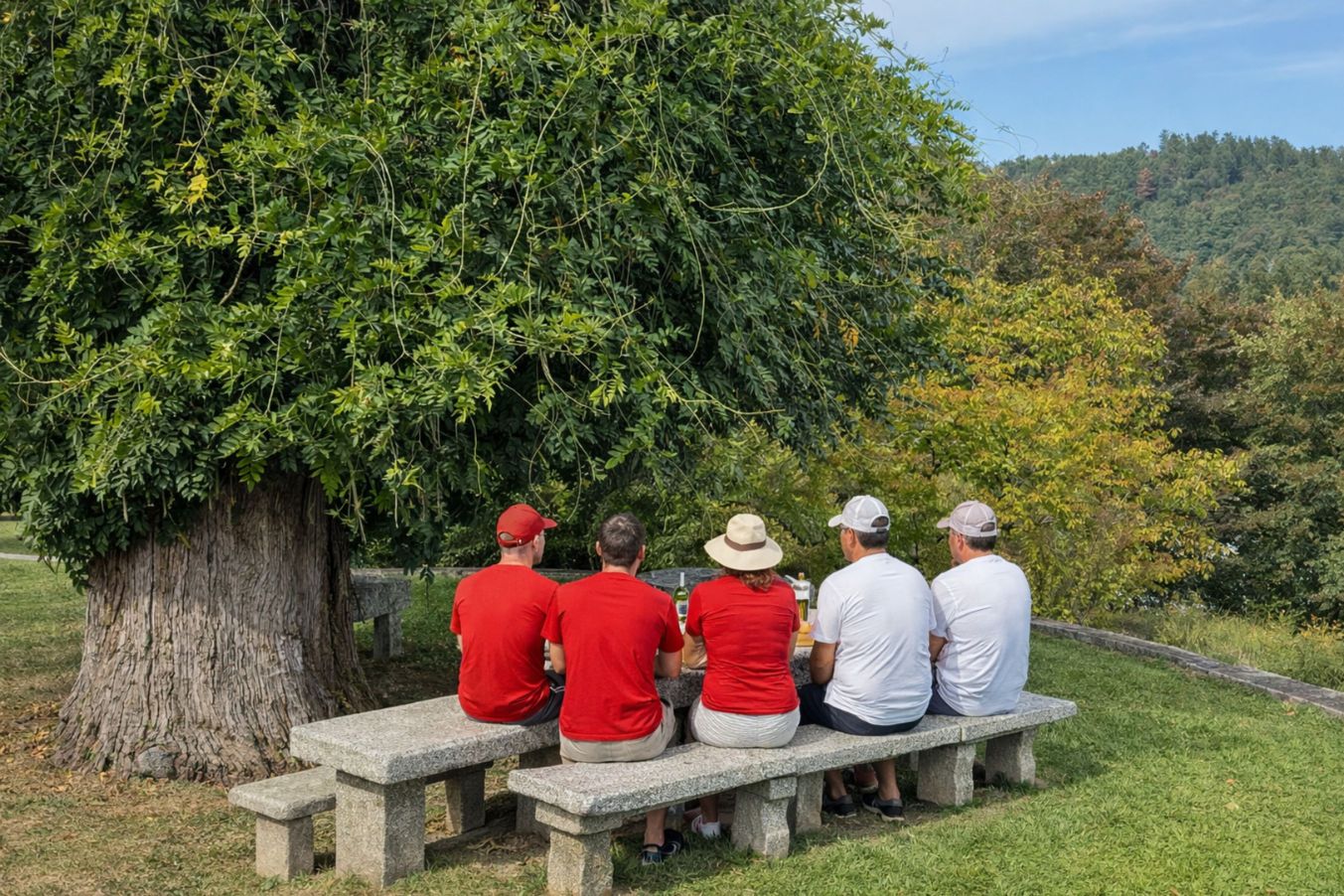
Provesende, on the plateau above the north bank near Sabrosa, is the classic answer: a granite village built around a small square, with manor houses, an old bakery and almost no through traffic. Favaios, a little further east, is known for two things that are famously good together, a distinctive moscatel and a four-cornered bread that the village has made for generations.
Sabrosa itself is traditionally claimed as the birthplace of Ferdinand Magellan, which the town makes rather a lot of, and it is a reasonable stop between Pinhao and the plateau. Further upriver, Sao Joao da Pesqueira sits high above the Douro with wide views over the upper valley, and it is a good deal quieter than anywhere downstream.
| Village | Where it is | What makes it worth the detour | Stay here? |
|---|---|---|---|
| Pinhao | On the river, mid-valley | The bend, the terraces, the tiled station, the quay | Yes, the strongest wine-trip base |
| Provesende | Plateau above the north bank | Granite manor houses around a quiet square | A few guesthouses. Charming and very quiet |
| Favaios | Plateau near Alijo | Moscatel de Favaios and the village's four-cornered bread | Possible, but better as a half-day stop |
| Barcos | Hills above the south bank | Old stone streets and almost no visitors | Only with a car and a taste for isolation |
| Sao Joao da Pesqueira | High above the upper Douro | Wide views over the eastern valley, real local life | Good for a second trip or a longer stay |
| Sabrosa | Plateau north of Pinhao | Magellan associations and a handsome small centre | Workable, though Pinhao is closer to the estates |
A practical note on all of them: plateau villages sit twenty to forty minutes above the river on winding roads, and those roads are unlit and narrow at night. Beautiful by day, tiring after a dinner in the valley. Factor the return drive into where you book, not just the photographs.
Should you sleep at a quinta instead of in a town?
If your trip is mainly about wine, yes. A quinta stay puts you inside a working estate: tastings on site, dinner without driving, terraces to yourself at sunset. The trade-offs are real, though. You are committed to one location, dependent on a car or a transfer, and eating wherever the estate serves.
Wine-estate guesthouses have multiplied across the valley over the past twenty years, and they range from a few farmhouse rooms to serious hotels built into a hillside. What they share is the thing a town hotel cannot offer: you are already there. The vineyard walk starts outside your door, the tasting room is downstairs, and nobody has to decide who is driving.
That last point is the strongest practical argument for it. A tasting-heavy trip and a hire car are in permanent tension, and a quinta stay resolves it for at least one full evening. Many estates will also arrange transfers to neighbouring quintas or into Pinhao, which softens the isolation problem if you ask when you book rather than on arrival.
The honest downside is choice. Dinner is whatever the estate is cooking, and if it does not serve dinner, you are driving a dark valley road to find some. Isolation that feels romantic on the first night can feel limiting on the third. Our usual suggestion for a three-night trip: two nights at a quinta, one in Pinhao or Regua, so you get both the estate experience and a change of scene.
| Staying at a quinta | Staying in a town | |
|---|---|---|
| Setting | Inside the vineyards, usually with a private view | In a village or town, with the vineyards nearby |
| Wine access | Tastings and often a cellar visit on site | Estates are a drive or a taxi ride away |
| Dinner | Whatever the estate serves, or a drive out | Several options within walking distance |
| Transport | Car or pre-booked transfer is close to essential | Train and taxi are workable in Regua and Pinhao |
| Evenings | Silent, dark, exceptional star cover | Some life, some noise, more to do |
| Cost | Usually the most expensive option in the valley | Wider range, including simple guesthouses |
| Best length of stay | Two nights, so you get one full day on the estate | Any length, and easier for longer trips |
How many nights does the Douro Valley deserve?
Two nights is the sweet spot. It buys you one full day in the valley plus two long evenings, which is when the place is at its best. One night is worth doing if the alternative is a day trip. Three or more only pays off if you are willing to go beyond Pinhao into the upper valley or across into the plateau villages.
People usually ask how many days to spend in the Douro Valley when what they really mean is how many nights, and the difference is the whole point, because the valley is best in the hours the day trips miss. The reason two nights works so well is arithmetic. Arrive in the afternoon of day one, and you get an evening. Day two is complete: two estates, a long lunch, an hour on the water, sunset from a terrace. Leave after breakfast on day three. Nothing is rushed and nothing is padded.
One night is still a clear upgrade on a Douro Valley day trip, because it removes the three hours of return driving that otherwise bookend everything. You will not see much more than a day tour covers, but you will see it without a departure time hanging over you, and you get the valley in the evening light rather than at noon.
| Nights | What fits comfortably | Who it suits |
|---|---|---|
| Day trip only | Two estate visits, lunch, an hour on the river | Short Porto trips with one free day |
| One night | The same, minus the rush, plus one evening and one sunrise | Anyone who can only spare a day and a half |
| Two nights | Three or four estates, a proper lunch, a boat trip, two evenings | Most wine travelers. The best value in the valley |
| Three nights | Add the plateau villages, a longer river stretch, a day of nothing | Slower trips and returning visitors |
| Four or more | The upper Douro beyond Pinhao, Foz Coa, cross-valley drives | Second visits, or anyone treating the valley as the whole trip |
A note on splitting bases. Two nights in one place beats one night in each, almost always. Checking out, driving, checking in and unpacking burns about three hours you could have spent in a vineyard, and in a valley this size you can reach everything from a single base anyway.
When should you book, and when do rooms get tight?
The valley has a small bed stock and a very concentrated peak. Harvest, from September into early October, is the hardest period of the year to book and the best time to be there. Summer weekends and the spring shoulder fill next. Winter is genuinely quiet, cheaper, and the only time you can be casual about it.
Understand the scale first. This is not a resort region with thousands of rooms. Pinhao has a small number of properties, quinta guesthouses often have fewer than ten rooms each, and a single wedding or a wine-trade event can absorb most of the good options in one weekend. Scarcity, not demand alone, is what drives the booking calendar here.
The harvest season is the extreme case. Estates that take guests are simultaneously running their busiest working weeks, so some reduce guest capacity precisely when demand peaks. If a harvest visit is the plan, treat the accommodation as the first booking of the whole trip and build the flights around it. It is also why the best time to visit the Douro Valley has two different answers, one about weather and one about whether there is a bed left.
| Season | Availability | How far ahead to book | What changes |
|---|---|---|---|
| November to February | Wide open | A week or two | Lowest rates, short days, some properties and estates close |
| March to May | Comfortable midweek, tighter at weekends | One to two months | Green terraces, mild days, blossom, rising demand |
| June to August | Tight, especially at weekends | Two to three months | Peak prices and real heat down in the gorge |
| September to mid-October | The hardest weeks of the year | Four to six months, more for quinta stays | Harvest. Treading sessions, full estates, top rates |
| Late October | Easing, and beautiful | One to two months | Autumn colour on the terraces and post-harvest calm |
One booking habit that pays off: check whether the property has parking before anything else if you are driving, and whether it will collect you from the station if you are not. Both are common, neither is universal, and in this valley the answer changes your whole day.
How do you get around once you have checked in?
A car covers everything but forces one person to skip the tastings. The train links Regua and Pinhao usefully but reaches almost no estates directly. Taxis exist in both towns and should be pre-arranged rather than hailed. Boats connect riverside quintas in season, and a guided day out of your base solves the driving problem entirely.
Estates are the awkward part. Many sit up narrow switchbacks with no bus and no pavement, and the last kilometre is often a private track. That is why estate-arranged transfers are so common, and why asking a quinta how it expects you to arrive is a sensible question to put in the booking email.
If nobody in the party is willing to give up the tastings, a guided wine tour booked from your base removes the problem for a day and costs less than a second hire car. River transport deserves more attention than it gets. Scheduled boats run stretches of the Douro in season, and estate-run boats shuttle guests between riverside quintas around Pinhao. It is slower than driving and much better, since the terraces make more sense from the water than from a road cut into the hillside.
| Option | What it covers well | Where it falls down |
|---|---|---|
| Hire car | Everything, including plateau villages and remote estates | Somebody is not drinking, and mountain roads at night are tiring |
| Train | Regua, Pinhao and the run back to Porto | Few estates are near a station; services are limited |
| Taxi | Short hops from town to a nearby quinta | Small local fleets. Book ahead, especially for the return |
| Estate transfer | Getting to and from the quinta you booked | Only serves that estate, and often only at set times |
| Boat | Riverside estates and the best views of the terraces | Seasonal, weather-dependent, slower |
| Guided day tour | Multiple estates with nobody driving | A fixed schedule you cannot change on the day |
What do people regret about where they stayed?
Three regrets come up repeatedly: staying in Porto and commuting when they had time to stay in the valley, booking a beautiful plateau village without realising how far it is from everything, and choosing a base with no walkable dinner. None of them ruin a trip. All of them are avoidable at the booking stage.
Whether to base yourself in Porto or the Douro is the first decision of the trip, and the one people most often defer until it is too late to change. The commuting regret is the biggest of the three. People with four or five nights in northern Portugal often keep the same Porto hotel throughout and do the valley as a single long day, then discover on that day that the place they most wanted to be is the place they had six hours in. If your trip has four nights or more, move one or two of them upriver.
The remote-village regret is the second. A stone house on the plateau photographs beautifully and sits forty minutes of hairpins above the estates you booked. That is eighty minutes of driving a day before anything else, and it lands squarely on whoever is not drinking. Lovely for a slow week, wearing on a two-night wine trip.
The dinner regret is the most preventable. Check what is within walking distance of the bed, and check whether it opens on the nights you are there. In a valley where several restaurants close one or two days a week and the nearest alternative is a dark drive away, that one search saves an evening.
The flip side is worth saying too, because it is the most common piece of feedback we hear from people who did stay overnight. Nobody regrets the evening. The day-trip crowd is gone by five, the river goes still, and the valley you booked the trip for is finally standing in front of you with nobody else in it.